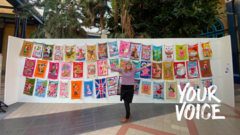
A lost tea towel featuring an artist's original work recently found its way back to its creator after a bizarre journey through the secondary market. To the casual observer, it is a heartwarming internet anecdote about a misplaced piece of kitchen memorabilia. To anyone tracking the hyper-fragmented economy of independent art licensing, it highlights a much larger, systemic battle over intellectual property and physical distribution.
The artist in question had long written off the specific production run, assuming the pieces were either languishing in a landfill or buried in a thrift store bargain bin. Instead, the item surfaced online, commanding a premium that far exceeded its original retail value. This reunion is not just a stroke of luck. It exposes the massive, unmonitored secondary market where independent designs are traded, collected, and occasionally weaponized against the very creators who generated them.
The Micro Economy of Practical Art
Museum gift shops, independent boutiques, and online storefronts are flooded with functional art. Canvas totes, ceramics, and tea towels have replaced traditional prints as the primary way young consumers interact with independent creators. For the artist, a tea towel is a low-risk entry point into manufacturing. It requires minimal overhead compared to framing and shipping high-end giclée prints.
Yet, the moment a physical product leaves the warehouse, the artist loses all control over its lifecycle. The secondary market operates entirely in the dark. On platforms like eBay, Etsy, and specialized Facebook tracking groups, out-of-print textile art regularly fetches hundreds of dollars. Collectors treat these items not as utilitarian kitchen rags, but as limited-edition prints. When a run is small—say, fewer than 500 units—the scarcity engine kicks into overdrive.
This creates a paradox for the working creative. The artist makes a razor-thin margin on the initial sale, often as low as two to three dollars per unit after manufacturing and distribution costs. Meanwhile, the secondary reseller captures 100% of the appreciated value when the item becomes a rare collector's piece.
Why Textiles Vanish
The supply chain for independent merchandise is notoriously fragile. Unlike major fashion houses or mass-market consumer goods companies, independent artists rarely have the capital to invest in sophisticated inventory tracking software.
- Logistical leakage: Items are frequently lost during regional transit or misrouted by third-party fulfillment centers.
- Liquidation loops: When boutique retailers go bankrupt, their remaining inventory is sold off in bulk pallets to anonymous liquidators, stripping the artist's name from the manifest.
- Domestic displacement: Consumers treat practical art with less reverence than a canvas, meaning valuable designs are easily donated, left behind during moves, or sold for pennies at estate sales.
When these items vanish into the liquidation loop, they don't disappear forever. They enter a parallel economic ecosystem managed by digital pickers who scan thrift stores with smartphone apps, looking for recognizable signatures or high-quality textile weaves.
The Digital Dragnet That Fetches Lost Work
The reunion of an artist with their lost work is rarely an accident of fate. It is the result of highly coordinated digital communities. Fans, amateur sleuths, and fellow artists spend hours cataloging out-of-print merchandise.
When a listing popped up on an auction site for the missing tea towel, it wasn't the artist who found it first. It was an eagle-eyed follower utilizing highly specific keyword alerts. The modern fan base acts as a decentralized security apparatus for independent brands. They monitor marketplaces not just to buy, but to police copyright infringement and alert creators when rare pieces surface.
This crowd-sourced surveillance is necessary because corporate platforms offer virtually zero protection for independent creators. Reverse-image search algorithms are notoriously poor at indexing textured fabric surfaces, meaning automated tools rarely catch missing or stolen designs. The human eye remains the only reliable filter.
The Problem with Platforms
Major e-commerce platforms have built sophisticated tools to protect multi-billion-dollar luxury brands from counterfeiting. If a fake designer handbag appears online, it is taken down within minutes. However, if an independent artist's out-of-print textile is found, mislabeled, or even counterfeited, the burden of proof falls entirely on the individual creator.
The process of filing a Digital Millennium Copyright Act (DMCA) takedown or claiming ownership of a physical asset found through a liquidation sale is a bureaucratic nightmare. It requires hours of documentation, legal correspondence, and follow-ups. For an independent operator running a studio solo, the opportunity cost of fighting these battles is too high. They choose to let the inventory go.
Reclaiming the Margin
The emotional victory of recovering a lost piece of one's creative history cannot obscure the financial reality. Independent artists are being squeezed out of the value chain they created. To combat this, a growing number of creators are changing how they view production runs.
They are abandoning the traditional wholesale model entirely. By moving to strict pre-order frameworks and numbered editions—even for utilitarian items like tea towels—artists can artificially replicate the scarcity that drives the secondary market, but keep the profits within their own ecosystem.
Some studios are going a step further by implementing blockchain-adjacent physical tracking, embedding small, washable QR codes or micro-tags into the hems of their textiles. This allows future buyers to verify the authenticity of the piece and links directly back to the artist's current portfolio, transforming a simple kitchen item into a permanent digital storefront.
The return of a single piece of lost art makes for a comforting headline. It suggests a world where things eventually find their way home. But for the thousands of creators whose work remains lost in the gears of global supply chains and digital resale platforms, the solution isn't relying on a lucky break online. It requires building a more resilient, fiercely protected infrastructure that treats every single textile print with the same economic respect as a gallery masterpiece.


