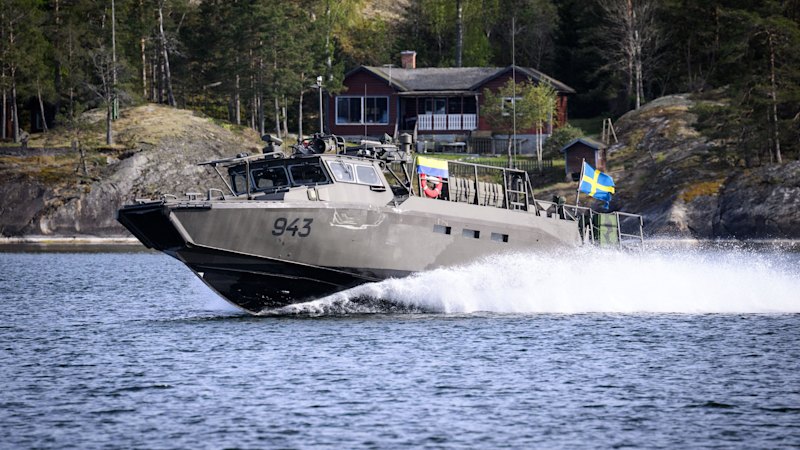
When a country changes two centuries of military neutrality overnight, everyday real estate suddenly becomes a national security emergency. Sweden is learning this lesson the hard way.
The Swedish Armed Forces and the Fortifications Agency just formally asked the government to expropriate a 600-square-meter property on the island of Muskö. Why? Because the plot sits directly next to one of the country's most secretive naval facilities. More importantly, it is owned by a Russian businessman with ties to the Kremlin.
If you think buying a vacation home near a military base is just a harmless real estate transaction, Stockholm's latest move proves you are dead wrong.
Inside the Muskö Naval Base Threat
To understand why Sweden wants this specific patch of land, you have to look at what lies beneath the surface. Built during the Cold War to keep submarine fleets safe from aerial bombardment, the Muskö Naval Base is a massive underground labyrinth. Workers blasted more than twenty kilometers of tunnels straight into solid granite. It features underground repair docks, command hubs, and subterranean living quarters.
The base was partially mothballed after the Cold War ended, but Sweden brought it back online in 2019. Since Sweden officially joined NATO, the strategic value of Muskö skyrocketed.
Here is the glaring vulnerability. The beachfront estate in question—developed by Russian businessman Stanislav Aleshchenko and registered under his wife's name—is the single piece of land near the approaches to the base that remains completely outside military control.
The elevated plot offers a pristine, unobstructed view of the surrounding bay. In modern warfare, that view is a tactical goldmine.
The Drone Factor That Changed Everything
Military planners don't worry about old-school infantry invasions on tiny Baltic islands anymore. They worry about drones.
Aerial and maritime drones completely rewrite how critical infrastructure gets defended. Chief of the Defense Staff Lieutenant General Carl-Johan Edström pointed out that the current security climate forces the state to act immediately rather than gamble on private ownership risks.
The Swedish military wants that specific plot to set up anti-drone defense systems. Without control of that land, filling the defensive gap around the facility remains impossible.
Defense Minister Pål Jonson noted that maintaining absolute operational security at Muskö is non-negotiable. When foreign nationals acquire high-value vantage points next to secret submarine tunnels, governments stop treating it as a property rights issue. They treat it as an active risk.
A Wider Pattern of Security Fears in the Baltic
This property grab isn't happening in a vacuum. Sweden is aggressively scrubbing potential intelligence vulnerabilities across the country.
Just weeks before the Muskö announcement, Swedish police detained two Russian citizens who camped near a property linked to Micael Johansson, the CEO of defense giant Saab. While those suspects were eventually released without formal criminal charges, the incident rattled security services.
Simultaneously, the Swedish Security Service disrupted a foreign intelligence operation aimed at discrediting the country's NATO integration. Authorities also cracked down on a network of pro-Kremlin figures operating inside local churches.
Moscow's ongoing aggression changed Stockholm's threat calculus permanently. The era of looking the other way regarding foreign ownership near sensitive defense sites is over.
Property owners and investors buying coastal assets across Europe must realize that national security trumps deeds and titles when geopolitical tensions boil over. Sweden drew a hard line in the granite at Muskö, and other nations facing similar hybrid threats are watching closely.


