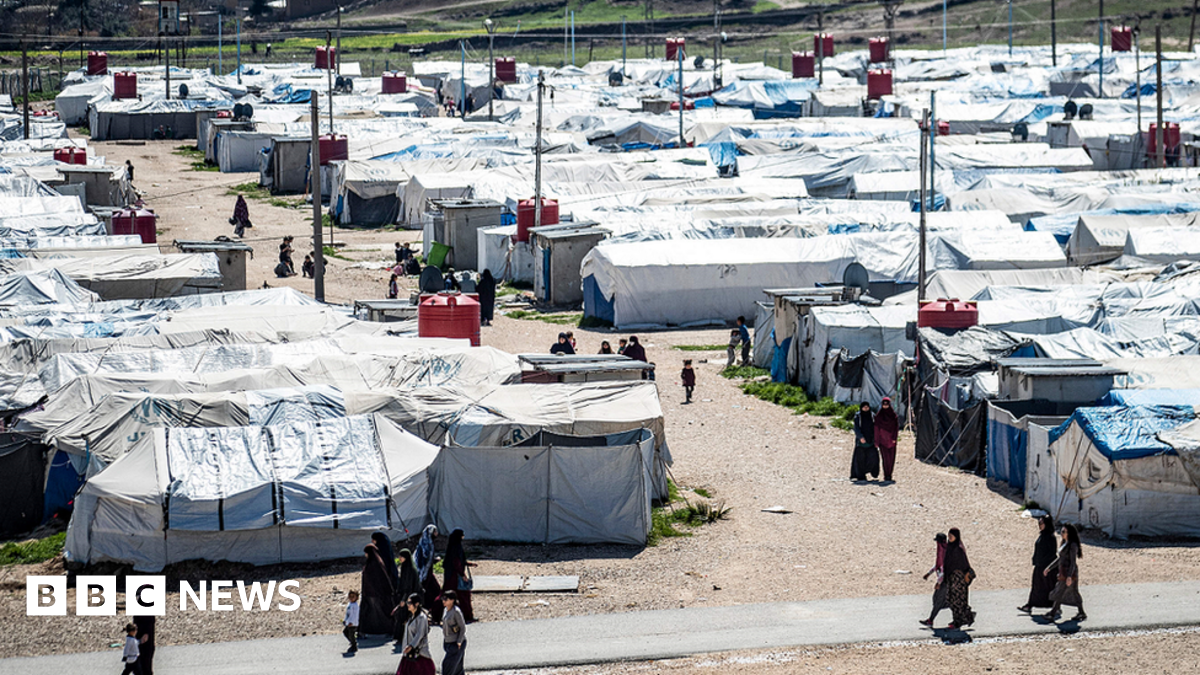
The repatriation of Australian women and children from the Al-Roj and Al-Hol detention camps in North East Syria is not a simple humanitarian rescue. It is a calculated, high-stakes gamble with national security. For years, these women have remained in a legal and geographical limbo, but the recent push by the Australian government to bring them home reveals a shift in strategy that prioritizes long-term surveillance over indefinite abandonment. The Home Affairs Minister’s confirmation of these returns marks the beginning of a messy, multi-decade integration process that will test the limits of Australian law and social cohesion.
The core of the issue lies in the distinction between victims of circumstance and active participants in a genocidal project. While some argue these women were "brides" lured by deception, intelligence assessments often paint a more complex picture. Many were deeply embedded in the social and administrative fabric of the Islamic State. Bringing them back to Australian soil does not end the threat; it merely changes the jurisdiction.
The Intelligence Dilemma of Controlled Returns
The decision to repatriate is driven by a cold realization within the intelligence community. Abandoning citizens in camps run by the Kurdish-led Syrian Democratic Forces (SDF) creates a vacuum. These camps are notorious breeding grounds for radicalization, and the risk of a mass breakout or the sudden collapse of the SDF’s control is a constant shadow. If these individuals were to escape and disappear into the global underground, the Australian government would lose all ability to track them.
By bringing them home, the Australian Federal Police (AFP) and ASIO gain the upper hand. They trade the chaos of a Syrian war zone for the controlled environment of Australian suburbs. Once they land, these women are met with a wall of legal and surveillance measures, including Control Orders and Post-Sentence Orders that can dictate everything from where they live to who they speak with. It is an expensive, labor-intensive exercise in risk management.
However, the legal framework is fragile. Collecting admissible evidence from a foreign battlefield to secure a criminal conviction is notoriously difficult. Without a conviction, the government is forced to rely on administrative "shadow" law to keep the public safe. This creates a permanent class of citizens who are neither fully free nor behind bars, a situation that civil libertarians and security hawks both find deeply unsettling.
Beyond the Bride Narrative
Public discourse often leans on the trope of the "jihadi bride," a term that suggests a level of passivity and innocence. This narrative is frequently pushed by legal teams and family advocates to soften public opposition to repatriation. But the reality on the ground in the caliphate was far more nuanced.
Women in the Islamic State often served as the enforcers of social morality, members of the hisbah (religious police), or recruiters who utilized social media to draw in more foreign fighters. They were the ones who maintained the household structures that allowed the caliphate to function as a pseudo-state rather than just a roaming militia.
When we look at the "why" behind their departure from Australia years ago, we see a mix of ideological fervor, familial pressure, and a search for belonging. To treat them all as victims of grooming is to ignore their agency. This lack of nuance makes the deradicalization process much harder. If the state starts from a position that these women were merely tricked, it fails to address the underlying ideological convictions that may still exist.
The Logistics of Reintegration
Reintegration is where the government’s plan faces its most significant hurdle. Australia's social services are being asked to manage a demographic that has spent years in a high-stress, radicalized environment. The children, many of whom were born in the camps or the caliphate, have known nothing but war and extremist indoctrination. They are the most tragic figures in this saga, and their needs are immense.
- Psychological Trauma: Severe PTSD is almost universal among the children.
- Educational Gaps: Most have never stepped foot in a traditional school.
- Stigmatization: They return to communities that may view them with suspicion or outright hostility.
The government’s approach involves a "wraparound" service model, but the success of these programs is unproven. There is no blueprint for deprogramming children who have been raised to view the West as the enemy. The burden often falls on local schools and healthcare providers who are under-equipped to handle the specific complexities of extremist-related trauma.
Furthermore, the Australian public’s appetite for these programs is thin. In a period of economic strain, the optics of spending millions of dollars on the specialized care and surveillance of former ISIL affiliates is a political lightning rod. Every dollar spent on a returnee is a dollar that critics argue should have gone to domestic social programs.
The Legal Void of North East Syria
Why hasn't the international community found a better way? The refusal to establish an international tribunal for ISIL members has left countries like Australia with two bad options: leave their citizens to rot in a lawless camp or bring them home to a legal system that was never designed for them.
The SDF has repeatedly called for foreign nations to take back their citizens. They are a non-state actor holding thousands of prisoners with no long-term plan and limited resources. The camps are a ticking time bomb. Australia’s recent movements are a direct response to the crumbling stability of the region. It is a preemptive strike against a future disaster, but it brings the conflict to our doorstep.
The Failure of Counter-Extremism Programs
For over a decade, Australia has invested heavily in Countering Violent Extremism (CVE) initiatives. Yet, the effectiveness of these programs remains a black box. Success is measured by the absence of an attack, a metric that is impossible to quantify accurately.
The repatriated women are often placed into these programs as a condition of their return. But for CVE to work, there must be a genuine desire for change. When participation is coerced by the threat of jail or the desire to keep custody of children, the results are often superficial. We are essentially betting our national security on the hope that these individuals have had a genuine change of heart, rather than just a change of scenery.
Monitoring a Lifetime of Risk
The surveillance required for a single high-risk individual is staggering. It requires teams of agents working in shifts, digital monitoring, and constant community liaison. Scale that up to dozens of returnees and the strain on ASIO and the AFP becomes apparent.
This isn't a one-year or five-year commitment. This is a lifetime of monitoring. The ideology that fueled the Islamic State does not vanish because a border was crossed. It lingers in private chats, in encrypted apps, and in the quiet resentment of those who feel they are being persecuted by the state. The government is essentially building a permanent surveillance infrastructure inside our own cities to manage the fallout of a war thousands of miles away.
The hard truth is that there is no "safe" way to handle this. Leaving them in Syria creates a long-term security vacuum and a humanitarian stain. Bringing them back creates an immediate domestic risk and a massive financial burden. The Australian government has chosen the latter, betting that our institutions are strong enough to absorb the shock.
The Unseen Impact on Local Communities
When these families are resettled, they aren't placed in a vacuum. They are moved into existing suburbs, often in areas with high migrant populations. This creates a localized tension that is rarely discussed in the halls of Parliament. Local police are briefed, but neighbors are often left in the dark, leading to a climate of fear and rumor.
If the goal is social cohesion, the secrecy surrounding the resettlement process often works against it. The lack of transparency fuels the "us vs. them" narrative that extremists on both sides of the spectrum exploit. We are asking Australian communities to host individuals who, at one point, rejected the very foundations of Australian society. That is a massive ask, and the government has yet to provide a convincing argument for why it will work this time.
The legal battles are just beginning. As returnees challenge their control orders and the state struggles to find evidence for historical crimes, the Australian court system will become a new battleground for the legacy of the caliphate. We are entering a phase where the "war on terror" is no longer a foreign expedition, but a domestic management problem.
The government must move beyond the rhetoric of "bringing them home" and start being honest about the "what then." The infrastructure for long-term monitoring, the reality of failed deradicalization, and the immense cost of this operation are facts that the public deserves to understand. Anything less is a disservice to the security of the country.
The arrival of these women and children is not the end of a chapter. It is the prologue to a new, more complicated era of domestic security management where the lines between criminal justice and national defense are permanently blurred. The gamble has been made; now we wait to see the price.
Authorities must now prioritize the immediate implementation of high-frequency monitoring and mandatory, transparent reporting on the progress of reintegration programs to ensure that public safety is not being sacrificed for political expediency.