The map of the world is usually drawn by giants.
We grow up learning to trace the borders of superpowers, studying the capitals of empires that rise, clash, and occasionally divide the spoils of the earth in quiet, wood-paneled rooms. We are conditioned to watch Washington and Beijing, Brussels and Moscow, as if history were a two-person play performed on a very wide stage.
Yet if you stand on the balcony of a foreign ministry in New Delhi, or listen closely to the diplomatic hum in Canberra, Ottawa, or Seoul, you hear a different sound. It is the sound of furniture being rearranged.
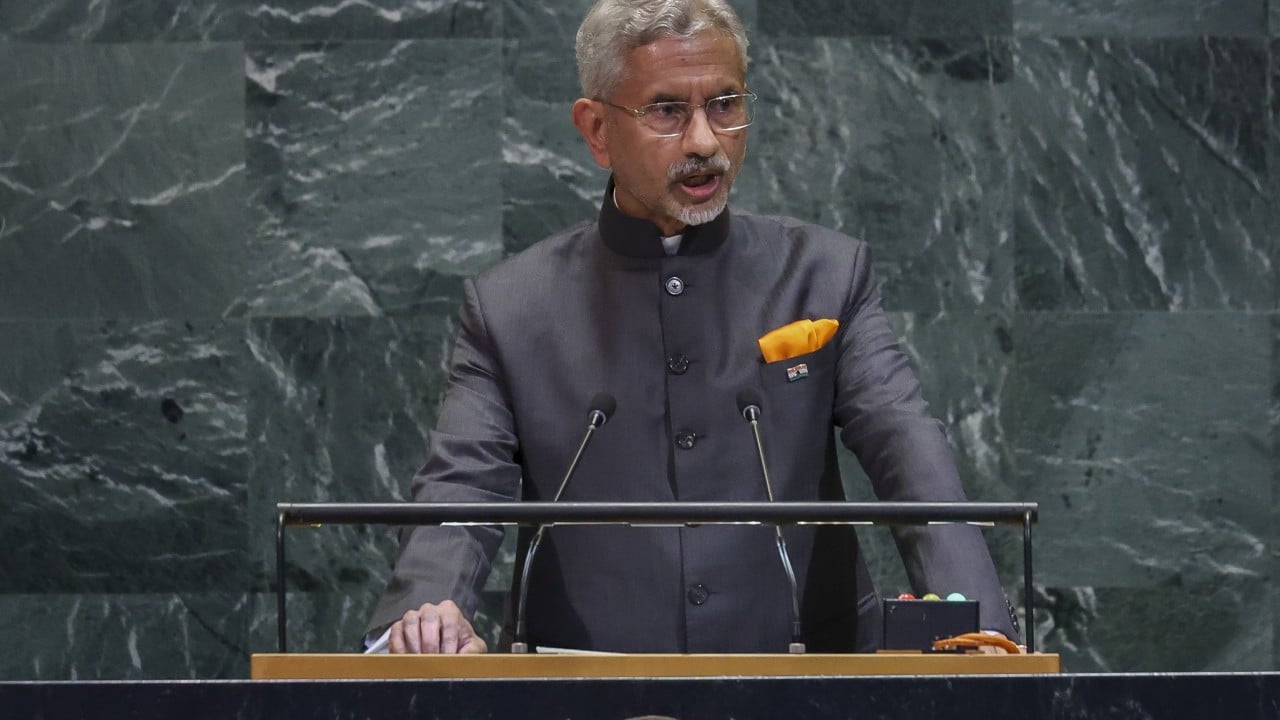
Consider a hypothetical diplomat named Aarav, sitting in a windowless briefing room in South Block, staring at a stack of freshly printed cables. He is not worried about a direct missile strike or a total nuclear exchange. Those are the nightmares of the twentieth century. Instead, Aarav is losing sleep over a lithium mine in the high-altitude deserts of South America, a choked shipping lane in the South China Sea, and a quiet decree signed three thousand miles away that restricts the export of rare earth magnets.
Aarav represents a nation of 1.4 billion people, a booming economy, a civilization thousands of years old. Yet, on many global boards, India and its peers have often found themselves treated as spectators rather than rule-makers. They are courted during elections, lectured during climate summits, and expected to buy defense hardware off the shelf from old capitals that still think they run the globe.
That era is quietly ending.
To understand why, you have to look past the grand rhetoric of global summits and examine the quiet architecture of what strategists are starting to call the P4M. It is an awkward acronym for a middle-power alignment, bringing together nations that refuse to be squeezed into binary choices. India, Australia, Japan, and other regional heavyweights are realizing a stark, sobering truth: when the elephants fight, the grass gets trampled. But when the middle powers lock arms, they can change the gravitational pull of the room.
We have seen this movie before, or at least variations of it. During the Cold War, the Non-Aligned Movement tried to stake out a neutral middle ground, but it often lacked economic teeth. It was a moral stance shouted into a hurricane.
The modern middle-power grouping is entirely different. It is not built on ideological purity or shared nostalgia. It is forged out of raw, grinding necessity.
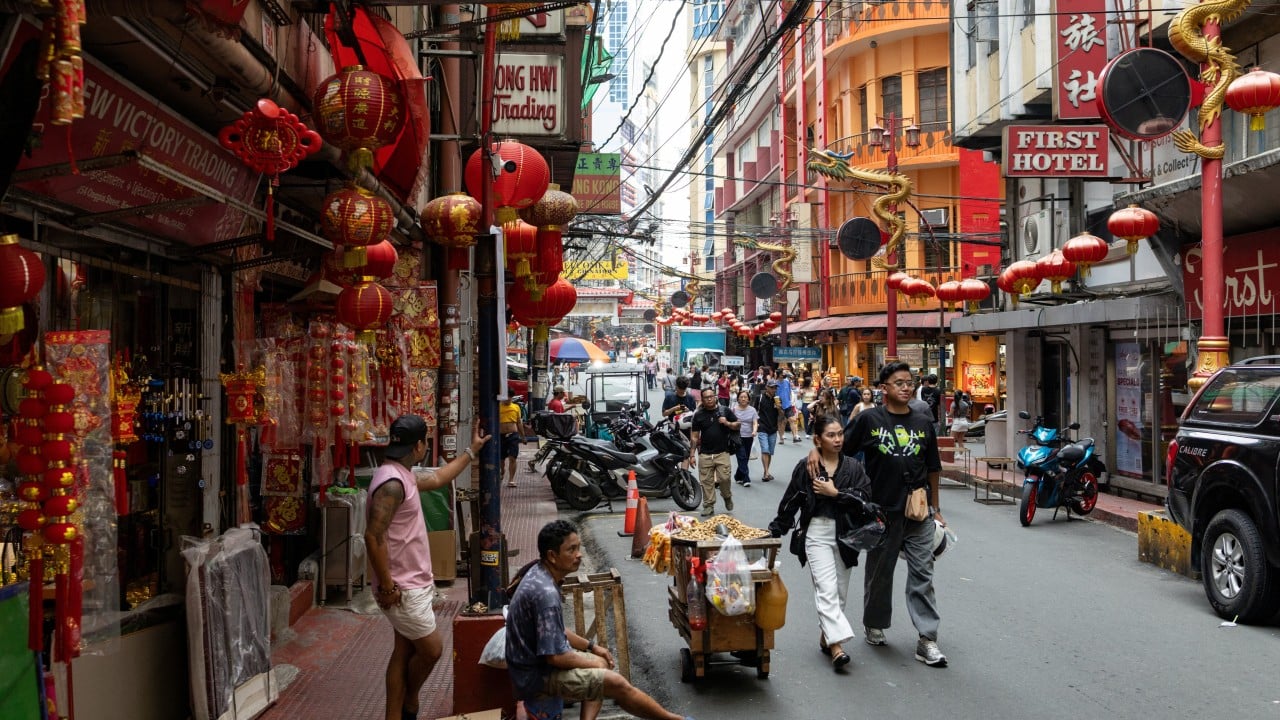
Walk through the ports of Chennai or Mumbai on any given Tuesday, and you can smell the salt, the diesel, the raw ambition of a country trying to build its future before the supply chains snap. Container ships sit bumper-to-bumper at berths, loaded with everything from microchips to pharmaceuticals. Every single one of those ships is a bet on stability. Every single one of those berths is vulnerable to a blockade, a tariff war, or a sudden geopolitical tantrum thrown by a superpower a thousand leagues away.
This is why the emergence of groups like the P4M matters so profoundly. They represent the insurance policy of nations that are too big to push around, yet too committed to multilateral trade to embrace isolationism. They are the countries that actually manufacture the goods, grow the food, and supply the talent that keeps the global engine humming.
Yet, entering this arena is not for the faint of heart. The field is crowded. Every regional bloc, security dialogue, and economic partnership now boasts an acronym that sounds like a password to a secret club. There is AUKUS, the Quad, BRICS, the Indo-Pacific Economic Framework, and a dozen overlapping alphabet soups designed by anxious bureaucrats.
Critics ask a fair question: Does the world really need another acronym? Isn't this just diplomatic clutter?
To answer that, you have to look at what happens when a crisis hits. When a pandemic shuts down borders, or a canal gets blocked by a rogue container ship, the grand global institutions often move with the speed of glaciers. The UN Security Council freezes into a veto-wielding stalemate. The World Trade Organization gets bogged down in procedural quagmires.
In those moments of friction, nations need agile groupings. They need tables where countries of equivalent economic weight and regional influence can pick up the phone, bypass the bureaucratic friction, and hammer out practical solutions.
India’s entry into this middle-power calculus changes the math entirely. For decades, New Delhi practiced a fierce, sometimes stubborn strategic autonomy. It took pride in standing alone, refusing formal alliances, and maintaining a historic distance from Western security architectures. That posture served its purpose during the bipolar decades of the twentieth century.
But the twenty-first century is multipolar, messy, and economically interconnected in ways the architects of the Cold War could never have imagined. You cannot stay completely independent when your technology supply chains run through three different potential adversaries, and your energy security depends on volatile maritime chokepoints.
Independence today does not mean isolation. It means diversification. It means having friends in multiple camps so that no single partner can hold your economy hostage.
Think of it as a neighborhood watch program for nations that live on the fault lines. If a bully moves into the cul-de-sac, the homeowners don't wait for the distant city mayor to notice. They talk to each other. They share security cameras, pool their resources, and make sure that crossing any individual lawn carries a cost too high to ignore.
This is the invisible stakes of the P4M and similar coalitions. It is about writing the rules of the road for the next fifty years before someone else writes them for you.
When we talk about artificial intelligence, semiconductor fabrication, green hydrogen, and undersea fiber-optic cables, we are talking about the invisible infrastructure of modern sovereignty. If India and its peers do not shape the standards for these technologies, they will find themselves perpetually downstream from regulations written in foreign capitals that do not care about the realities of the Global South.
The narrative of international relations has long been written as a tragedy or a thriller. We look for villains, heroes, and inevitable collisions. We love the drama of the falling empire and the rising challenger.
Reality is much quieter than that. It is bureaucratic. It is found in trade agreements negotiated over lukewarm coffee at three in the morning. It is forged in joint naval exercises where sailors from different continents learn to speak the same radio frequencies.
Aarav closes his briefing folder as the sun begins to rise over New Delhi, casting a pale, dusty orange light across the concrete balconies of government offices. Down on the street, the morning traffic is already beginning to roar—a chaotic, beautiful symphony of scooters, buses, and pedestrians carving out a living in a changing world.
He knows the road ahead is fraught with friction. He knows that building consensus among proud, sovereign middle powers is like herding cats across a tightrope. Interests will clash. Ambitions will rub raw.
And yet, the alternative—sitting quietly at the children's table while the giants divide the future—is no longer an option.
The map is being redrawn, stroke by careful stroke, in rooms just like this one.