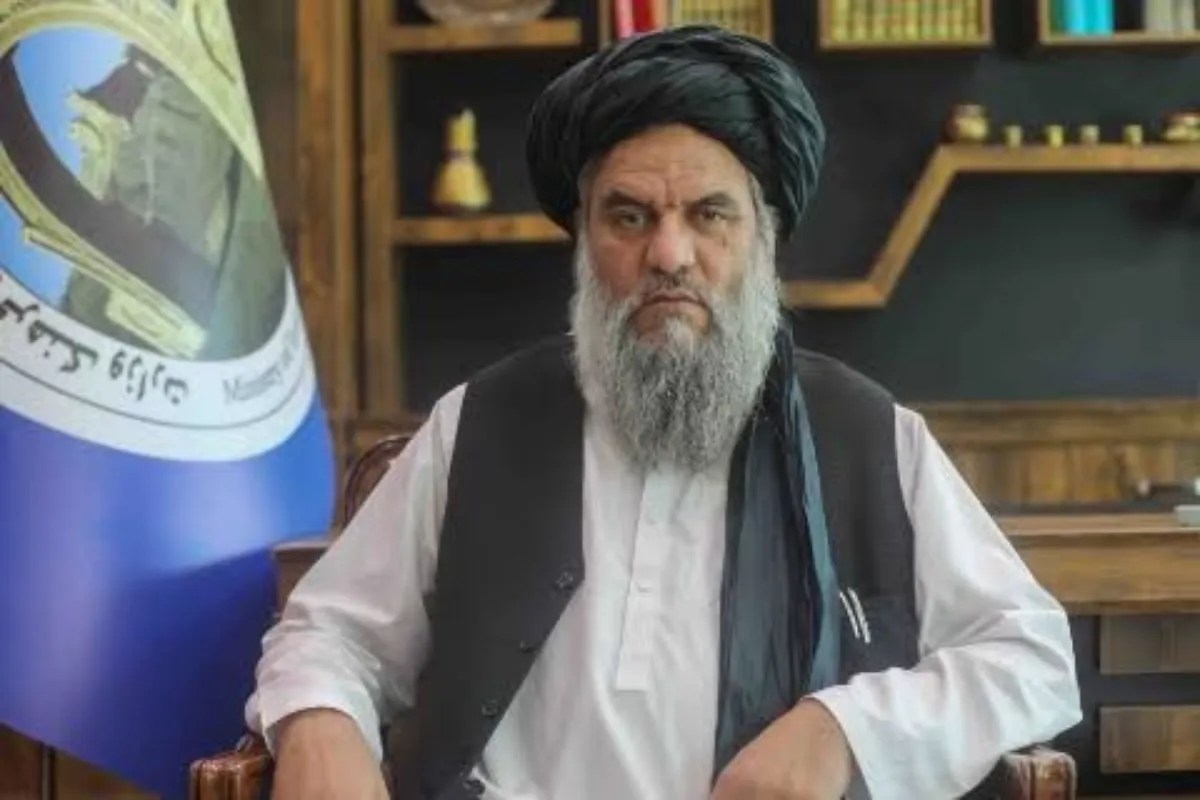
Pakistan's foreign policy is blowing up in its face. For decades, Islamabad played a dangerous double game in Afghanistan, banking on the Taliban to secure its western border. Now, that gamble has completely failed. The tension between these neighbors reached a boiling point when Sirajuddin Haqqani issued a fierce statement that echoes a terrifying reality for Islamabad. The core message is clear. The Taliban minister Haqqani warning that Pakistan will break into pieces isn't just empty rhetoric. It's a sign of a massive geopolitical shift.
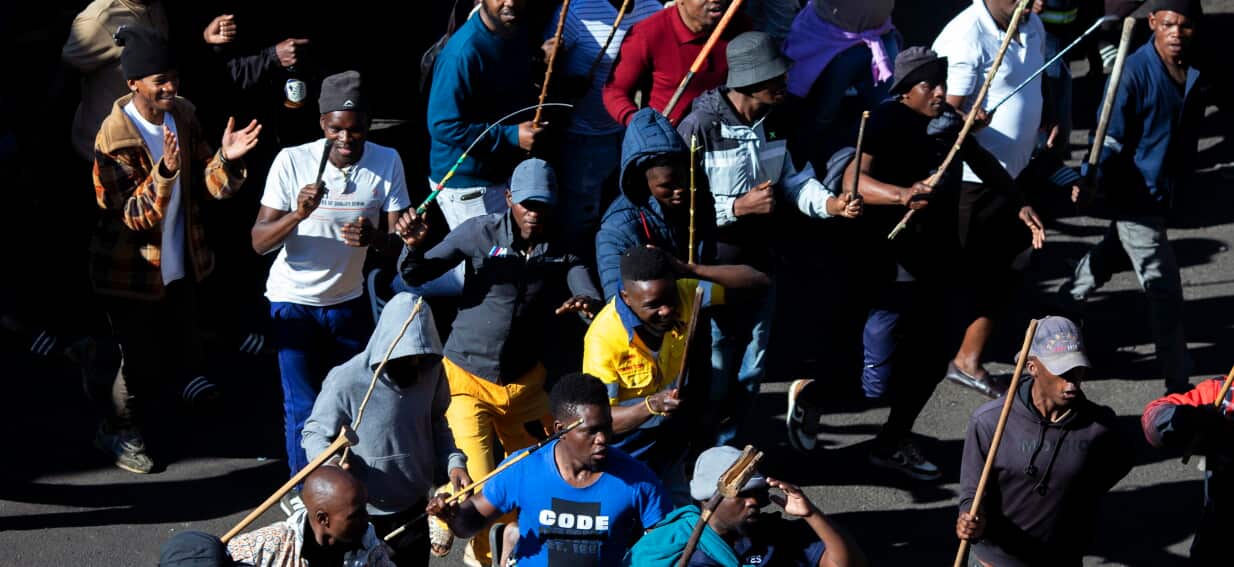
During a massive gathering at the grand mosque in Khost Province, Haqqani openly warned Pakistan against its aggressive military actions. He explicitly mentioned the threat of a national uprising and jihad if Islamabad doesn't stop its cross-border strikes. This isn't the old Taliban that took orders from Rawalpindi. This is an independent, armed regime that knows exactly where Pakistan's weak spots are.
The Taliban Minister Haqqani Warning That Pakistan Will Break Into Pieces
Islamabad loves to blame its internal chaos on foreign hands. But the threat right now is right at their doorstep. When the Taliban's interior minister stands up in Khost and talks about a national uprising, it carries weight. Haqqani network used to be Pakistan's closest ally. They were the crown jewel of the Inter-Services Intelligence asset list. Seeing that exact group turn around and predict the fragmentation of Pakistan is the ultimate irony.
The breaking point didn't happen overnight. It started when the Pakistani military launched airstrikes inside Afghan provinces like Paktia, Khost, and Kunar. Islamabad claimed they were hitting terror camps belonging to the Tehreek-e-Taliban Pakistan. Kabul saw it as a direct violation of their sovereignty. Zabihullah Mujahid even claimed that Taliban forces launched drone strikes against military installations inside Pakistani cities, including Nowshera and Abbottabad. The conflict is getting hot. Fast.
Why the Haqqani Network Changed Its Stance
You have to look at the history to understand why this hurts Pakistan so much. The Haqqani clan always operated as the bridge between the Afghan Taliban and the Pakistani state. They protected Pakistani interests for years.
That bond is dead. Power changes people, and it certainly changed Kabul. Now that they run a country, they don't need a handler. Sirajuddin Haqqani wants to prove his nationalist credentials to the Afghan public. Defending Afghan soil against Pakistani jets is the easiest way to do that.
Internal Fault Lines That Could Fracture Pakistan
Haqqani’s warning hits a nerve because Pakistan is already incredibly unstable. The country's economy is on life support. Inflation is crushing ordinary citizens. Political polarization is at an all-time high. When a foreign leader talks about a country breaking apart, they are looking at existing cracks.
- The Balochistan Insurgency: Armed groups in the southwest are fighting a intense war for independence. They constantly target state infrastructure and Chinese investments.
- The Pashtun Grievance: The tribal areas along the Durand Line feel betrayed by Islamabad. They see the Pakistani military as an occupying force.
- Economic Meltdown: A state cannot hold its provinces together when it can barely keep the lights on.
The Pakistani Taliban capitalizes on all of this. They don't want a seat at the table. They want the whole table. By launching relentless operations in Khyber Pakhtunkhwa, they are slowly carving out proto-states inside Pakistan.
The Failure of the Strategic Depth Policy
For years, Pakistani generals talked about "strategic depth." The brilliant plan was to have a puppet government in Kabul so Pakistan could focus its entire army on the eastern border with India. It sounded great in air-conditioned briefing rooms in Rawalpindi.
It failed completely in the real world. Instead of getting strategic depth in Afghanistan, Afghanistan got strategic depth in Pakistan. The TTP uses Afghan soil as a safe haven, and the Afghan Taliban refuses to hand them over. Pakistani officials frequently complain that Kabul's promises are completely empty. They want verifiable action, but they aren't going to get it.
The Durand Line Dispute
The border itself is a ticking time bomb. Afghanistan has never recognized the Durand Line as an international border. Not under the old republic, and certainly not under the current regime. Taliban fighters regularly tear down the border fencing that Pakistan spent billions of dollars building. They see the fence as an artificial line dividing the Pashtun people.
What Happens Next for the Region
Don't expect this situation to cool down anytime soon. Pakistan's army chief, Asim Munir, is under immense pressure to show strength. He can't look weak in front of his own population. But every time Pakistan retaliates with airstrikes, it pushes Kabul closer to declaring open war.
If a full-scale border conflict erupts, Pakistan will face a multi-front nightmare. They have an active insurgency in Balochistan, a hot border with Afghanistan, and deep economic rot at home.
The era of Pakistan controlling Afghanistan through proxies is officially over. Islamabad needs to realize that its old playbook doesn't work anymore. If they keep pushing military solutions along the border, the dire warnings coming out of Kabul might actually turn into a self-fulfilling prophecy. The smart move right now is to stop the airstrikes, sit down at the negotiating table, and accept that the old power dynamics are gone for good.