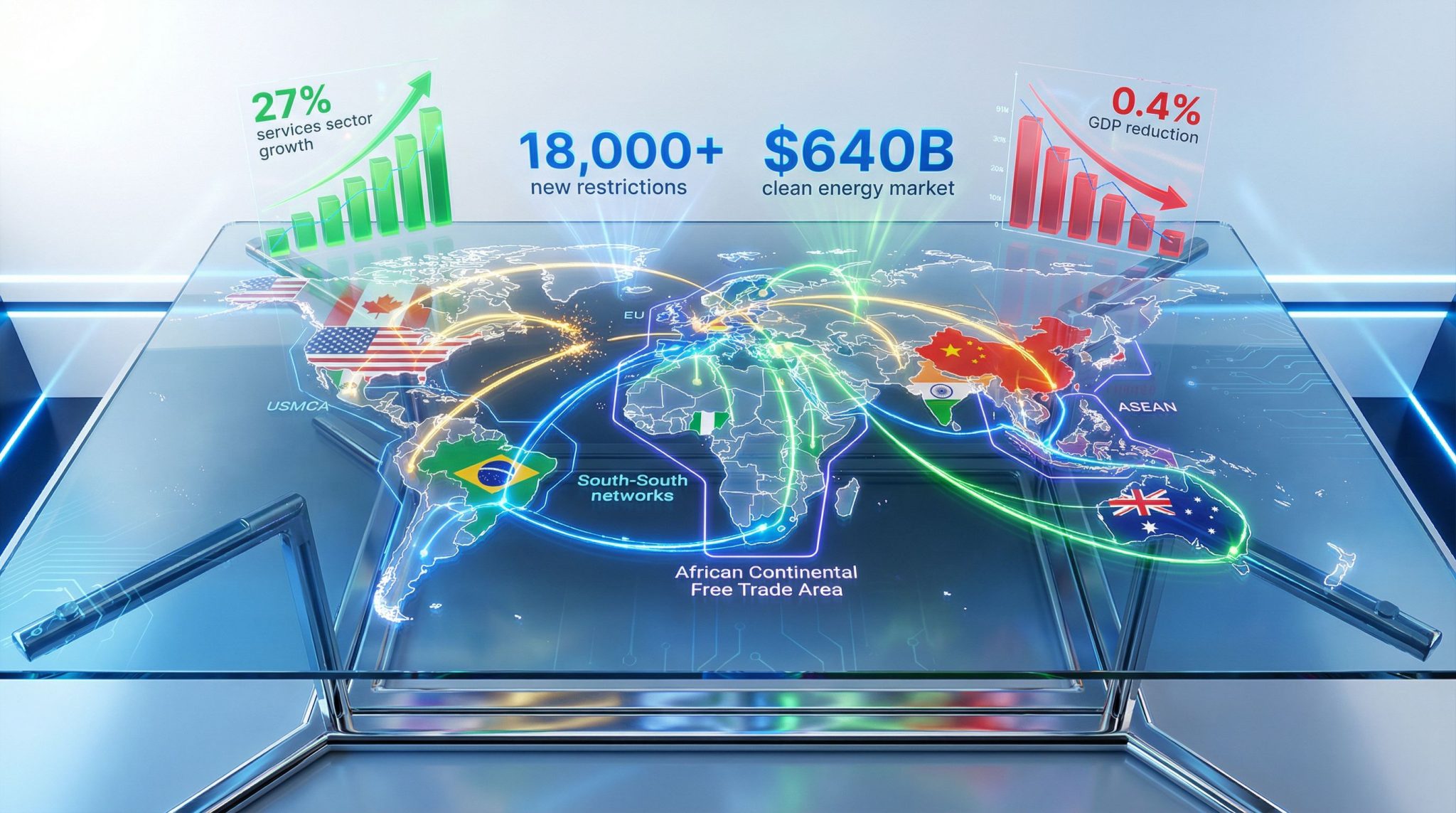
The corporate decision to forgo a tariff refund—a legal mechanism designed to mitigate import costs—represents a departure from standard fiscal optimization. In classical economic theory, firm management is obligated to minimize tax liabilities and maximize shareholder value. When a corporation opts against pursuing a legitimate duty drawback or Section 301 exclusion, it is not acting irrationally. It is engaging in a different calculation: the conversion of fiscal capital into political capital.
The praise an administration directs toward companies that refuse to seek tariff relief is a strategic signal. It frames the company as a partner in the national trade agenda rather than an entity attempting to circumvent protective measures. This behavior requires an analysis of the internal firm mechanics that prioritize political signaling over immediate bottom-line recovery.
The Operational Mechanics of the Tariff Exclusion
To understand the decision to forgo a refund, one must first define the cost structure of obtaining one. A tariff exclusion or a duty drawback claim is not an automated process. It is a highly manual, labor-intensive engagement with the Office of the United States Trade Representative (USTR) or Customs and Border Protection (CBP).
- Administrative Friction: The cost of counsel, trade compliance experts, and the internal labor hours required to document the specific supply chain provenance of every impacted SKU is substantial. For medium-sized firms, the cost of the legal pursuit can rival the value of the refund itself.
- Regulatory Visibility: Submitting an exclusion request acts as a beacon to federal regulators. It invites audit. When a company requests a variance from tariff law, it forces a granular review of its entire customs profile. For firms with complex supply chains—where classification errors are statistically probable—the risk of discovering non-compliance elsewhere outweighs the potential tax savings.
- The Multiplier Effect: Large corporations often operate on thin margins but massive volume. If a firm absorbs a 10-25% tariff without seeking a refund, it signals to the market, investors, and the administration that its margins are robust enough to withstand trade friction. This reinforces the "Strength" narrative, which can defend a stock price more effectively than a one-time refund check.
The Theory of the Political Ledger
Corporations operate under a dual-ledger system. The first is the GAAP-compliant financial ledger, which tracks profit and loss. The second is the political ledger, which tracks social license, regulatory goodwill, and the avoidance of punitive scrutiny.
When an administration creates a public spectacle around companies that "don’t seek refunds," they are manipulating the cost-benefit analysis of the political ledger. The firm that complies with the spirit of the tariff—even if it is legally entitled to relief—purchases "political immunity." This immunity has tangible value in three domains:
- Antitrust and Competition: Firms that align with the administration's trade posture are less likely to be targeted by aggressive regulatory review in other operational areas, such as pricing power or market dominance.
- Procurement Preference: Aligning with the executive branch's trade rhetoric creates a subtle but verifiable advantage in government contracting.
- Media and Investor Sentiment: In the current information environment, the narrative of "patriotic manufacturing" or "domestic commitment" can command a premium in equity valuations.
This is not altruism. It is a calculated trade. The corporation accepts a higher cost of goods sold (COGS) in exchange for a reduction in the "political risk premium" applied to its equity.
Calculating the Decision Threshold
The rational actor model for trade compliance usually follows a standard hierarchy of decision-making. Corporations that deviate from this model are doing so based on an internal risk-adjusted forecast.
The decision to avoid seeking a refund is predicated on a "Threshold Analysis." Management must determine if the following inequality holds true:
$$C_{administrative} + C_{audit_risk} + C_{political_backlash} > R_{expected}$$
Where $C$ represents the costs and $R$ represents the expected refund.
The variable $C_{political_backlash}$ is the most volatile. It is the cost the firm incurs if the public or the administration perceives the company as "gaming the system" or undermining trade policy. When an administration makes a habit of naming and praising those who forgo refunds, the value of $C_{political_backlash}$ spikes for every firm in that sector. This changes the math. What was once a rational, financially prudent decision to seek a refund suddenly becomes a high-risk liability.
The Cost of the Signaling Game
This strategic positioning is not without structural flaws. While the political goodwill is high, the fiscal erosion is permanent.
- The Margin Squeeze: By absorbing tariff costs, firms are effectively subsidizing government trade policy from their own retained earnings. If this persists, capital expenditure (CapEx) for R&D or expansion is inevitably reduced. The long-term cost of this decision is a slower rate of innovation compared to global competitors who are not subject to the same political signaling constraints.
- The Precedent of Dependency: Once a firm establishes the precedent that it can absorb these costs, it becomes difficult to justify future price increases to consumers or shareholders. The market begins to treat the tariff-inclusive price as the new baseline, making it harder to pivot if the political winds shift and the administration changes its stance on refunds.
- The Information Asymmetry: The administration benefits from the optics of "patriotic" corporate behavior without needing to account for the competitive damage. The firm, conversely, hides its internal fiscal stress behind the veneer of political loyalty. This asymmetry benefits the political actor but creates a hidden fragility in the corporate entity.
Strategic Operational Playbook
For firms evaluating whether to seek tariff refunds or accept the political signaling route, the following operational logic must be applied.
First, quantify the "Political Utility." If your firm relies on federal contracts, is subject to active antitrust oversight, or requires expedited regulatory approvals, the value of aligning with the administration’s trade rhetoric is high. In this scenario, the cost of the tariffs is essentially a marketing and lobbying expense. Treat it as such on the books. Do not view the unpaid tariffs as a loss; view them as a fee paid for regulatory access.
Second, decouple supply chain strategy from political rhetoric. If the political utility is low—meaning the firm has minimal interaction with government agencies—the refusal to seek a refund is a failure of management. In this context, there is no reward for the sacrifice. Use the refund mechanism to its maximum legal extent. Pursue Duty Drawback programs and Section 301 exclusions aggressively. Capital that remains on the balance sheet is always superior to capital returned to the Treasury.
Third, maintain operational opacity. If a firm decides to forgo a refund for political reasons, it must communicate this to stakeholders not as a loss, but as a proactive strategic investment in supply chain stability. Reframing the expense as a calculated defense of market position is essential to prevent shareholder erosion.
The final strategic move is to audit the "Political Risk Premium" every quarter. If the administration’s rhetoric softens or if the political benefits (contracts, regulatory relief) fail to materialize, the firm must immediately pivot back to fiscal optimization. The refusal to seek a refund should never be a static policy; it must be a fluid response to the current state of political capital availability. Treat political loyalty as a transient asset, subject to depreciation just like any other resource.