Tariffs were supposed to buy European automakers breathing room. Instead, they pushed Chinese carmakers straight onto European factory floors.
When Brussels slapped steep countervailing duties on electric vehicles imported from China on top of the standard 10% import tariff, legacy brands like Volkswagen, Renault, and Stellantis expected a speed bump. A temporary shield while they cut battery costs and rolled out cheaper EVs. That shield didn't hold for long. By September 2026, Chinese brands had captured 12.7% of Europe's new-car market—up from roughly 1% five years earlier—and even edged past Japanese automakers in overall market share, according to Dataforce figures reported by DirectIndustry. For a closer look into similar topics, we suggest: this related article.
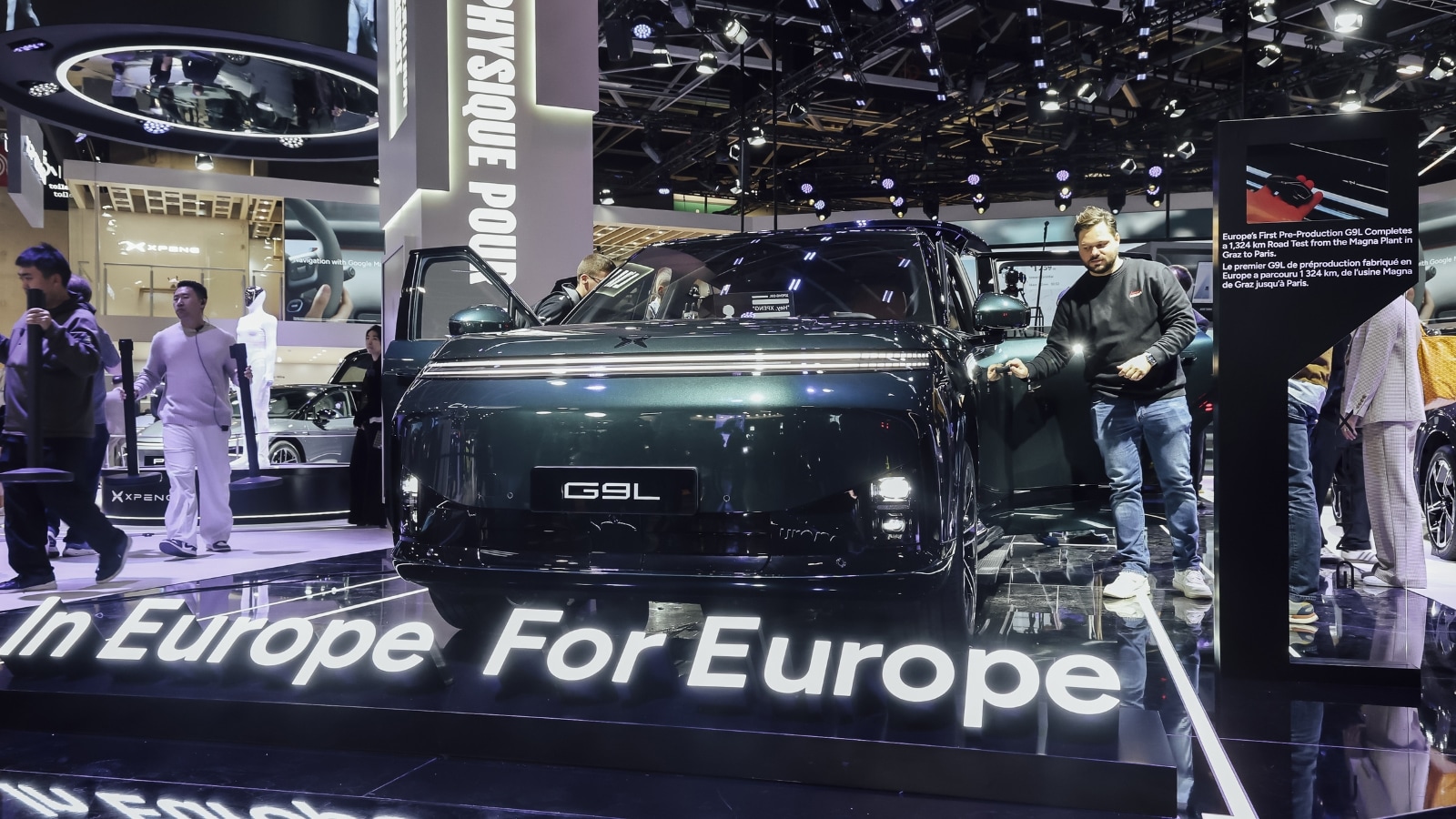
Even more telling is how Chinese carmakers are rewriting their playbook. Rather than fighting tariffs solely from export ships, they're building and partnering inside Europe. Chinese carmakers in Europe are moving past simple import-led expansion into real local assembly, joint ventures, and ground-up plants.
Honestly, that shift changes the entire competitive equation. A tariff on a car built in Shanghai or Ningde stings. A car built in Spain or Hungary—or assembled from semi-knocked-down kits—plays by a different set of rules. To get more context on the matter, extensive coverage can be read at Financial Times.
Why Tariffs Alone Couldn't Slow Chinese Carmakers
If you look closely at what happened after the EU duties hit, the loopholes stand out right away. First, the extra EV duties targeted battery-electric vehicles rather than plug-in hybrids. Chinese brands pivoted hard into PHEVs, which still faced only the standard 10% duty, grabbing roughly a third of Europe's plug-in hybrid market within two years.
Second, cost structure gave Chinese automakers room to absorb pain that would have sunk rivals. Benchmarking firm A2MAC1 has pointed out that Chinese EVs often cost around $11,000 less to build than comparable European models, largely because vertical integration and battery scale are baked into the engineering from day one. When you start with a five-figure manufacturing advantage, a duty surcharge hurts margins without automatically pricing you out of the showroom.
Third, battery exports kept flowing. According to research from Transport & Environment, Chinese battery exports surged dramatically over the first half of the decade, approaching nearly $30 billion in 2025 under ultra-low tariff treatment.
The big miss in the tariff debate: Blocking finished EVs at the port doesn't stop a supply chain that controls battery cells, power electronics, and software integration. It just forces companies to move final assembly closer to the customer.
And let's be fair to European policymakers: they aren't standing still. Proposals like the EU's Industrial Acceleration Act and potential local-content thresholds—such as a 70% local-content benchmark discussed around localized production—aim to tie incentives and market access to genuine European manufacturing. Still, in 2025, S&P Global Mobility data showed that 99.3% of Chinese-brand vehicles sold in Europe were still shipped from China. That gap between current imports and local output is exactly where the next battle is playing out.
Four Ways Chinese Carmakers Are Moving Into European Production
In my experience watching auto supply chains, companies rarely pick just one entry route when crossing an ocean. They test speed, capital risk, and regulatory compliance against one another. Right now, Chinese carmakers are using four distinct paths to build Chinese carmakers in Europe manufacturing clout.
Sharing a Legacy Partner's Line
An idle factory line is expensive for any European automaker. Partnering with a Chinese brand that needs local assembly—or already has a deep commercial tie—can put those lines back to work.
Take Leapmotor, in which Stellantis holds roughly a 20% stake. Leapmotor started producing its B10 at Stellantis's plant in Zaragoza, Spain, with the B05 slated to follow in early 2027. For Stellantis, it utilizes capacity and deepens a partnership that also leans on a Stellantis-led joint venture for distribution. For Leapmotor, it builds local credibility and cuts customs friction.
Shipping Kits for Contract Assembly
When speed matters more than deep localization, contract manufacturing offers a fast bridge. XPeng, for instance, has used Magna Steyr's Graz facility in Austria to assemble vehicles from kits rather than shipping fully built cars.
It's a smart intermediate move, though it comes with a caveat. If regulators tighten rules around true regional value-add, light assembly from imported kits won't always satisfy strict local-content tests.
Reviving Closed Plants Through Joint Ventures
Europe has plenty of political pressure to protect industrial jobs when older plants shut down. Taking over a shuttered site alongside a local partner solves a delicate problem at once.
At the former Nissan factory in Barcelona, Spanish automaker Ebro has teamed up with Chery on vehicle production, targeting higher local-content levels as output scales. This route takes more coordination than contract assembly, yet it wins goodwill from local unions and governments in a way pure imports never will.
Building Greenfield Plants From Scratch
Greenfield construction is the slowest, costliest path—and the clearest signal of long-term commitment. BYD's plant in Szeged, Hungary stands out as the first full-scale car factory a Chinese automaker has built in Europe from the ground up, backed by massive Chinese battery investments across the region such as CATL's facilities.
Even greenfield plants aren't isolated islands. German equipment supplier Dürr, for example, provided over 120 robots for BYD's Szeged paint shop, showing how European engineering firms still capture real contracts even as competition intensifies.
What Legacy Rivals Get Wrong About This Threat
Many legacy executives still frame Chinese rivals as purely "cheap EV" players. Honestly, that view is outdated and dangerous.
First, Chinese automakers aren't competing only on rock-bottom sticker prices anymore. Many push tech-heavy cabins, fast-charging architectures, and aggressive hybrid/EV lineups that appeal to mainstream buyers looking for value rather than a bare-bones penalty box.
Second, some analysts assume European labor and energy costs will erase China's cost advantage once cars are built in Europe. That's only partly true. Even with local assembly, sharing common platforms, scaling battery packs, and bringing high-automation tooling from China keeps unit costs tight—especially compared with legacy brands still carrying heavy legacy overhead and slower software cycles.
Third, there's a misconception that every factory plan moves smoothly. European permitting, grid upgrades, and shifting trade rules create real friction. Look at how quickly automakers adjust timelines or sites when rules evolve, or how assembly plans shift between countries like Poland and Spain as trade pressures bite. Building in Europe isn't a magic button; it's a multi-year grind.
What This Means for Legacy Automakers, Suppliers, and Buyers
Legacy carmakers face a two-front squeeze. On one side, Chinese brands are localizing assembly to blunt tariffs. On the other, European buyers are increasingly cross-shopping Chinese models—both electric and plug-in hybrid—without assuming they're second-rate.
For Tier-1 and Tier-2 European suppliers, the picture is mixed rather than purely bleak. Losing market share to lower-cost rival component makers hurts, yet supplying robotics, stamping lines, chassis parts, and localized components to new European plants creates fresh order books.
And if you're shopping for a car in Europe over the next couple of years, pay attention to where a model is actually built and how its warranty and service network is backed. Locally assembled models can shorten delivery times and reduce tariff exposure, while established dealer or joint-venture networks often make after-sales support much less of a gamble.
Practical Next Steps If You Track or Compete in Auto
- Map local-content rules, not just tariff headlines: Watch EU industrial policy and local-content thresholds closely, since assembly location and regional parts share increasingly determine cost and subsidy eligibility.
- Audit exposure by powertrain, not just BEVs: Check where competitors are gaining share in plug-in hybrids and hybrids, where tariff rules and buyer demand behave differently from pure EVs.
- Target localized supply chain RFQs early: If you run an industrial equipment, logistics, or components business in Europe, engage new joint ventures and greenfield sites well before full volume ramps.
- Compare total ownership costs before buying: When evaluating any new-entrant EV or PHEV, weigh upfront price savings against depreciation, insurance quotes, software updates, and local service bay availability.


