The water in the Victoria Harbour transition zone doesn’t look like a classroom. It is a churning, slate-gray expanse, smelling of salt, diesel, and the ancient secrets of the silt. Below the surface, visibility drops to a few hazy feet. This is the nervous system of global trade. Every hour, massive container ships—the size of horizontal skyscrapers—plough through these lanes, carrying everything from the microchips in your pocket to the grain in your pantry.
If these lanes choke, the world stutters.
Most people see the ocean as a void between points A and B. They assume the safety of these passages is the domain of grizzled sea captains or billion-dollar government agencies. They are wrong. In the humid heat of Hong Kong, a group of teenagers is proving that the future of maritime security isn’t just about heavy steel and naval might. It is about data. It is about the quiet, persistent pulse of sensors designed in high school labs.
The Weight of a Single Degree
Consider a hypothetical student named Kai. He isn’t interested in the romance of the high seas. He cares about the pH levels of the water and the way temperature fluctuations affect the hull integrity of a cargo carrier. To the average observer, a 0.5-degree shift in water temperature is a footnote. To Kai and his peers, it is a variable that can dictate the rate of biofouling—the accumulation of microorganisms, plants, and animals on wet surfaces.
When barnacles and algae colonize the bottom of a ship, they create drag. Drag requires more fuel. More fuel means more carbon emissions and higher prices at your local grocery store. It is a domino effect that starts with a microscopic larvae and ends with a global economic tremor.
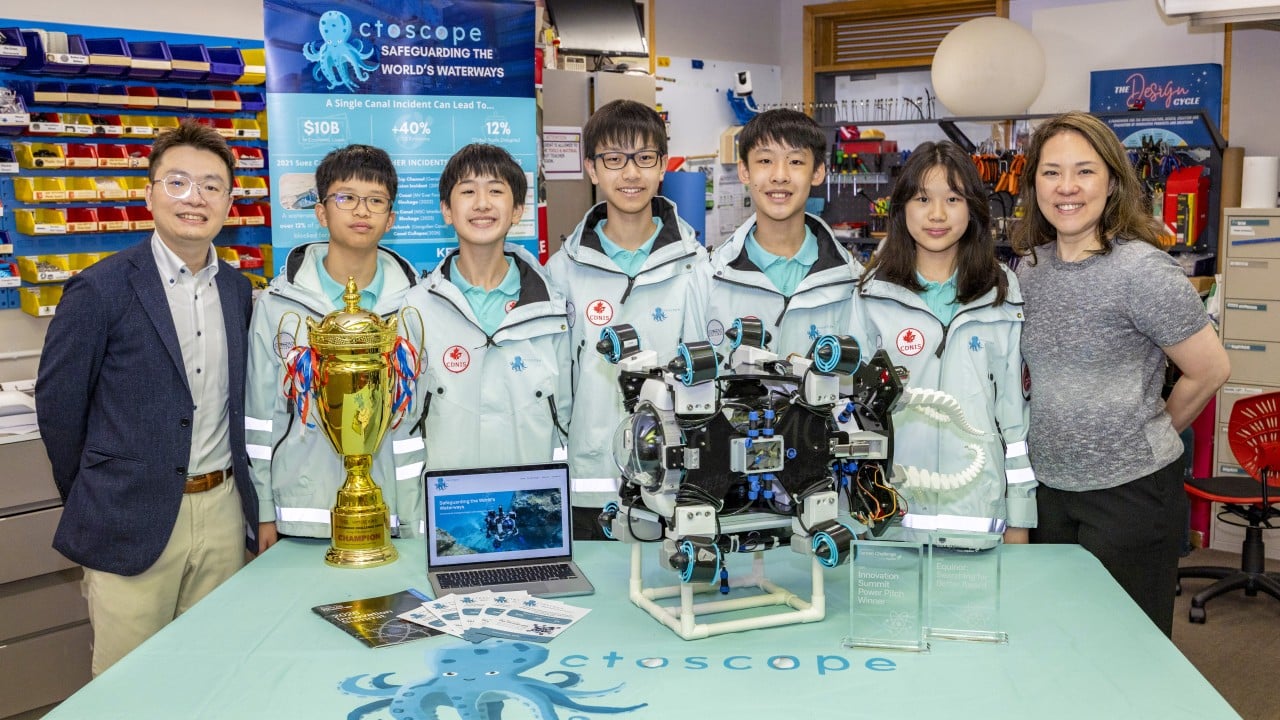
The students are part of an ambitious initiative to deploy autonomous underwater vehicles (AUVs) and static sensor arrays across critical bottlenecks. They aren't just building hobbyist kits. They are engineering systems that must survive the crushing pressure and corrosive salt of one of the world's busiest ports.
The technical challenge is immense. Saltwater is a nightmare for electronics. It eats through seals. It blocks radio signals. To communicate with their devices, these teens have to master acoustic telemetry—sending data through the water using sound waves, much like a whale calls to its pod. When a sensor successfully pings back a reading from thirty meters down, it isn't just a grade on a test. It is a proof of concept for a decentralized monitoring network that could change how we protect the blue economy.
Why the Invisible Matters
We live in an age of fragility. We saw it when a single ship wedged itself into the banks of the Suez Canal, halting billions of dollars in trade and sending shockwaves through every manufacturing hub on the planet. That event pulled back the curtain on a terrifying reality: our global lifestyle depends on a few narrow strips of water.
The Hong Kong student teams are focusing their energy on "Subsurface Awareness." While satellites can track the position of every ship on the surface, the world beneath the waves remains largely a black box. What is the current doing at the mouth of the Pearl River Delta? How is the sediment shifting near the anchoring grounds?
By dropping custom-built sensors into these depths, these teenagers are mapping the "underwater weather."
They use low-cost, 3D-printed components and open-source microcontrollers. This is a deliberate choice. High-end military sensors cost hundreds of thousands of dollars. They are rare and precious. But if you can build a reliable sensor for the price of a smartphone, you can deploy thousands of them. You can create a "smart" shipping lane that reports its own health in real-time.
The Human Element in the Machine
It is easy to get lost in the specifications of brushless motors and lithium-polymer batteries. But walk into one of these labs and the smell hits you: burning solder and old coffee. You see the frustration on a girl’s face when her waterproof seal fails for the fifth time in a pressure tank. You see the callouses on their hands from hauling equipment onto small research vessels.
This isn't about being a "tech prodigy." It is about the grind.
These students are learning a hard truth that many CEOs forget: technology is only as good as the human intent behind it. They are navigating the complex intersection of environmental science and international logistics. They have to understand the migratory patterns of local dolphin populations just as well as they understand the draft requirements of a Triple-E class container ship.
One student recently described the ocean not as a resource to be exploited, but as a patient to be monitored. This shift in perspective is the real breakthrough. While the older generation views maritime lanes through the lens of geopolitics and dominance, these teens view them as a shared biological and economic ecosystem.
Resilience in the Silt
The work is often thankless. Much of the data collected is mundane. Hours of "normal" readings are interrupted only by the occasional spike or anomaly. But in those anomalies lies the value. A sudden change in salinity might signal an illegal discharge of ballast water. A strange vibration picked up by a hydrophone might indicate a failing engine on a nearby vessel before the crew even realizes there is a problem.
They are building a digital twin of the harbour.
Imagine a virtual map where every temperature gradient, every current, and every obstacle is rendered in high definition, updated by a swarm of student-built drones. This isn't science fiction. It is happening in the workshops of Hong Kong secondary schools. They are creating a level of transparency that has never existed in the shipping industry.
Transparency breeds accountability. When the data is public and peer-reviewed by a generation that has to live with the consequences of climate change, the "accidental" spills and "unforeseen" environmental impacts become much harder to hide.
The Silent Watch
Late at night, when the neon lights of Tsim Sha Tsui reflect off the water, the harbour feels invincible. It looks like a machine that will never stop. But the teens know better. They know the fragility of the systems we take for granted.
They are not waiting for a government mandate to save the oceans. They are not waiting for a massive corporation to innovate. They are simply building. They are diving into the murky, difficult parts of the world and bringing back clarity.
One day, you will buy a product that arrived on time because a sensor, designed by an eighteen-year-old in a cramped school lab, alerted a captain to a shifting sandbank or a dangerous current three days before it became a crisis. You won't know his name. You won't see the sensor. But the world will keep moving because someone was watching the depths.
The water remains dark, cold, and indifferent. But beneath the surface, a thousand tiny lights are beginning to flicker, held steady by the hands of the next generation.