The High-Priced Illusion of Modernization
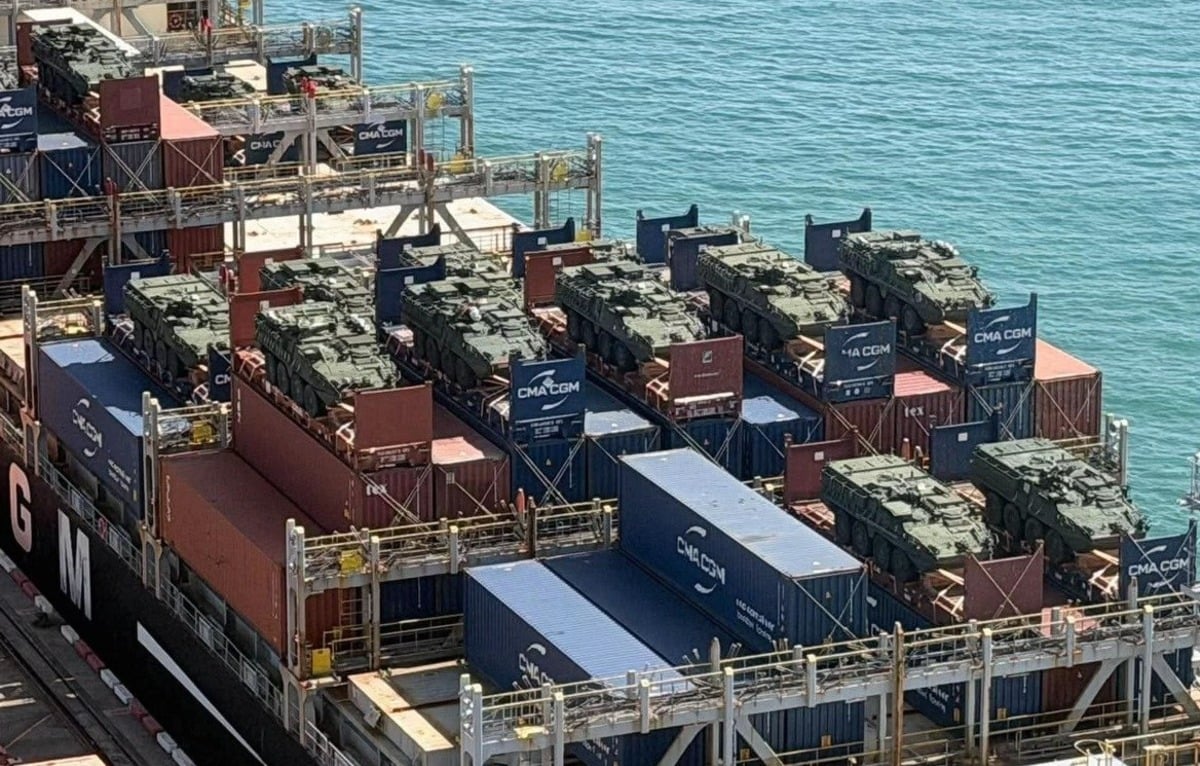
Defense media loves a good delivery photo. A pristine cargo ship docks at Sattahip, ramps drop, and eight-wheeled Stryker armored vehicles roll out under the blinding tropical sun. Headlines celebrate Thailand’s military "modernization" and its deepening strategic alignment with Washington.
It is a clean, comforting narrative. It is also entirely wrong.
Parading imported light armor across paved tarmac is easy. Preparing for the harsh reality of Southeast Asian territorial defense is not. Thailand’s continued acquisition of American-made Stryker infantry carrier vehicles represents a classic military procurement trap: buying expensive, logistically heavy hardware designed for a completely different war, in a completely different terrain, against a completely different enemy.
The defense establishment calls this strategic upgrading. In reality, it is a multi-million-dollar exercises in theater.
The Wrong Weapon for the Wrong Map
The Stryker was born out of a specific late-1990s US Army operational requirement: the need for a medium-weight force that could deploy anywhere on earth within 96 hours to fight asymmetrical counterinsurgencies or rapid expeditionary actions. It was engineered around paved highways, desert flats, and open European plains.
Thailand is not the Iraqi desert. It is not the Suwalki Gap.
The Physics of Tropical Mud
A fully loaded Stryker ICV weighs upwards of 19 to 20 tons. Put eight rubber tires under 40,000 pounds of steel and composite armor, and you get an impressive machine on an interstate. Place that same machine in the sticky, saturated clay of the Chao Phraya River Basin during monsoon season, and you get a very expensive stationary target.
- Ground Pressure Dynamics: Tracked vehicles distribute their weight over a massive contact patch. Eight-wheeled vehicles concentrate immense force onto small contact points. When the rain falls, wheel ruts turn into trenches, and wheels lose traction fast.
- Terrain Constraints: Over 30% of Thailand’s topography consists of dense jungle, mountain ranges, or flooded paddy fields. A wheeled armored vehicle is functionally tethered to established road networks in these zones.
- The Chokepoint Problem: If an armored column is restricted to asphalt roads because the surrounding terrain will swallow it whole, you have not bought mobility. You have bought a predictable convoy that any low-cost drone operator can spot and destroy.
I have spent years analyzing force-structure investments across Southeast Asia. Time after time, air-conditioned procurement offices sign off on high-tech European or American platforms because they look formidable on paper. Then, six months into field deployment, those same platforms sit parked in motor pools because the local geography renders them operational liabilities.
The Drone Paradox: 1990s Steel vs. 2020s Precision
The most glaring flaw in praising these shipments is the total disregard for how land warfare has evolved over the past three years.
We are watching light armor get torn to pieces on modern battlefields by $500 commercial drones carrying shaped charges. The Stryker's top armor is notoriously thin. An operational unit relying on basic Strykers without heavy active protection systems (APS), electronic warfare (EW) jamming suites, and anti-drone cages is running a death trap.
+------------------------------------------------------------------+
|                   THE MODERN SURVIVABILITY GAP                  |
+------------------------------------------------------------------+
| Traditional Focus:  [Heavy Hull Armor] --> Deflects Direct Small Arms|
| Modern Reality:     [FPV Drones / EW]  --> Attacks Top & Angles  |
| Procurement Reality:[Imported Base Model] --> Lacks Native EW/APS|
+------------------------------------------------------------------+
To make a Stryker survivable against today's threats, you must bolt on millions of dollars in secondary electronics, drone-slaying remote weapon stations, and reactive armor. That adds weight. Added weight ruins suspension systems, bogs down engines, and further degrades off-road performance.
Thailand is paying premium prices for 25-year-old operational design concepts, right at the exact historical moment those concepts are being rendered obsolete by cheap, asymmetric technology.
The Logistics Nightmare Nobody Talks About
Buying a foreign armored vehicle is not a one-time transaction; it is a decades-long mortgage paid in spare parts, proprietary software updates, and contractor support.
When a country imports small batches of American armor while simultaneously maintaining Chinese VT-4 main battle tanks, Ukrainian BTR-3s, and older Western platforms, it creates a logistical nightmare.
The Maintenance Friction
- Supply Chain Dependencies: Every specialized bolt, transmission component, and digital module for a US-made vehicle comes with ITAR restrictions, export approvals, and long shipping timelines.
- Interoperability Myth: Mixing American, Chinese, and European platforms inside the same national defense framework creates a fractured supply chain. A mechanic trained on Chinese diesel engines cannot simply turn a wrench on a Stryker's Caterpillar C7 engine without entirely different diagnostic tools and supply lines.
- Fuel and Maintenance Costs: Operating wheeled armor built to Western standards requires high-grade fuel, specialized lubricants, and meticulous preventative maintenance. In a prolonged conflict, supply lines break down long before weapons run out of ammunition.
Imagine a scenario where a regional crisis erupts, supply routes are contested, and a forward battalion needs replacement drive shafts for a specialized Western vehicle. The lead time isn't days—it's months. A platform that cannot be maintained locally in the middle of a conflict is not an asset; it is a temporary loaner.
The Real Winner Isn't the Thai Infantry
If the tactical math does not add up, why does this transaction keep happening?
Because defense procurement is rarely about tactics. It is about diplomacy, posturing, and signaling.
For Washington, shipping these vehicles secures long-term military ties, locks in maintenance contracts, and keeps foreign defense dollars flowing to domestic production lines. For regional military leadership, acquiring prominent Western hardware signals prestige and international standing.
It looks fantastic in parades. It reassures urban populations that the armed forces possess world-class hardware. It satisfies political allies on both sides of the Pacific.
The only entity that loses in this equation is the infantry soldier tasked with fighting inside a 20-ton rubber-tired box trapped on a muddy, single-lane road while quadcopters hover overhead.
What Actual Strategic Modernization Looks Like
True regional defense does not come from importing heavy legacy steel from Western contractors. If defense planners were serious about counter-preponderance and territorial defense in Southeast Asia, they would abandon the lure of status-symbol armor and pivot completely.
The Decentralized Defense Model
- Massive Investment in Loitering Munitions: Instead of spending tens of millions on a handful of infantry carriers, direct those funds into thousands of locally manufactured, networked strike drones.
- Man-Portable Anti-Armor Networks: Equip light, agile, highly mobile infantry units with advanced anti-tank guided missiles (ATGMs) and MANPADS. A four-man team on off-road utility vehicles armed with modern optics and ATGMs can neutralize an entire mechanized column at a fraction of the cost.
- Local Industrial Capability: Stop buying finished foreign products that lock you into foreign supply chains. Build the domestic industrial base to produce, repair, and modify simple, rugged, terrain-appropriate vehicles locally.
A country with a terrain dominated by jungles, rivers, and mountains does not need to copy the force structures of a superpower built for global power projection. It needs to make invidious land warfare so costly, unpredictable, and lethal that no adversary would ever consider crossing its borders.
Continuing to parade imported American Strykers through the streets is not a sign of a forward-thinking force. It is a sign of a defense strategy fundamentally trapped in the past.


