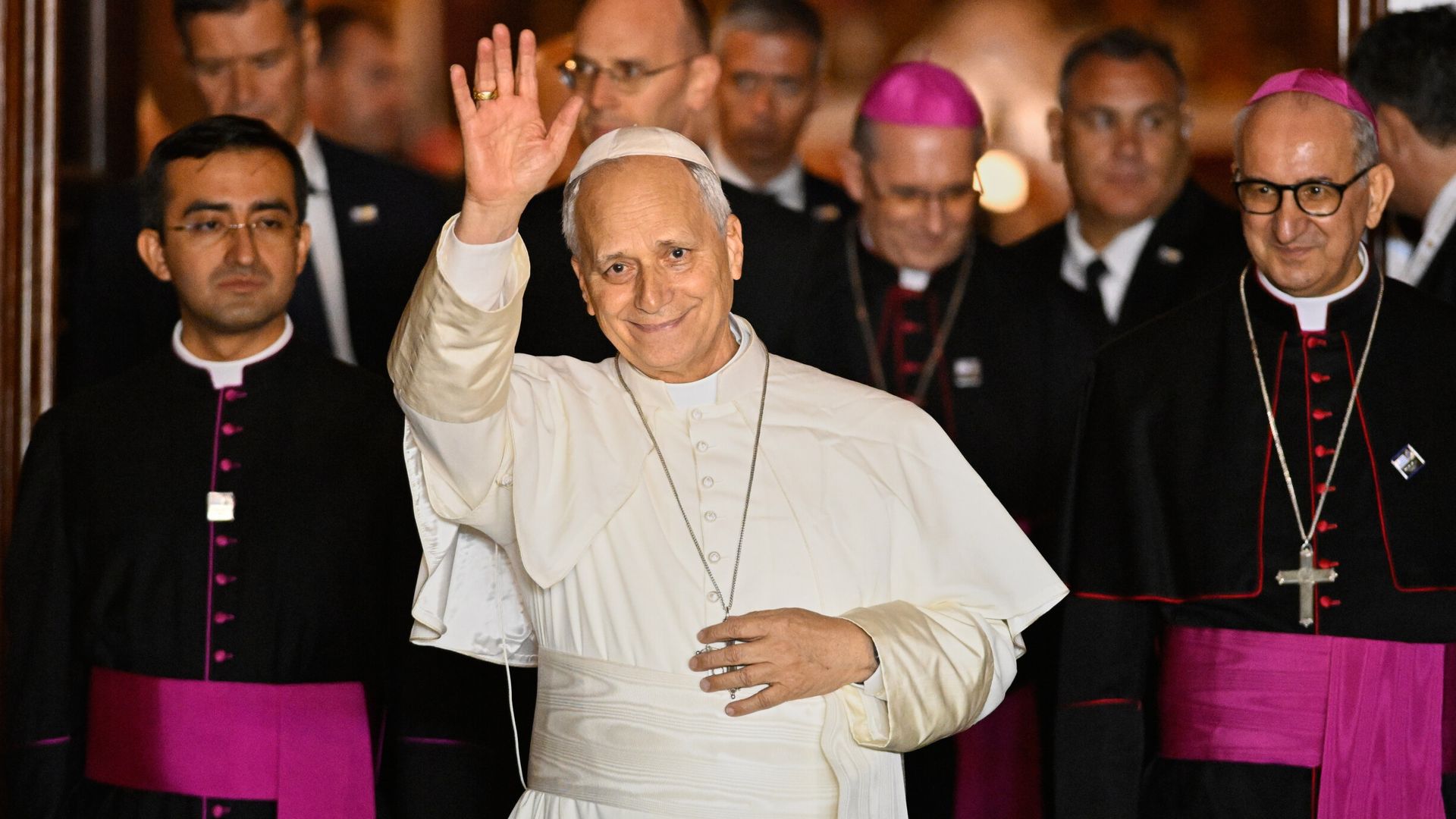
Heat rises off sun-baked pavement before sunrise, carrying the sharp scent of roasted corn, diesel exhaust, and damp wool. Thousands of people are already pressed against steel barricades, gripping handmade banners, faded rosaries, and smartphones raised like candles in the dark. A standard wire report would call this a routine crowd welcoming Pope Leo as he begins a Latin America tour.
Waiting. Expanding on this theme, you can also read: The Ghost Vaults of Asunción and the President Who Watched Them Empty.
That is the real work of the morning. Hours before any motorcade turns a corner, strangers share water pouches, trade news about rising grocery bills, and adjust their weight on aching calves as the sky shifts from bruised indigo to pale gold. I have stood behind enough metal crowd barriers in crowded plazas—from Lima to Buenos Aires and across bustling city avenues—to know that a crowd is never a single voice. It is hundreds of private grievances, quiet prayers, and sudden bursts of hope colliding in the open air.
To make sense of what happens when Pope Leo steps onto Latin American soil, we have to look past the ticker tape and security perimeters. Why do thousands still stand shoulder to shoulder in a region where church attendance has shifted dramatically over the last three decades? Why does a papal visit still command front-page urgency across countries wrestling with inflation, gang violence, political polarization, and climate strain? Observers at The New York Times have provided expertise on this situation.
The Crowd Behind the Headlines
Numbers flatten human beings. A headline might say "thousands turn out," turning flesh-and-blood neighbors into a statistic that fits neatly inside a morning broadcast. Yet every person leaning over a guardrail carries a history that no camera lens can zoom in on.
To make this concrete, consider a hypothetical character named Lucía, a bus driver and part-time caregiver in a mid-sized South American city. This scenario is hypothetical, built to illustrate pressures that real families across the region face every week. Lucía wakes at 4:00 a.m., leaves a pot of beans simmering for her mother, and rides two buses just to claim a spot three rows back from the street. She is not there because she agrees with every church teaching or every Vatican decree. She is there because her neighborhood has felt abandoned by institutions that promise protection and deliver speeches instead.
Now think about another hypothetical figure, Mateo, a twenty-two-year-old warehouse worker whose cousin left for North America last spring. This too is a hypothetical portrait, drawn from patterns visible in neighborhoods from Central America to the Southern Cone. Mateo grew up watching friends drift away from weekly Mass, drawn instead to evangelical storefronts, secular life, or sheer exhaustion after twelve-hour shifts. Still, when the papal route passes two miles from his apartment, Mateo takes half a day off without pay. Why? Because even skeptics sometimes want to see if a global moral voice has the courage to name the pain in their streets.
I will admit something candidly: watching global religious tours from afar can feel confusing, even cynical. Critics ask whether large public gatherings change anything once the banners come down and the television trucks pack up. Doubts like that are not foolish. Crowds disperse. Politicians co-opt symbols. Economic pressures return on Monday morning.
Why Latin America Still Matters at the Center of the Story
Latin America is not a quiet backwater on the papal map. Historically, it has held a massive share of the world's Roman Catholics, while simultaneously experiencing decades of intense religious competition, rapid urbanization, and deep social inequality. When a pope begins a Latin America tour, every stop acts like a magnifying glass over the continent's fault lines.
Consider what happens next when a pontiff speaks about dignity, labor, migration, or corruption in a plaza filled with working people. Words spoken in Rome can sound abstract, filtered through diplomatic cables and theological commentary. Spoken in a crowded avenue under a harsh sun, those same words land next to real shortages, real fear, and real family separations.
Think of it like a tuning fork struck beside a cracked glass. You can see the vibration across the room, and you can tell right away whether the note rings true or falls flat. For decades, Latin Americans have watched leaders arrive with grand promises and leave behind photo albums. People who show up by the thousands have sharp radar for hollow theater. They know the difference between comfort and flattery.
The Invisible Stakes Beneath the Cheer
When thousands gather to greet Pope Leo, the visible drama is the wave from a vehicle, the roar of applause, the sea of flags. The invisible stakes sit much lower, inside ordinary households making impossible choices.
- Economic strain: Rising costs for food, transport, and housing turn everyday survival into a constant calculation, making any message about human dignity feel urgent rather than theoretical.
- Public security: Communities living under the shadow of extortion, street crime, or cartels look for signs of solidarity from institutions that still hold moral weight.
- Generational divide: Older relatives often cherish tradition and ritual, while younger relatives question authority or look for community in smaller, more personal spaces, creating quiet friction around the dinner table.
- Civic exhaustion: Repeated political scandals leave many citizens distrustful of state power, pushing people to search—sometimes warily—for voices outside partisan politics.
Notice how none of these stakes fit neatly into a single policy memo. A mother holding a child on her shoulders is not debating macroeconomic theory. A retired teacher standing near the front is not writing a sociological paper. Both are trying to hold onto a sense of belonging in a world that often feels indifferent.
A Hypothetical Afternoon Along the Route
Suppose the motorcade slows near an intersection lined with small shops, mechanics' garages, and street vendors. This scene is hypothetical, meant to trace the emotional arc that unfolds along a real route when anticipation finally meets arrival.
For hours, the crowd has been a patchwork of chatter and impatience. Someone faints near the front; volunteers pass forward bottles of water and pull a folding chair into the shade. A teenager jokes about how long his legs have been locked in place. Then a ripple moves down the street—a change in siren pitch, a surge of cameras, a sudden hush followed by a wall of sound.
In that brief window, the mood shifts from waiting to witness. People lift children higher so they can see over shoulders. Hands reach out without expecting to touch anything. For a few minutes, strangers who arrived carrying separate burdens feel bound together by a shared moment of attention.
Then the vehicle passes. The roar fades down the avenue. Within minutes, vendors are folding cardboard boxes, police units are reopening lanes, and people are walking back toward bus stops and train stations.
What Remains After the Crowd Goes Home
The real test of any tour does not happen on the barricade. It happens on the commute home, at the kitchen sink, and in the quiet decisions people make next week.
A crowd does not solve structural poverty or heal decades of distrust in an afternoon. Anyone claiming a single visit fixes deep social wounds is selling a fairy tale. Yet dismissing the gathering as mere spectacle misses how human beings actually endure hard times. Shared presence matters. Being seen matters. Even a fleeting moment of collective hope can give someone enough strength to face another week of hard work.
When Pope Leo begins a Latin America tour and thousands turn out along the route, the story is never just about the man in white. It is about the thousands standing in the sun, bringing their unvarnished lives to the edge of the street and asking—quietly or loudly—whether anyone truly sees them.
A single voice echoes off concrete walls and fades into traffic, yet the ache in those thousands of footsteps stays behind in the pavement.