Mass production broke something important. Walk into any major home goods retailer and you'll find identical, factory-made textiles pumped out by automated looms in a matter of seconds. They're cheap. They're disposable. They're also completely devoid of a human soul.
That is why traditional artisan networks are fighting back. You might also find this related coverage interesting: The Woman Who Kept Her Childhood Alive for a Century.
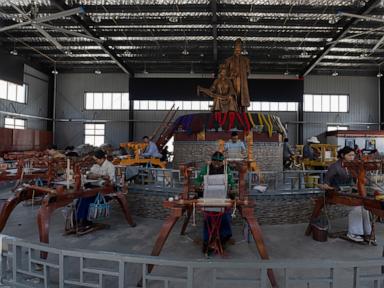
Up in the high-altitude plateau, a Tibetan weaving cooperative is quietly proving that centuries-old craft can survive the modern economy without selling out its heritage. You've probably seen mass-market rugs styled to look like vintage Tibetan pieces. They miss the point entirely. Real Tibetan weaving isn't just about throwing wool onto a loom. It's a grueling, highly skilled discipline tied directly to nomadic survival, Buddhist symbolism, and community resilience.
Let's look at how these cooperatives operate, why the standard fast-decor model ruins authentic craft, and what you actually support when you buy directly from artisan guilds. As discussed in latest coverage by Refinery29, the results are notable.
The Reality of High-Altitude Craftsmanship
Let's clear up a massive misconception right away. People think traditional weaving is a gentle, leisurely village hobby. It isn't. Working with raw Tibetan sheep's wool is physically punishing.
The wool harvested from native sheep breeds is packed with natural lanolin. This oil protects the animals against freezing mountain winters, but it means the raw fleece must be washed, carded, and spun entirely by hand before a single knot gets tied. It takes incredible hand strength and years of muscle memory to master the unique Tibetan knotting technique.
Cooperatives change the economic math for these artisans. Historically, individual weavers sold their rugs to local traders for pennies, trapped in cycles of debt. By organizing into cooperatives, these makers pool resources, buy raw materials in bulk, and dictate fair prices for their labor.
You aren't just buying a floor covering. You are funding healthcare funds, retirement safety nets, and local apprenticeships for teenagers who might otherwise have to leave their ancestral villages for low-wage factory jobs in crowded cities.
Preserving Ancient Patterns Without Turning Into a Museum
Museums preserve the past by putting it behind glass. Cooperatives preserve the past by keeping it alive in living rooms.
The iconography woven into these textiles is deeply intentional. You'll see snow lions, endless knots, fierce dragons, and auspicious geometric symbols. Each motif carries centuries of cultural weight. When a younger weaver sits down at the vertical wooden loom, an older master teaches them not just the stitch count, but the meaning behind every single line of colored yarn.
Natural dyes remain a cornerstone of this work, too. While synthetic dyes are faster and cheaper, many cooperatives insist on using traditional roots, leaves, and minerals to achieve those deep, muted earthy tones. Madder root gives a rich red. Walnut husks yield deep browns.
This commitment to organic materials means every single batch of yarn has minor variations. That irregularity is the hallmark of genuine hand-spun textiles. Factory looms hate imperfection. Tibetan weavers embrace it because nature isn't uniform.
How to Spot Authentic Tibetan Work
The global market is flooded with knockoffs. Manufacturers in other countries frequently stamp the "Tibetan" label on cheap, synthetic carpets made with acrylic yarn and chemical dyes.
If you want to buy ethically and authentically, you have to look for specific markers:
- Weight and Density: Authentic hand-knotted wool rugs are heavy. They use a unique looping method around a metal rod that creates a dense, durable pile.
- The Lanolin Test: Real highland wool retains a subtle, clean, natural scent of lanolin. It feels slightly oily to the touch and naturally repels dirt and moisture.
- Maker Transparency: Legitimate cooperatives proudly name their artisan groups, workshops, or regional collectives. If a seller can't tell you where or by whom the textile was made, walk away.
Buying a genuine piece from a cooperative costs more upfront than grabbing a synthetic rug off a big-box shelf. But that rug will last for decades, often outliving the people who bought it, aging gracefully while cheap alternatives end up in landfills within five years.
Supporting the Next Generation
Keeping this tradition alive isn't about romanticizing the past. It's about economic self-determination.
When young people see that master weaving can pay a dignified salary, they stay. They teach their children. They adapt traditional patterns for modern architecture without losing their soul.
You don't need to travel to the Himalayas to participate in this economy. Seek out direct-trade platforms, verify the sourcing of your home textiles, and prioritize human-made quality over cheap convenience. Support the workshops keeping the looms moving.