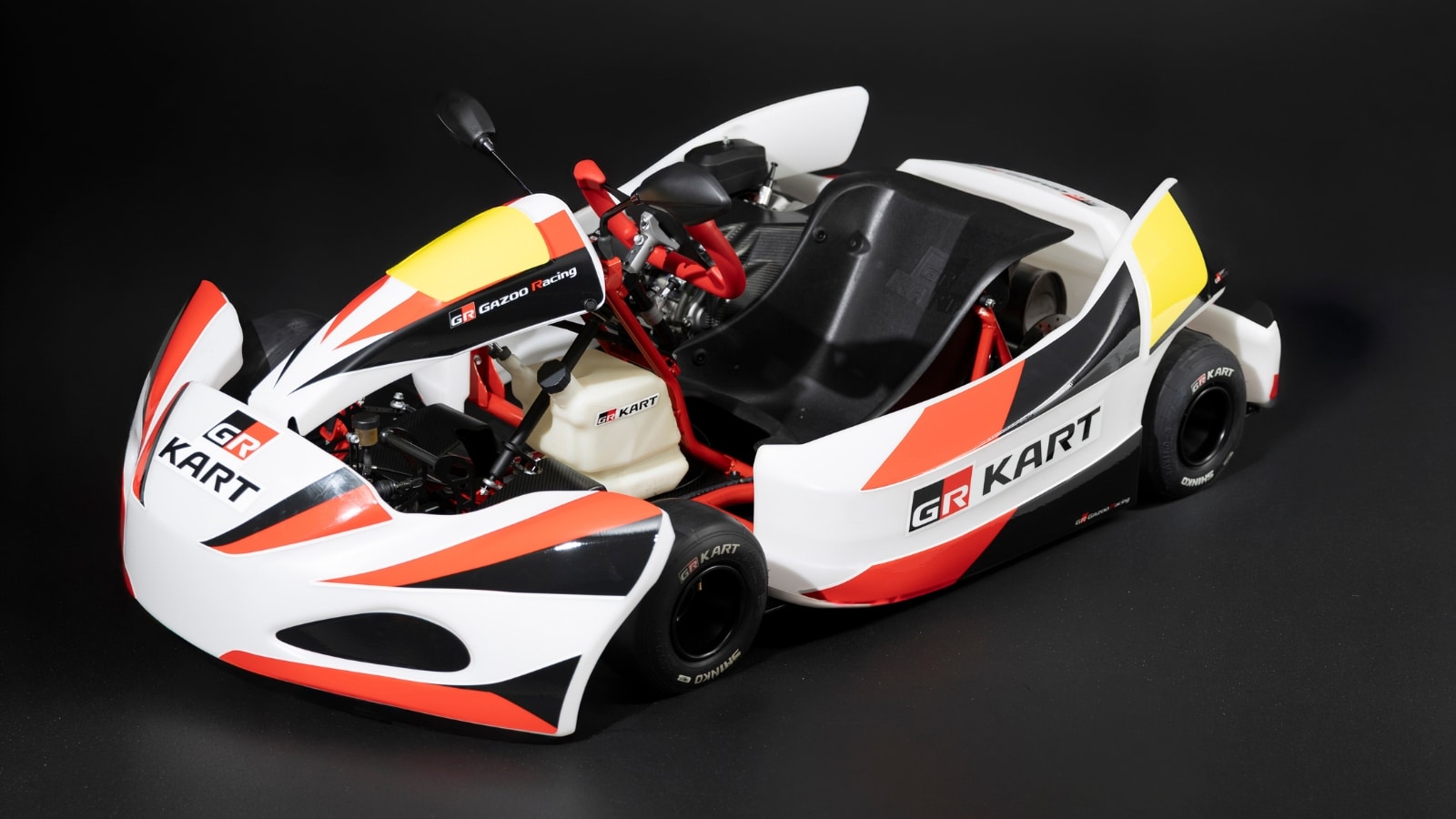
Motorsports has an expensive gatekeeper problem. If you want your kid to start racing karts competitively, you're usually staring down a massive financial pit of initial equipment costs, high-maintenance two-stroke engines, and the logistical nightmare of hauling a full-sized trailer to local tracks. Toyota's Gazoo Racing division looked at this broken entry model and decided to build something entirely different.
Meet the GR Kart. It runs on a 215cc four-stroke engine, costs roughly 385,000 yen (around $2,500 USD), and is explicitly engineered to fit inside a standard family minivan without taking the chassis apart. Toyota wants to treat racing like soccer or baseball—accessible, community-driven, and cheap enough for regular families.
Fixing What Traditional Karts Get Wrong
Most high-end racing karts are terrifyingly fast and punishingly expensive. They use tuned 125cc two-stroke engines that require constant mechanical overhauls, expensive fuel mixes, and specialized gear. Toyota built the GR Kart with the opposite philosophy.
Instead of a messy chain drive that flings black grease everywhere, this machine uses a clean belt-drive system equipped with an automatic tensioner. You don't have to fiddle with manual adjustments every weekend. The engine utilizes a newly developed diaphragm carburetor designed for four-stroke setups. This design completely eliminates the float chamber issues that normally plague traditional karts when they whip through sharp corners under heavy lateral G-forces.
Maintenance headaches basically vanish. There's a built-in, self-charging battery, meaning you can ditch external battery packs and chargers entirely. Toyota even added internal metal fuel lines to resist gasoline degradation over long periods of storage.
Designed for Real Families and Tight Spaces
If you own a typical Japanese family minivan like a Toyota Voxy or Noah—or a standard multi-row people mover elsewhere—you can slide this machine right into the back. At 1,820 millimeters long and 1,160 millimeters wide, it bypasses the need for a bulky utility trailer.
Storage at home is just as practical. When you're done for the season, you can store the kart vertically in your garage. Toyota engineered an upright-storage-compatible engine oil catch tank and specialized fuel filler orientation so you don't even have to drain the gasoline and oil before putting it away.
Fit is another hurdle Toyota cleared cleanly. Most racing karts are built for specific age brackets, forcing parents to buy new chassis as kids grow. The GR Kart features sliding pedals and a tiltable steering wheel that adjust on the fly. It accommodates drivers ranging from 135 to 185 centimeters tall. A dad, a teenager, and a pre-teen can all drive the exact same machine with a few quick adjustments.
Safety Features Built for Beginners
Putting novices on a track requires heavy safety buffers. Toyota didn't cut corners here.
The outer bumper geometry is specifically molded to prevent a colliding kart from riding up and over a rear tire. Rear hub stopper pins are integrated to ensure the wheels stay bolted down even under harsh impacts. They also redesigned the throttle cable mount to eliminate the danger of a stuck throttle if a beginner panics.
Even the seat layout considers minor burns and bruises. The upper portion has dedicated hand-rest surfaces designed to keep fingers safely away from the hot muffler when getting in and out.
How to Get Your Hands on One
Right now, the rollout is concentrated in Japan, where the karts are sold through select GR Garages and partner tracks. Toyota paired the vehicle release with the GR app, a digital ecosystem providing training guides, pre-purchase modules, and driving support.
If you are tired of motorsports pricing out regular enthusiasts, this project is a step in the right direction. Look for regional expansion as Toyota tests whether grassroots karting can successfully scale to international markets. Stop waiting for traditional racing leagues to lower their entry fees. Seek out local tracks supporting beginner-friendly four-stroke classes and see if budget-focused grassroots racing is ready to take off near you.