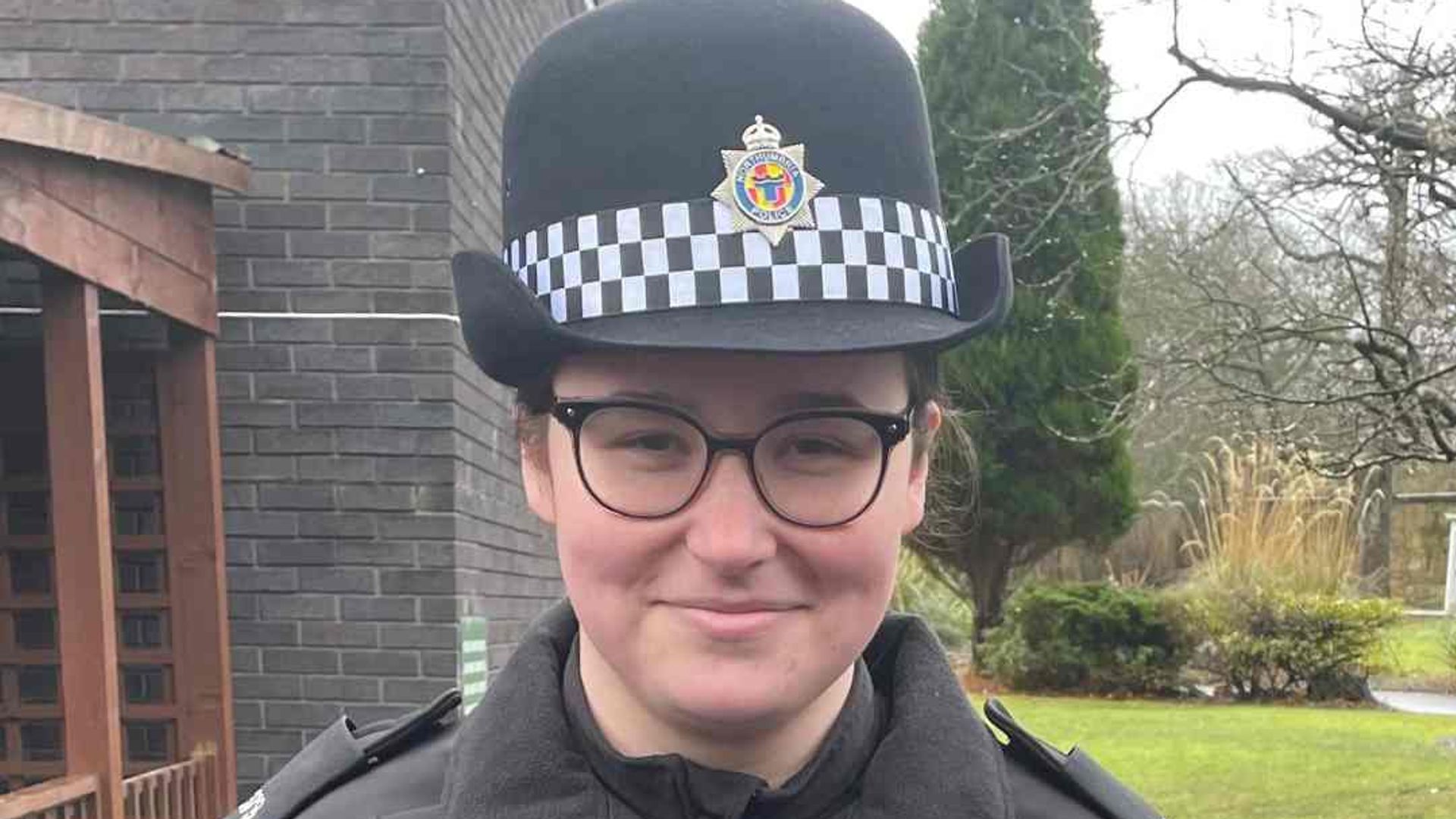
Standing on a dark stretch of the A189 near Cramlington, Northumberland, at 11:34pm is inherently dangerous. Doing it to protect other drivers after a crash is what police officers do without a second thought. For 19-year-old Police Constable Jess Turnbull, that routine duty turned fatal on Monday, 8 June.
The details emerging from the opening of her inquest in Morpeth paint a devastating picture. PC Turnbull, who followed her father Andy into the force just nine months prior, was implementing a road closure when a Mercedes collided with her parked marked vehicle, striking her. She suffered catastrophic injuries and died two days later at the Royal Victoria Infirmary in Newcastle.
This case is not just an isolated tragedy. It highlights a massive, recurring vulnerability for emergency responders working on active roadways. When a driver strikes a stationary emergency vehicle with flashing blue lights, it exposes deep issues regarding driver attention, night visibility, and road management protocols.
What Happened on the A189 That Night
The sequence of events on 8 June moved with terrifying speed. Northumbria Police logs indicate a call came in at 11:11pm reporting a two-vehicle collision on the A189. PC Turnbull and a colleague arrived shortly after to secure the scene.
By 11:34pm, she was out of her vehicle, positioned near the front of the marked police car, setting up the closure. A 73-year-old motorist driving a Mercedes struck the stationary police car. The force of that impact sent the vehicle forward, striking PC Turnbull.
Coroner Andrew Hetherington adjourned the full inquest until 11 January to allow the police investigation to conclude. The driver of the Mercedes was arrested on suspicion of causing death by dangerous driving and remains on bail.
The Moth Effect and Roadside Danger
Roadside management is statistically one of the most perilous duties an officer performs. The issue frequently stems from a phenomenon traffic safety experts call the "moth effect" or target fixation.
When drivers travel down an unlit road at night, their eyes naturally lock onto bright, flashing lights. Under the influence of fatigue, distraction, or intoxication, drivers occasionally steer directly toward the object they are looking at, effectively turning the emergency lights into a beacon for a collision.
The physical configuration of the scene also creates a shield or a trap. Standard protocol dictates positioning a police cruiser at an angle to create a physical barrier between oncoming traffic and the incident area. However, if a vehicle impacts that barrier with enough velocity, the cruiser itself can become a weapon against the officers standing nearby.
Moving Past Initial Incident Management
The investigation into the death of PC Turnbull will scrutinize vehicle placement, lighting configurations, and the speed of the oncoming Mercedes. For the wider law enforcement community, the immediate priority rests on mitigating these exact risks during late-night closures.
Emergency services have increasingly looked toward stricter implementation of passive warning systems well ahead of the physical crash site. Relying solely on the flashing lights of a vehicle parked directly at the closure point leaves zero margin for error if an approaching driver fails to react in time. Advanced warning flares, portable digital signage, and rumble strips placed hundreds of yards upstream are essential to break a driver's target fixation before they reach the scene.
The tragic loss of a young officer who viewed the uniform as a true calling underscores the reality that roadside scenes require aggressive, layered defense mechanisms. While the full inquest in January will determine the precise legal responsibilities of the collision, the immediate lesson for road safety is clear: visibility alone does not guarantee protection. Advanced, distant warnings are the only way to give distracted drivers the time they need to stop.

