Geopolitical analysts love a good funeral. They see a spark in Budapest, a chill in Greenland, or a diplomatic spat in Tehran and immediately start drafting the obituary for Western unity. They call it the "transatlantic rupture." They claim the values that bridged the Atlantic for seventy years are dissolving into a puddle of populist resentment and strategic drift.
They are wrong. Discover more on a connected issue: this related article.
What we are witnessing isn't a breakup. It’s a restructuring. The frantic hand-wringing over Hungary’s electoral path or Greenland’s resource-driven pivot ignores a fundamental reality of the 21st century: the "West" is no longer a political social club; it’s a cold, hard, military-industrial procurement agency. If you’re looking for high-minded ideological purity, you’re looking at the wrong map.
The Myth of the Ideological Monolith
The lazy consensus suggests that for the transatlantic alliance to function, every member must march in lockstep toward a specific brand of liberal internationalism. When Viktor Orbán wins an election or Greenland flirts with outside investment, the "rupture" theorists scream that the sky is falling. Additional journalism by The Washington Post explores comparable views on the subject.
They miss the point. The alliance was never built on shared hobbies or identical domestic policies. It was built on the cold math of containment and market access.
Imagine a scenario where every NATO member held the exact same view on social engineering, carbon taxes, and judicial reform. You wouldn’t have a stronger alliance; you’d have a fragile, inflexible echo chamber. The friction we see today isn't a sign of collapse. It’s a sign of a system that is finally acknowledging the diverse internal pressures of its constituent parts.
Hungary isn't "leaving" the West. It is testing how much leverage a small, landlocked nation can extract from a massive security architecture. It’s a business negotiation, not a divorce filing.
Greenland and the Resource Trap
When critics point to Greenland as a "new stage" of the rupture, they reveal a staggering lack of economic depth. They frame it as a tug-of-war between Washington and Copenhagen, or a vulnerability to Chinese "debt-trap" diplomacy.
The reality is simpler: Greenland is an emerging market with a massive liquidity problem. Its move toward autonomy isn't a rejection of the West; it’s an attempt to join the global supply chain as a primary stakeholder rather than a colonial footnote.
I’ve seen dozens of emerging markets play this game. They flirt with "alternative" partners to drive up the price for their traditional allies. If the United States wants to maintain its grip on the Arctic, it doesn't need more "shared values" seminars. It needs to outbid the competition. The "rupture" here is nothing more than the price of admission going up.
The Iran Fallacy
The argument that Iran represents a "break" between Europe and America is perhaps the most intellectually dishonest take in modern foreign policy. It assumes there was ever a unified "Western" strategy on the Middle East to begin with.
History tells a different story. Since the 1953 coup, European and American interests in Iran have diverged more often than they have aligned. Europe sees a market; America sees a regional hegemon that needs to be checked. These aren't new cracks in the foundation. They are the foundation.
When the U.S. pulled out of the JCPOA, the "rupture" crowd acted like a sacred vow had been broken. In truth, it was a return to form. The alliance survived the Suez Crisis, the Vietnam War, and the invasion of Iraq—all points of massive internal disagreement. A disagreement over trade with Tehran is a rounding error in the grand scheme of North Atlantic stability.
Follow the Hardware, Not the Rhetoric
If you want to know the health of the transatlantic relationship, stop reading election manifestos and start reading defense contracts.
While pundits talk about "drifting apart," European defense spending is hitting levels unseen since the Cold War. And where is that money going? A massive chunk is flowing directly into the American defense industrial base.
- Poland is buying M1 Abrams tanks and HIMARS.
- Germany is buying F-35s.
- The Netherlands is deeply integrated into the F-35 supply chain.
This isn't the behavior of a continent looking for a "rupture." This is the behavior of a continent doubling down on a specific security provider. You don't spend billions on a proprietary weapon system if you’re planning on leaving the neighborhood next week. The interoperability of hardware creates a "lock-in" effect that rhetoric cannot touch.
The Hungary Distraction
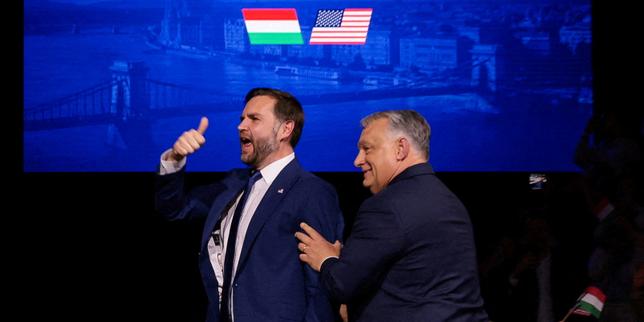
Let’s address the elephant in Budapest. The claim that the Hungarian election is a "new stage" of the rupture is a classic case of mistaking a local skirmish for a global war.
Orbán's "illiberal democracy" is a domestic political product designed for internal consumption. It uses the EU and the US as convenient foil characters to rally a base. But look at his actions, not his speeches. Hungary remains in NATO. Hungary remains in the EU. Hungary continues to receive massive subsidies.
Orbán isn't trying to destroy the transatlantic link; he’s trying to be its most expensive and annoying member. He knows exactly where the line is. He can flirt with Moscow or Beijing all he wants, but he knows that his security and his economy are tied to the West.
The "rupture" narrative gives him too much credit. It treats a tactical annoyance as a strategic shift. It’s not. It’s theater.
The Real Threat Is Not Populism
If you're worried about the future of the West, stop looking at voters in rural Hungary and start looking at the industrial capacity of the United States and Europe.
The real danger isn't that we disagree on how to run a court system or how to tax a corporation. The danger is that we lose the ability to build things.
- Semiconductor manufacturing: If the West can't secure its own chips, the alliance is irrelevant.
- Energy independence: As long as Europe is tethered to external energy sources, its strategic autonomy is a fantasy.
- Logistics: The ability to move troops and material across the Atlantic is the only thing that makes the alliance real.
The focus on "ruptures" in Greenland or Iran is a distraction from these existential industrial challenges. We are arguing about the color of the curtains while the foundation is being eaten by termites.
Stop Asking the Wrong Questions
People often ask: "Can the transatlantic alliance survive the rise of populism?"
This is a flawed premise. The alliance doesn't exist to fight populism. It exists to secure the interests of its members against external peer competitors. Populism is a domestic symptom of economic anxiety, not a foreign policy doctrine.
The better question is: "Can the alliance adapt to a multipolar world where its members have different economic needs?"
The answer is yes, but only if we stop treating every disagreement as a sign of the end times. We need to accept that a member can be a "good" ally in terms of defense and a "difficult" partner in terms of social policy. The overlap between those two circles is shrinking, and that’s okay.
The Cost of Purity
The obsession with a "values-based" alliance is actually the greatest threat to its longevity. When you demand 100% ideological alignment, you create a brittle system that breaks at the first sign of dissent.
If the U.S. demands that Greenland or Hungary or any other nation must adopt a specific set of progressive or neoliberal values to be "in the club," it will drive them away. The "rupture" theorists are actually creating the very problem they claim to fear by insisting on a level of uniformity that is impossible in a democratic world.
I have seen this in corporate mergers time and again. The CEO who demands "one culture" on day one usually ends up with a mass exodus of talent. The CEO who focuses on "aligned incentives" wins.
The transatlantic relationship is a merger of necessity, not a marriage of love.
The New Reality
We are moving into an era of "Transactional Transatlanticism."
It’s less romantic. It’s less inspiring. It involves a lot more arguing over trade deficits and defense percentages. But it’s also more durable. It acknowledges that nations have interests, and those interests won't always align.
The "rupture" isn't coming. It’s already here, and it’s just a normal part of a maturing relationship. Stop mourning the 1990s. That world is gone, and it’s not coming back.
The Atlantic is still there. The ships are still crossing. The planes are still flying. The only thing that has changed is that we’ve stopped pretending it’s easy.
The West isn't dying; it’s just finally being honest about its bills. Pay the invoice and move on.