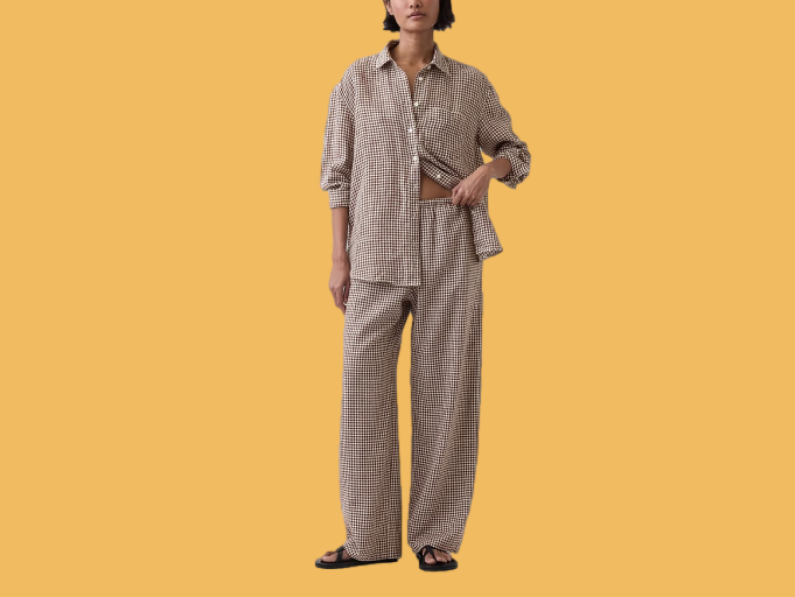
Extended seasonal fabric utilization requires dismantling the binary mental model separating warm-weather textiles from cold-weather textiles. Conventional wardrobe management treats flax-derived fabrics as single-season assets tied strictly to high-temperature environments. This approach introduces unnecessary depreciation costs and restricts styling utility across thermal gradients. Maximizing utility demands evaluating garments through material science properties rather than calendar dates.
The Material Physics of Flax
Flax fibers possess hollow structural characteristics that regulate thermal conductivity differently than dense cotton or synthetic blends. Air trapped within the cellular structure acts as a natural insulator when layered against the skin, while the high crystalline cellulose content promotes moisture evaporation during temperature fluctuations.
[Thermal Gradient]
       │
       ├── Ambient Drop ──> Trapped Air Insulates (Base Layer)
       │
       └── Radiant Heat ──> High Moisture Vapor Transmission (Cooling)
This dual property means the textile performs across varying climate parameters. The fabric behaves as a cooling mechanism under direct solar exposure and transitions into an effective microclimate regulator when paired with dense outer layers. Treating the material as a rigid calendar-bound asset ignores its thermodynamic adaptability.
The Three Variables of Cross-Season Integration
Shifting a lightweight textile from summer application to autumn infrastructure relies on controlling three distinct variables: weight density, weave tightness, and thermal coupling.
Weight Density and Grammage
Summer garments typically feature low grammage ratings, often falling between one hundred and one hundred fifty grams per square meter. Integrating these weights into lower temperatures fails if worn in isolation. The threshold for multi-season durability requires a baseline weight density above one hundred eighty grams per square meter, which resists wind penetration while retaining structural drape.
Weave Architecture
Open-weave constructions permit convective heat loss, which is desirable in July but problematic in October. Cross-season utility depends on closed-weave structures or dense yarn twists. High-twist yarns reduce interstitial gaps between threads, minimizing air permeability without sacrificing the natural breathability inherent to the raw material.
Thermal Coupling Mechanics
Single-layer deployment exposes lightweight textiles to rapid heat loss. Multi-season styling functions as a thermal circuit. Pairing a breathable base with high-density woolens or cashmeres creates an insulating boundary layer. The lower garment manages moisture regulation against the body, while the heavier outer garment arrests convective wind chill.
Structural Pairing Frameworks
Execution requires a systematic approach to layering that balances texture, weight, and visual contrast.
- The Density Contrast Rule: Pair lightweight fluid weaves with heavy, non-stretchy outer garments like structured wool coats or heavy corduroy trousers. This balances the visual weight of autumn dressing with the tactile lightness of the inner layer.
- The Substrate Interlocking Method: Utilize mid-weight variations as an intermediate layer between a fine-gauge knit and a structured outer shell. This prevents the fabric from compressing under heavy outerwear while maintaining active temperature moderation.
- Color Desaturation Strategy: Transition high-chroma summer shades into autumn by anchoring them with neutral, low-saturation earth tones such as charcoal, olive, and chocolate brown. Color temperature plays a psychological role in seasonal appropriateness.
Operational Limitations and Failure Points
No textile strategy operates without constraints. Recognizing the boundaries of extended fabric utilization prevents structural wardrobe failures.
Moisture absorption presents a primary operational hazard. Flax fibers absorb up to twenty percent of their dry weight in moisture before feeling damp. In high-humidity autumn environments without adequate airflow, trapped moisture lowers skin temperature rapidly, inducing chill.
Crease recovery is another quantifiable limitation. Lower-grade weaves lack elastic memory, leading to permanent deformation at high-stress articulation points such as elbows and knees when layered tightly beneath restrictive outerwear. Selecting high-twist, long-staple yarn variants mitigates this degradation.
Strategic Implementation
Discard the notion of seasonal wardrobe purging. Audit existing inventory by measuring grammage and evaluating weave density rather than relying on purchase history or marketing categorizations. Isolate items exceeding one hundred seventy grams per square meter for immediate integration into cool-weather layering arrays. Position lighter variants as structural mid-layers beneath heavyweight wool and leather jackets to exploit the material's moisture-wicking properties while neutralizing its vulnerability to wind chill.