The mainstream media wants you to believe that international diplomacy runs on shared democratic values and the sacred rule of law. They want you to look at the United States Department of Justice indicting individuals linked to an alleged plot against a Sikh activist on American soil and see a righteous superpower protecting its sovereignty from a rogue intelligence agency.
They are selling you a fairy tale.
The Western press has fallen into a lazy consensus. They treat the indictment of an Indian national as an unprecedented breakdown in international norms. They paint it as a shocking revelation that a rising global power would attempt to neutralize perceived national security threats beyond its borders.
This view is completely detached from the reality of global intelligence operations. It ignores how states actually behave when the cameras are turned off.
The real narrative has nothing to do with morality, sovereignty, or the protection of activists. It is about intelligence theater, diplomatic leverage, and the changing mechanics of global statecraft.
The Myth of the Clean Superpower
To understand why the common narrative is fundamentally flawed, you have to strip away the selective amnesia of Western commentators. The shock and awe directed at New Delhi's alleged actions assume that transnational operations are an aberration.
They are not. They are standard operating procedure.
For decades, major intelligence agencies across the globe have operated under a simple, unwritten rule: if a threat exists abroad, you neutralize it. The methods vary. Sometimes it is a drone strike. Sometimes it is a quiet poisoning. Sometimes it is a contracted local asset executing a wetwork assignment in a crowded city.
The United States pioneered the modern framework of extrajudicial targeted killings. The post-9/11 era established a precedent where national security concerns overrule the domestic laws of sovereign nations. When Washington tracks a target into Pakistan, Yemen, or Somalia, it does not wait for an extradition treaty to clear the bureaucracy. It acts.
When the mainstream media expresses horror that India might adopt a similar doctrine, they are not defending an international principle. They are defending a monopoly.
The actual friction here is not that an assassination was planned. The friction is that a middle power had the audacity to utilize the exact same playbook that the dominant global powers have used for half a century.
The Outsourcing Reality
Every experienced intelligence professional understands the concept of plausible deniability. You do not use your top-tier, badge-carrying intelligence officers to conduct messy operations in Western capitals. You use cutouts. You use proxies. You use the criminal underworld.
The indictment names individuals connected to organized crime networks. The media points to this as proof of a reckless, unguided intelligence apparatus.
That is a complete misreading of how these operations work.
Intelligence agencies do not avoid criminal syndicates; they manage them. From the Cold War to the modern era, the intersection of state intelligence and organized crime is a well-traveled highway. Think of the historical cooperation between Western intelligence and Corsican mobs to counter political rivals in post-war Europe, or the utilization of cartel networks for logistics in Latin America.
Criminal networks possess the infrastructure that states lack on foreign soil. They have the weapons, the safe houses, and the individuals willing to pull a trigger for a fee. More importantly, they provide the state with a firewall. If the operation succeeds, the target is gone. If the operation fails, the state can claim it was merely a localized gang war or a rogue criminal enterprise.
The failure in this specific instance was not the strategy of using a cutout. The failure was the tradecraft.
The operation violated the cardinal rule of covert action: never let your proxy connect back to a verifiable government communications channel. The moment the targets used unencrypted lines or left a digital paper trail linking back to state officials, the firewall collapsed.
Why Washington Chose Exposure Over Silence
If you want to see the real mechanics of power, look at what the US government did with the information.
In the traditional world of intelligence sharing, when a friendly nation gets caught operating inside your borders, you do not immediately run to the press or file a public indictment in the Southern District of New York.
You handle it quietly.
You call the station chief into a secure room. You present the evidence. You expel a few diplomats under thin cover. You extract a concession on an unrelated trade deal or a military basing agreement. You keep the laundry clean in public because the strategic partnership matters more than a single botched operation.
The decision to go public—to unseal a detailed, narrative-heavy indictment—was a deliberate political choice. It was not a mandatory legal requirement. The Department of Justice operates under executive guidance when foreign policy implications are this severe.
Washington chose to expose the plot because it needed leverage.
The US-India relationship is frequently described as a crucial strategic alliance designed to counterbalance a rising China in the Indo-Pacific. But an alliance between a dominant superpower and a fiercely independent civilizational state is inherently unstable. New Delhi has consistently refused to play the role of a junior partner. India buys Russian oil despite Western sanctions. India maintains its own strategic autonomy. India refuses to sign binding mutual defense pacts that would force its hand in a conflict.
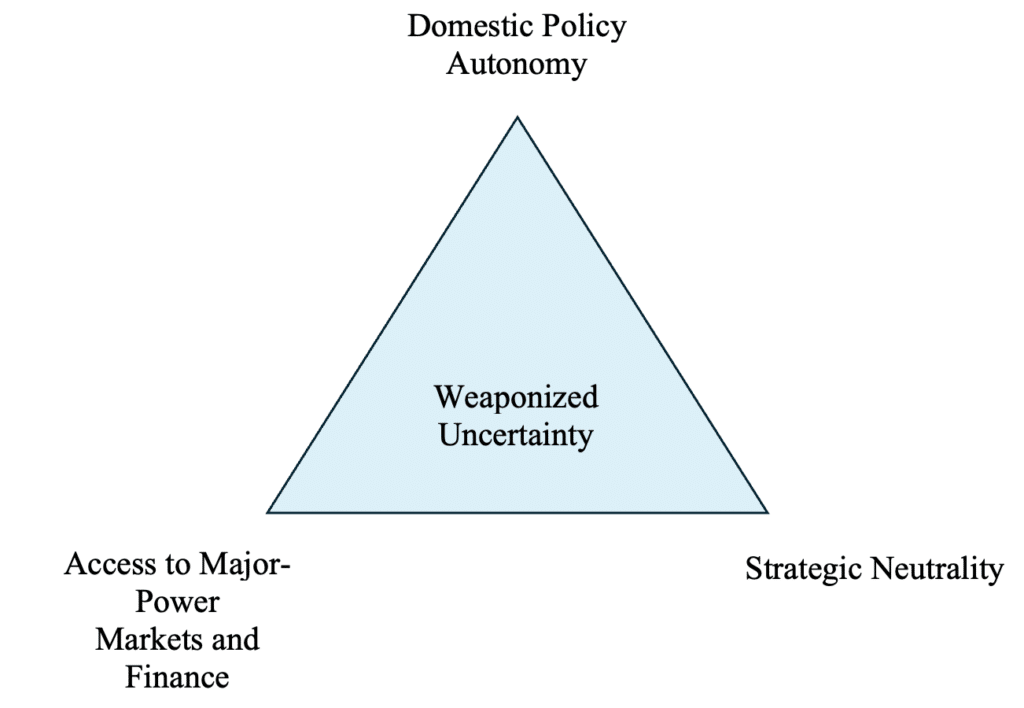
By weaponizing the indictment, Washington sent a clear, chilling message to the Indian security establishment: your access to Western markets, Western technology, and Western intelligence is conditional.
It was a public demonstration of dominance masked as a legal proceeding. It was a reminder that despite all the rhetoric about a partnership of equals, the US still holds the keys to the global financial and legal architecture. If New Delhi steps too far outside the boundaries of the Western-defined order, Washington can destroy its international standing overnight.
The Flawed Premise of Free Speech Protection
The public debate heavily centers on the idea that the US is defending the constitutional rights of its residents to engage in political activism. This is the ultimate lazy consensus.
Let us examine a scenario where a foreign national resides in Washington and actively advocates for the violent balkanization of a Western ally. If that individual were funding or instigating militant actions against the UK, France, or Canada, they would find themselves in a federal holding cell within twenty-four hours. Their assets would be frozen under anti-terrorism statutes.
The individual at the center of this plot is not considered a benign peaceful activist by the state he targets. He is viewed as a direct national security threat who leads an organization banned under anti-terror legislation in his home country. He openly threatens commercial aviation and political leaders.
The US protection of this individual is not an absolute stance on the First Amendment. It is a calculated geopolitical asset.
Western nations have a long history of harboring political dissidents from rival or non-aligned states. These individuals are kept in reserve. They are assets that can be activated, protected, or ignored depending on the state of diplomatic relations with the home country. They are lever points.
When the US refuses to extradite a individual whom India considers a terrorist, it is a deliberate decision to maintain a point of friction against New Delhi. It ensures that India can never feel entirely secure, keeping them dependent on Western cooperation for intelligence sharing and counter-terrorism coordination.
The Cost of the Contrarian Reality
There is a downside to analyzing the world through this lens. Admitting that international law is a weapon of convenience rather than a binding code of conduct strips away the comforting illusions of global stability.
It forces you to accept that the international order is anarchic. Might still makes right. The only real crime in the global intelligence arena is getting caught and lacking the economic or military power to force the other side to overlook it.
India’s security agencies made a massive miscalculation. They assumed their growing economic importance made them untouchable. They assumed that because Washington needed them to deter Beijing, the US would look the other way regarding internal security operations in North America.
They misjudged the arrogance of the American security state.
Washington will always prioritize the sanctity of its own domestic monopoly on violence over the strategic comfort of an ally. The moment a foreign agency tries to execute an operation on US soil without explicit coordination, it threatens the internal authority of the American state. That cannot be tolerated, regardless of how many fighter jets or trade deals are on the table.
The New Era of Disrupted Statecraft
The fallout from this indictment will not destroy the US-India relationship. The structural realities that draw the two nations together—chiefly the shared necessity to manage Chinese expansion—are too powerful to be derailed by a botched intelligence operation.
But the relationship will never be the same. The innocence is gone.
New Delhi now knows exactly where the boundaries lie. They understand that the West will use their internal legal systems as geopolitical clubs whenever necessary. They have learned that the rhetoric of global partnership is a corporate marketing campaign designed to obscure the raw exercise of state power.
Moving forward, we will see a shift in how middle powers conduct these operations. They will not stop targeting individuals they perceive as threats abroad. The political imperatives driving those decisions are too deeply embedded in their domestic security doctrines.
Instead, they will adapt. They will build better firewalls. They will use deeper criminal proxies that cannot be traced back to a government smartphone. They will invest in cyber-enabled operations that do not require physical footprints in Western cities.
The age of amateurish, easily traceable transnational hits is over. The age of sophisticated, untraceable gray-zone warfare has arrived. The West did not stop the practice; they just forced their partners to become much better at it.