The control room of a coastal powerhouse hums with a low, perpetual resonance. Outside, the sea looks calm, reflecting a pale morning sky. Inside, banks of monitors glow softly, charting the invisible heartbeat of megawatts.
Then, an alarm shatters the quiet. Learn more on a similar issue: this related article.
It is not a roaring klaxon. It is a sharp, insistent pulse. Red lights blink across a terminal. Operators lean in closer, their coffee cups frozen halfway to their lips. The numbers do not make sense. Water intake pressure is dropping. The turbines are crying out for cooling flow, but the ocean gates are choking.
Miles out in the dark, cool water, something ancient is moving. More reporting by BBC News explores comparable perspectives on this issue.
We rarely think of the sea as a battlefield. We think of beaches, salt air, and postcard horizons. But beneath the surface, millions of translucent, gelatinous bodies drift on invisible currents. They possess no bones, no brains, no complex strategies. They are simply carried by the tide, eating, pulsing, existing.
Yet, when millions of them converge, they become an unstoppable force.
Consider a hypothetical engineer named Jean-Luc, standing watch during one of these sudden surges. He has spent twenty years managing the delicate dance between river water, ocean tides, and nuclear fission. He knows every valve, every pipe, every mathematical projection of thermal efficiency. But he did not factor in the ghosts.
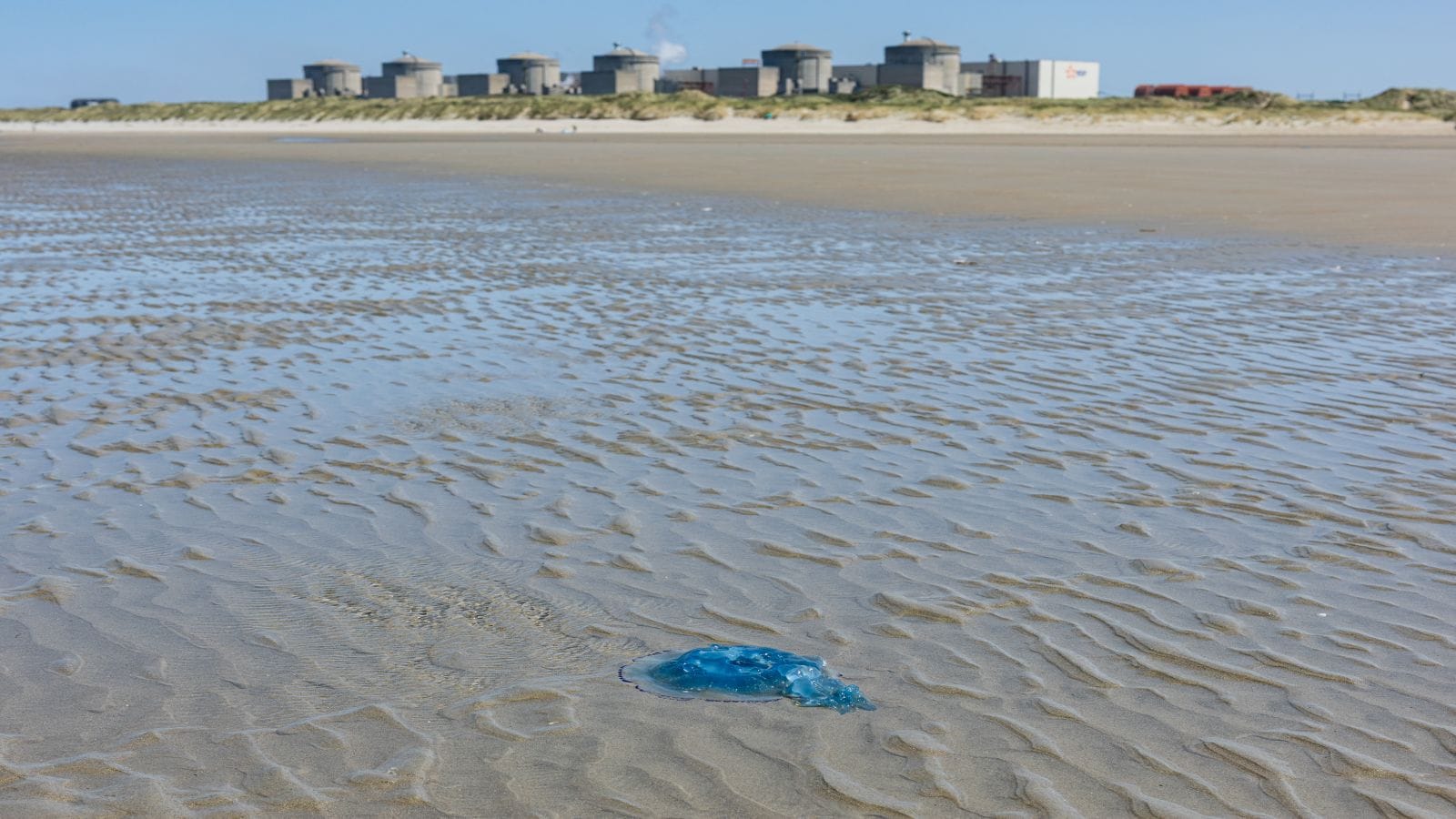
As the tide shifts, a massive bloom of jellyfish—sometimes stretching for miles—drifts directly toward the coastal intakes of the nuclear facility. These giant power plants require staggering volumes of cold water to condense steam back into liquid, keeping the core stable. To feed this thirst, massive tunnels pull water directly from the sea.
They pull the jellyfish, too.
The Anatomy of an Overload
At first, the screens catch them. Metal grates and rotating drum screens act as the first line of defense. But physics has a breaking point.
When a dense swarm hits, the screens are overwhelmed in minutes. The gelatinous bodies crush against the steel mesh, forming a dense, suffocating mat. Water cannot pass through a wall of compressed jellyfish. The pressure differential skyrockets.
Silence descends on the facility as operators execute an emergency shutdown.
This is not a failure of technology. It is a collision between human engineering and biological reality. Nuclear reactors are marvels of modern physics, designed to withstand earthquakes, extreme weather, and mechanical failure. They are fortified, redundant, and heavily monitored.
Yet, a creature that is ninety-five percent water can bring them to their knees.
Why does this happen with increasing frequency? The answer lies in the shifting chemistry of our oceans. Warmer waters, overfishing of natural predators like tuna and sea turtles, and coastal nutrient runoffs create the ultimate breeding ground for gelatinous blooms. The sea is changing its composition, and our critical infrastructure is on the front lines of that transformation.
When Giants Step Back
When three reactors power down simultaneously, the grid feels the shockwave.
Electricity is not something you can stockpile in a warehouse. It must be generated the exact millisecond it is consumed. When gigawatts vanish from the system because millions of sea creatures clogged a cooling pipe, grid operators must scramble. Fossil fuel plants fire up. Hydro dams open their gates wider. Imports cross borders in fractions of a second to keep hospitals lit and homes warm.
Down on the shore, cleanup crews face a surreal reality.
They haul tons of translucent pulp away from the intake channels. It is exhausting, messy work. There is no glory in it. No heroic struggle against a roaring beast. Just shovels, heavy machinery, and endless mounds of sea drift that smell faintly of salt and iodine.
We build monuments to our control over nature. We harness the atom. We split the fundamental building blocks of matter to power our cities. We map the stars and calculate the trajectories of comets.
Yet, as the tide rolls back out, leaving a glistening residue on the metal grates, a humbling truth remains.
The most sophisticated machines we have ever built are still entirely at the mercy of the drift.