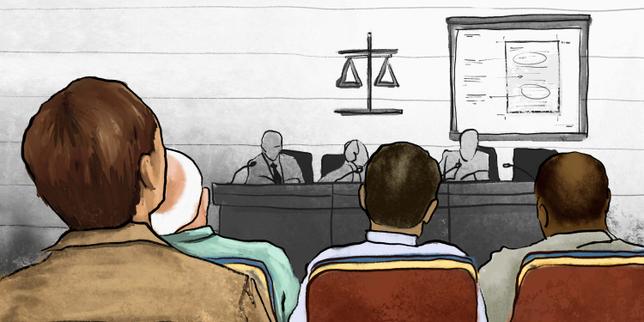
We love our monsters. They make life simple. When a court drags Othman Garrido into the dock for charges tied to jihadist networks, the public and the press reach for a comforting script. They talk about "the banality of evil," "the inversion of values," and the hypnotic pull of radicalization as if it were some ancient witchcraft that instantly lobotomizes an otherwise decent citizen.
The lazy consensus is clear: evil is exotic, foreign, and alien to the normal human experience. We tell ourselves that men like Garrido are aberrations, broken cogs in a machine of pure malice, and that normal humans are tricked or swept away by a sudden tide of violence.
It is a comforting lie. And it is entirely wrong.
I have spent years studying the forensics of violent extremism, sitting across from individuals who threw their lives away for causes that defy rational self-preservation. Here is the uncomfortable truth the commentators miss: human beings do not need to be brainwashed to commit atrocities. We do not need our values inverted by dark magic. We are biologically and psychologically hardwired to slide straight into violence the moment the social contract offers a compelling enough narrative, a clear enemy, and a sense of belonging.
Garrido did not fall under a spell. He made a series of calculated choices, and he did so because radicalization offers something modern, atomized societies fail to provide: absolute moral clarity, instant camaraderie, and a license to matter.
The Comfort of the Monster Myth
The entire media apparatus surrounding trials like this relies on framing the perpetrator as an anomaly. They use words like descent, plunge, and indoctrination. These metaphors imply gravity—a passive fall into darkness.
Physics doesn't work that way in human psychology, and neither does extremism.
When researchers look at the profiles of individuals who join extremist networks, they do not find mindless zombies. They find ordinary people dealing with profound personal alienation, status frustration, and a hunger for significance. The extremist group does not hypnotize them; it recruits their existing grievances and weaponizes them.
Pretending that ordinary humans are naturally repulsed by violence is historically illiterate. History is a long, uninterrupted catalog of ordinary neighbors turning on each other the moment authority figures hand them permission slips and moral justification. From Rwanda to the Balkans, and down to modern online radical echo chambers, the transition from polite neighbor to enthusiastic participant takes days, not decades.
We cling to the "banality of evil" formulation coined by Hannah Arendt because it distances us from the perpetrator. If Eichmann or Garrido are just mechanical bureaucrats of death operating under a strange spell, then the rest of us sitting safely in the courtroom gallery are clean.
We aren't clean. We are running the exact same cognitive software.
The Mechanics of Belonging
Let us look at what actually happens when a person drifts toward jihadist or extremist networks. It is rarely a sudden theological epiphany. It starts with a vacuum.
Modern secular life is demanding, hyper-individualized, and often profoundly lonely. People look for a tribe. Mainstream institutions—civic clubs, local churches, unions, community associations—have hollowed out across much of the Western world. Into that vacuum step extremist movements, which operate with the organizational efficiency of elite silicon valley startups combined with the emotional hook of a tight-knit family.
They offer three things that traditional society has abandoned:
- Unquestionable Purpose: You are not just paying taxes and scrolling through social media; you are part of a cosmic battle between good and evil.
- Immediate Brotherhood: You are instantly welcomed, validated, and given a shared identity that overrides your failures in the secular world.
- Externalized Responsibility: Your personal failures, economic anxieties, and social awkwardness are no longer your fault. They are the fault of a corrupt system, and fighting that system is your redemption.
When Garrido adhered to violence, he didn't do so because his brain malfunctioned. He did so because violence is the ultimate currency of commitment within an extremist subculture. It proves you are real. It proves you matter.
If we want to stop this cycle, we have to stop treating radicalization as a contagious mental disease and start treating it as a fiercely competitive alternative lifestyle brand.
Dismantling the Rehabilitation Fantasy
Courts want closure. They want a verdict that says justice has been served, the monster has been caged, and the sickness has been quarantined.
That is not how human behavior works post-conviction, either.
We see endless debates on how to "de-radicalize" individuals once they are inside the penal system. Billions are spent on psychological programs, theological counseling, and civic re-education. Some of it works on the margins, but much of it fails because it addresses the symptom while ignoring the structural void that created the radical in the first place.
You cannot de-radicalize someone by handing them a pamphlet on democratic values if they return to a prison environment or a society that treats them like pariahs, offering zero avenues for authentic reintegration or status. Extremism wins in prisons because prisons are miniature totalitarian societies that replicate the exact conditions of hyper-solidarity and us-versus-them tribalism that put them there in the first place.
When we isolate, mock, and otherize these individuals completely, we reinforce the exact narrative their handlers fed them: The world hates you, they never understood you, and your only true family is us.
What We Should Be Doing Instead
If our diagnosis is wrong, our prescription is poison. Continuing to gasp in mock horror every time a young man adopts violent ideologies ensures we will keep producing them.
We need to pivot from moral panic to tactical friction.
- Stop Elevating Them: Media coverage of high-profile trials should be muted, clinical, and devoid of romanticized anti-hero profiling. Every dramatic headline about the "inversion of values" acts as free marketing for impressionable losers looking for an epic narrative.
- Rebuild Local Social Fabric: The best counter-terrorism policy is boring. It is local community centers, youth sports leagues, mental health accessibility, and economic mobility. People with stable stakes in society rarely blow themselves up or join death cults.
- Call Out the Ego: Radicalization is rarely about pure ideology; it is often deeply narcissistic. These individuals want to be feared, noticed, and historicized. Strip away the cosmic pretense and treat them like the petty, status-starved vandals they often are.
Othman Garrido is not an alien creature from a dark realm. He is the logical product of a society that produces radical alienation and then acts shocked when someone finds a brutal way to cure it.
Until we fix the vacuum at home, the courtroom doors will keep revolving.