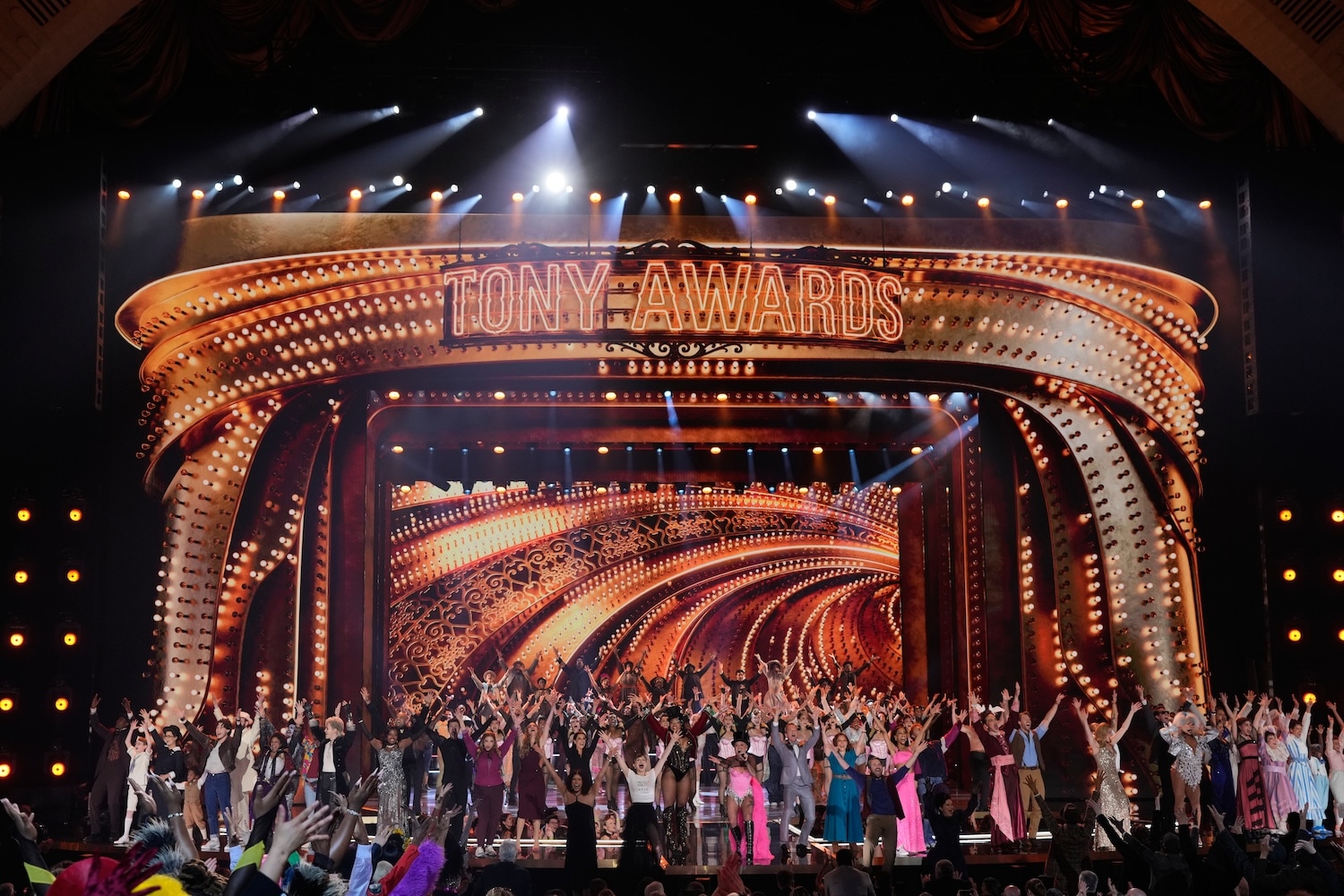
The air inside the Radio City Music Hall always smells faintly of old velvet, spilled champagne, and the distinct, metallic tang of sheer terror. It is June 2026. The Tony Awards are underway, and the air conditioning is fighting a losing battle against three thousand bodies holding their breath.
To the casual observer watching from a couch at home, the Tonys look like a celebration. A parade of glittering gowns, pristine tuxedos, and tearful speeches. But if you stand just five feet offstage, in the dim, cramped cavern of the wings, the reality is entirely different. You see the makeup melting under the savage heat of the follow-spots. You hear the ragged, desperate breathing of actors who have just left their souls on the floorboards.
Theater is not cinema. There is no safety net. No second take. If you drop a line in front of a packed house, it stays dropped. If your voice cracks during a climactic monologue, that failure hangs in the air like smoke, witnessed by thousands of eyes. To do this once a night is exhausting. To do it eight times a week is a form of beautiful, voluntary torture.
But tonight, the stakes are absurdly high for two specific titans of the stage. They are not fighting for a break; they are fighting for immortality.
The Weight of the Third
John Lithgow and Laurie Metcalf are not names that need an introduction to anyone who has ever loved a story. They are institutions. Yet, as the presenter opens the envelope for the evening’s most fiercely contested acting categories, the collective pulse of the room spikes.
History is a heavy thing to carry.
Before tonight, both Lithgow and Metcalf belonged to an exclusive, elite club of actors who had conquered the Broadway stage twice before. Two Tony Awards. It is a monumental achievement that most actors would gladly trade a limb for. But there is a cruel quirk in human psychology: two is a pair, but three is a trifecta. Three is a pattern. Three means it wasn't a fluke.
Consider the sheer mathematical improbability of what they were chasing. Thousands of actors step onto a Broadway stage every year. Only a handful are nominated. A fraction win. To win three times requires a alignment of luck, timing, and an almost superhuman level of endurance across decades.
Lithgow, standing tall with that familiar, commanding presence that can shift from terrifying to heartbreaking in a syllable, knows the cost of this longevity. His first Tony came more than fifty years ago, back in 1973 for The Changing Room. Think about that duration. Five decades of memorizing lines, of facing brutal critics, of putting his emotional vulnerability on display night after night. His second came in 2002 for The Sweet Smell of Success.
Now, in 2026, the question hanging in the humid air of the auditorium was simple: Could he do it again? Could a career spanning generations find its ultimate punctuation mark?
The Mechanics of the Magic
To understand why this matters so deeply, we have to look past the trophy itself. A Tony Award is just a spinning disc of pewter and brass. It has no intrinsic value. The real value is what it represents to the person holding it—a momentary relief from the crushing doubt that plagues every single artist.
Imagine a hypothetical young actress sitting in the nosebleed section tonight. Let’s call her Sarah. Sarah has maxed out two credit cards just to afford her acting classes. She works a grueling shift at a diner in Hell's Kitchen, rushes to auditions with grease still trapped under her fingernails, and spends her nights crying over rejections that feel like personal attacks.
When Sarah looks at Laurie Metcalf on that stage, she isn't just looking at a celebrity. She is looking at a survival map.
Metcalf’s trajectory is a masterclass in relentless work. Her first Tony came in 2017 for A Doll's House, Part 2, followed immediately by another win in 2018 for Three Tall Women. She makes it look effortless. But the truth of the theater is that nothing is effortless.
Every performance requires an actor to tear open old wounds, to summon genuine grief, rage, or joy on command, precisely at 8:15 PM, Tuesday through Sunday. If your dog died that morning, it doesn't matter. If you have a fever of 102 degrees, the curtain still rises. The audience paid hundreds of dollars per seat, and they do not care about your personal tragedy. They demand the magic.
Metcalf and Lithgow have given that magic over and over, sacrificing their vocal cords, their knees, and their mental peace to the gods of the proscenium arch.
The Moment the Room Stopped Breathing
The announcements happened with the sudden, shocking speed that always catches nominees off guard. One minute you are rehearsing your "happy loser" face in the mirror, and the next, your name is bouncing off the walls of the theater.
John Lithgow’s name was called first.
The roar from the crowd was instantaneous, a deafening wave of sound that seemed to shake the dust from the chandeliers. As he walked up the steps to the stage, his stride was deliberate. This was his third time making this walk, yet the look on his face wasn't one of triumph. It was profound, humbling relief. The trifecta was real. Three’s a charm. The fifty-three-year arc from his first win to this moment was finally complete.
But the theater gods weren't done making history.
A short while later, Laurie Metcalf’s name echoed through the speakers. The double trifecta. Two legendary performers, entering the exact same historic stratosphere on the exact same night. The audience didn't just applaud; they stood. It was a visceral, spontaneous recognition of a lifetime spent in service of the stage.
By achieving their third Tony Awards, Lithgow and Metcalf didn't just win a prize. They joined a pantheon. They proved that excellence isn't a flash in the pan. It is a habit. It is a grueling, lifelong commitment to showing up, even when everything hurts.
The Echoes in the Dark
The television cameras have long since shut down. The millions of viewers at home have turned off their screens and gone to bed, perhaps dreaming of the songs and stories they witnessed. The glitter has been swept from the aisles of Radio City Music Hall.
But the impact of what happened tonight lingers.
Back in the wings, after the photoshoots and the frantic interviews, the theater falls into its natural state: dark, quiet, and cavernous. The ghosts of past performances seem to hover just out of sight.
For Sarah, the hypothetical actress walking back to her tiny apartment in the dark, the world looks slightly different now. She watched two human beings push through decades of rejection, aging, and the grueling physical toll of live theater to achieve something permanent. The three trophies sitting on Lithgow and Metcalf’s mantels tomorrow morning aren't just symbols of success.
They are proof that the struggle is worth it.
The theater takes everything you have. It demands your youth, your energy, your weekends, and your sanity. But tonight, for two extraordinary artists, it gave something back. It gave them immortality, measured out in three perfect pieces of spinning brass.
The ghost light is rolled out onto the empty stage, casting a solitary, flickering beam into the dark auditorium, waiting for the next story to begin.