The coffee in the Islamabad briefing room is always lukewarm, served in chipped porcelain that has survived three decades of bureaucratic shuffling. Outside, the midday heat presses against the glass like a heavy hand, blurring the margins of the capital. Inside, the air conditioning hums a low, mechanical drone, barely masking the tension of men staring at a map they know too well.
They are looking at a line drawn across the Arabian Peninsula.
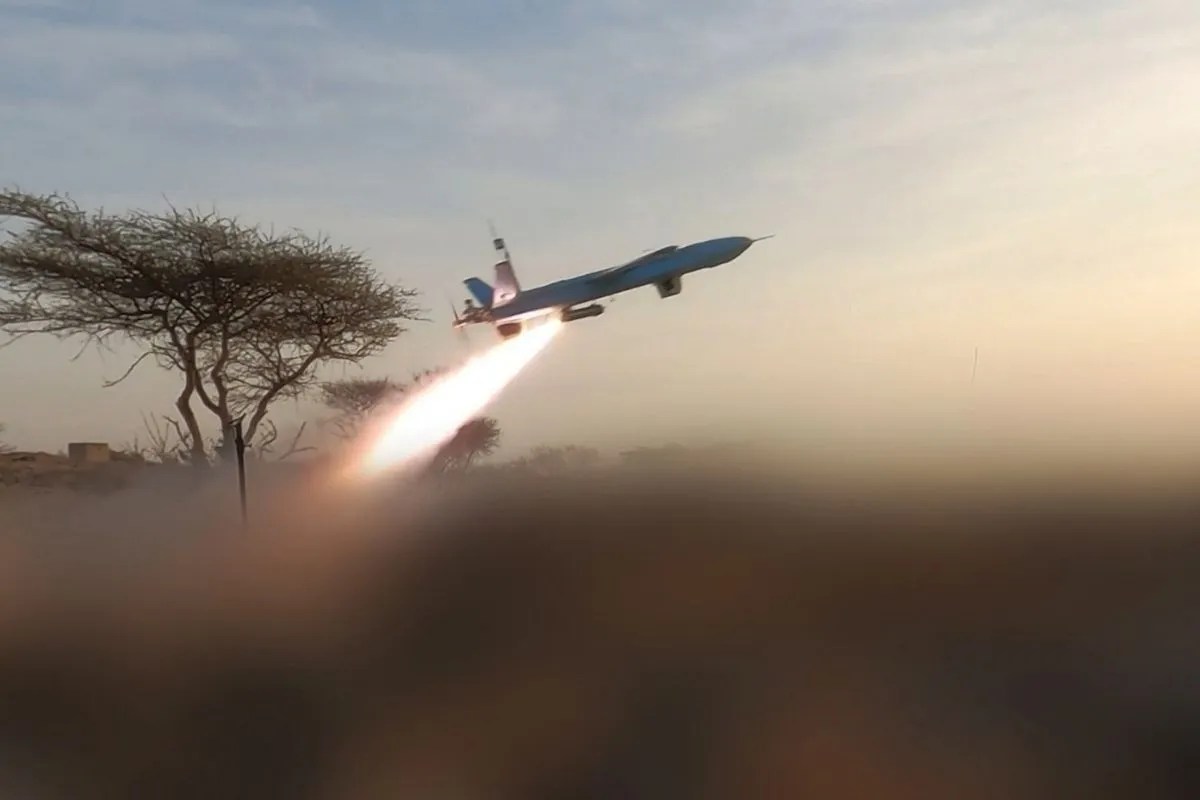
To the untrained eye, it is just geography. To the diplomats and defense strategists tracing it with the blunt edge of a yellow pencil, it is a tripwire. Thousands of miles away, in the jagged mountains of Yemen, a projectile leaves a launch rail. It traces a fiery arc through the dark sky before slamming into an oil refinery, a civilian airport, or a desalination plant on the Saudi coast.
Smoke billows. Markets shudder. And in an office three time zones away, a file is pulled from a metal cabinet.
Let us introduce Tariq. He is a hypothetical mid-level analyst whose desk smells of old paper and cardamom tea, but his waking hours are spent calculating numbers that keep generals awake. He does not wear stars on his shoulders, yet he understands the math of consequence better than most politicians. When he looks at the escalating drone strikes and missile volleys launched by Houthi forces toward Riyadh and Jeddah, he does not just see fire in the night. He sees a rusted chain, links forged over decades of shifting alliances, stretching taut.
That chain has a name: the joint defense pact.
It is an agreement born of another era, signed when the regional chessboard possessed entirely different players. On paper, it is a mutual security understanding, an assurance that an attack on one is viewed with extreme gravity by the other. For years, it sat dormant, gathering the quiet dust of diplomatic archives. It was a failsafe, a piece of heavy machinery locked behind glass labeled Break Only in Case of Absolute Emergency.
Now, the glass is cracking.
When Pakistan’s foreign office issues a warning that a sustained campaign of Houthi aggression against Saudi Arabia could trigger this mutual defense mechanism, the world often misreads the signal. Headlines reduce it to geopolitical posturing, the saber-rattling of distant capitals. They miss the heavy, grinding reality of what that activation actually means.
Imagine standing at the edge of a dry riverbed in Balochistan or the bustling streets of Lahore, where remittances sent home by workers sweating in Riyadh build houses and fund university educations. The bond between these nations is not merely transactional; it is woven into the personal histories of millions of families. When the security of the Kingdom is threatened, the shockwave travels directly down to the kitchen tables of suburban neighborhoods thousands of miles away.
Yet, the state apparatus moves with agonizing, deliberate caution.
Why? Because stepping onto that treaty ground is not a gesture. It is a commitment of boots, steel, and strategic posture that transforms a regional civil war into a multi-continental crisis.
The Houthis, operating from the rugged highlands of Yemen, have evolved from an insurgent militia into a surprisingly sophisticated force capable of projecting power far beyond their borders. Backed by complex supply chains and asymmetrical tactics, they have mastered the art of the low-cost, high-impact strike. A drone built with off-the-shelf commercial components can force a multi-billion-dollar economy to blink.
Against this backdrop, Saudi Arabia’s air defenses work in relentless overdrive, intercepting threats overhead while fragments rain down on sand and asphalt. Every successful interception buys time. Every failure exacts a toll in blood and infrastructural ruin.
And Pakistan watches the sky darken.
If the defense pact is invoked, the calculus shifts from passive diplomacy to active deterrence. It means Islamabad would be bound by treaty obligations to weigh military intervention or expanded strategic backing to secure the Kingdom’s sovereign borders. For a nation balancing its own delicate domestic security, fragile economic recovery, and complex regional balancing acts—particularly with neighbors like Iran—this is not a step taken lightly. It is walking a tightrope over an active volcano.
Diplomats call this strategic ambiguity. The human translation is far simpler: holding your breath while watching someone else strike a match near an open fuel tank.
The warning issued by Pakistani authorities was not a threat; it was a flashing red light on a dashboard that the international community has largely chosen to ignore. It was a message directed as much to the sponsors of the conflict as to the combatants themselves: do not mistake patience for indifference. Do not pull so hard on the wire that you snap the anchors holding regional stability in place.
History is littered with the wreckage of conflicts that everyone thought they could contain until they couldn't. The First World War began with an assassination in a dusty European street, cascading through a series of interlocking treaties that dragged empires into the mud. Modern conflicts rarely start with a grand design; they begin with small miscalculations, a series of escalatory steps where each side feels compelled to respond to the last, until the point of no return is quietly crossed in the dark.
This is the invisible stake in the desert sand.
When a missile arcs over the Red Sea, it carries more than explosives. It carries the weight of a regional architecture built over half a century. It tests the limits of endurance, the elasticity of alliances, and the fragile peace that keeps millions of people safe from the fallout of total escalation.
Tariq closes his file at the end of a sixteen-hour shift. Outside, the Islamabad night has finally cooled, the heavy humidity giving way to a clear, star-studded sky. He looks out the window, past the manicured hedges of the compound, toward the western horizon. Somewhere out there, thousands of miles away across deserts and seas, another night has fallen over the Kingdom. Another radar screen is glowing in the dark, green lines sweeping in a continuous, hypnotic circle, waiting to see what flies out of the shadows next.