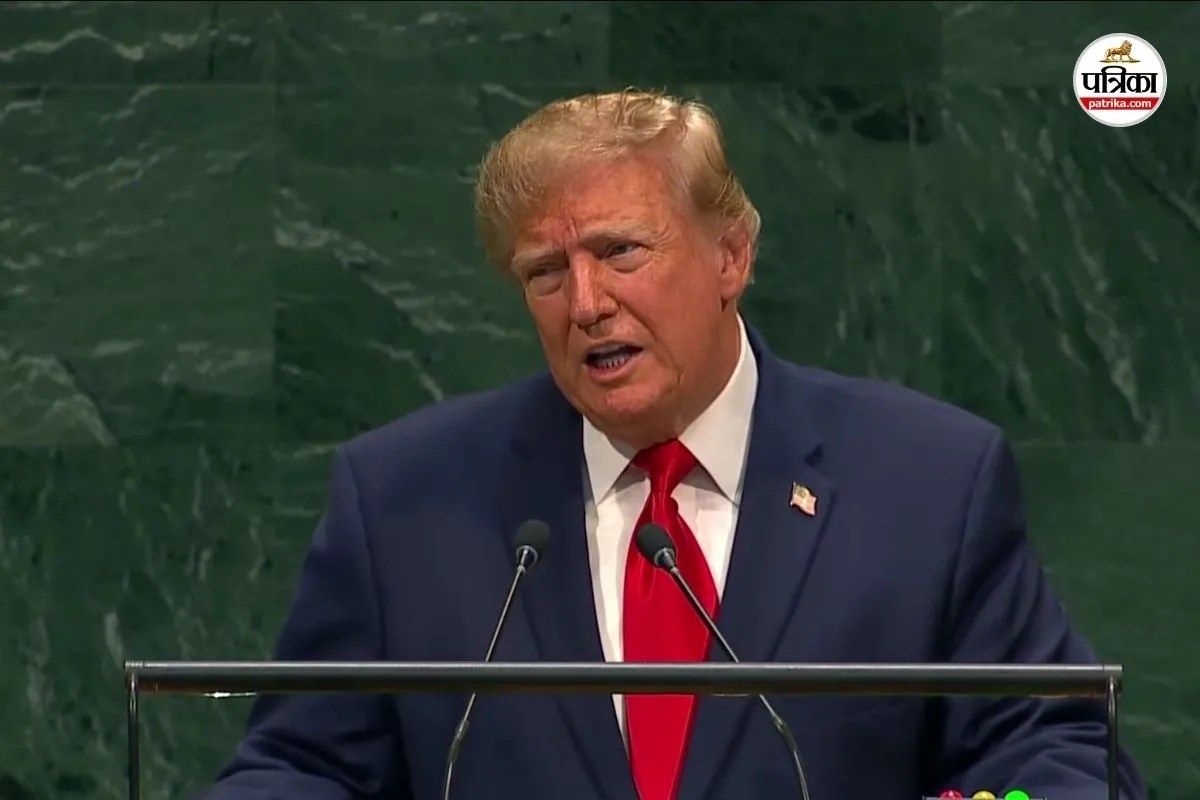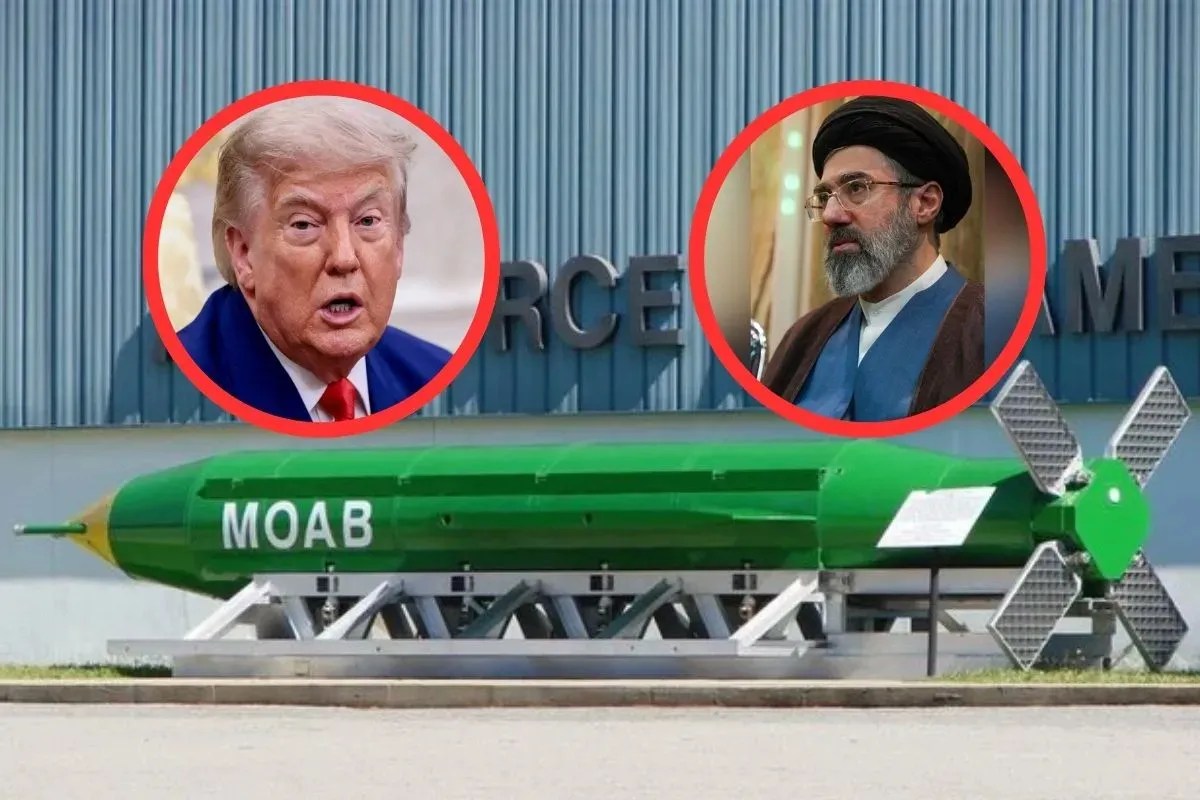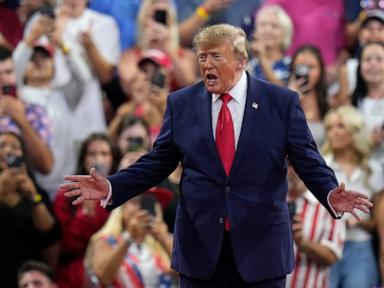
Donald Trump revived the prospect of military intervention in Cuba during a South Florida rally, directly linking potential U.S. force in Havana to American strikes and escalation strategies directed at Iran. For decades, Washington has relied on economic embargoes, diplomatic isolation, and covert pressure to weaken the Cuban government. By placing a military option on the table in front of an energized Cuban-American crowd, Trump is signaling a sharp rhetorical break from post-Cold War containment, weaponizing foreign policy momentum from the Middle East to secure domestic political leverage in a critical voting bloc.
The crowd in South Florida roared. They always do when a politician promises the end of the Castro-era regime. Yet anyone who has covered Washington and Latin America for the past thirty years recognizes the difference between campaign-stage bravado and Pentagon war plans. Talking about invading or bombing an island ninety miles off Key West is easy when the microphones are hot. Executing it is an entirely different beast.
To understand why this rhetoric is surfacing now, you have to look at the intersection of domestic electoral math, Middle Eastern escalation, and the severe economic collapse currently gripping Havana.
The South Florida Electoral Calculation
Miami-Dade County is the gravitational center of Cuban exile politics. For over sixty years, presidential candidates have traveled to Little Havana, Hialeah, and Doral to prove their anti-communist credentials. Usually, that meant promising tougher sanctions, restricting remittances, or keeping Cuba on the State Sponsors of Terrorism list.
Trump has always preferred maximum pressure over incremental diplomacy. During his first term, he rolled back the Obama-era normalization policies, tightened travel restrictions, and activated Title III of the Helms-Burton Act, allowing U.S. citizens to sue foreign companies operating on property confiscated after the 1959 revolution. Those moves solidified his support among Cuban-American voters, a demographic that has shifted decisively toward the Republican column over the last decade.
Floating military intervention takes that political bidding war to its logical extreme. Once you have already imposed the strictest sanctions short of a total naval blockade, there are very few economic levers left to pull. Rhetoric has to escalate to match the audience's expectations. By framing Cuba as the next logical target after confronting Iran, Trump taps into a specific worldview shared by hardline exile leaders—the idea that authoritarian regimes in Tehran, Caracas, and Havana form a single, interconnected axis that only responds to overwhelming physical force.
It is potent political theater. Whether it translates into actual military doctrine depends on variables that have nothing to do with rally applause.
Linking Tehran and Havana
The strategic logic behind connecting Iran and Cuba isn't entirely invented out of thin air, even if the military comparison is wildly disproportionate. Iran and Cuba have maintained diplomatic and economic ties for decades, united primarily by mutual hostility toward Washington. Iranian officials have routinely visited Havana to sign energy, biotechnology, and telecommunications agreements, offering rhetorical solidarity while largely failing to rescue the island's crumbling infrastructure.
From a hardline national security perspective, the argument goes like this. If the United States demonstrates the willingness to use kinetic force against entrenched adversaries like Iran, smaller hostile regimes in the Western Hemisphere will either capitulate or face the same fate. Proponents of this view argue that American deterrence eroded over the years because adversaries stopped believing Washington would actually pull the trigger.
The flaw in that logic lies in the stark operational differences between the two theaters.
Confronting Iran in the Middle East typically involves long-range air strikes, naval deterrence in the Persian Gulf, missile defense, and proxy management. It is a high-tech, standoff conflict designed to degrade specific nuclear or military capabilities without committing hundreds of thousands of American ground troops to an occupation.
Cuba offers no clean standoff targets. There are no enriched uranium facilities buried under mountains to bomb. There is no blue-water navy to sink. Any serious military intervention in Cuba aimed at regime change would almost certainly require an amphibious and airborne invasion, followed by a prolonged, messy ground occupation of an island nation of roughly eleven million people.
What the Pentagon Actually Sees
If you ask military planners in the Pentagon about invading Cuba, you won't get enthusiastic nods. You will get headaches.
The last time the United States seriously drew up plans to invade Cuba was during the October 1962 Missile Crisis. Back then, the Joint Chiefs of Staff estimated that an invasion would require hundreds of thousands of troops and result in tens of thousands of American casualties within the first few weeks. While modern American air superiority and precision-guided munitions have transformed warfare since the Kennedy administration, the basic geography and asymmetric challenges remain brutal.
Cuba's Revolutionary Armed Forces (FAR) have spent sixty years preparing for one specific scenario—a U.S. invasion. They know they cannot win a conventional war against the American military. Instead, their entire doctrine, known as the War of All the People, is built around protracted guerrilla warfare. Weapons caches are dispersed across the island's mountainous terrain, including the Sierra Maestra and Escambray ranges.
Consider a hypothetical scenario where U.S. air strikes destroy Havana's command centers, radar installations, and naval ports within forty-eight hours. The conventional Cuban military ceases to exist as a coherent fighting force. What happens on day three? Who secures the power grid? Who distributes food to eleven million starving citizens? Who patrols the streets of Santiago de Cuba and Camaguey while armed militias melt into the countryside?
Washington learned the hard way in Baghdad and Kabul that toppling a regime is the easy part. Owning the aftermath is what bleeds a superpower dry.
The Reality on the Ground in Havana
The irony of threatening military force against Cuba right now is that the Cuban government is already collapsing under the weight of its own incompetence.
The island is enduring its worst economic crisis since the collapse of the Soviet Union in the 1990s. Daily blackouts routinely last twelve to eighteen hours across large swaths of the country because the aging thermoelectric power plants are literally falling apart. Basic food items—bread, milk, cooking oil, chicken—are scarce and wildly unaffordable for average citizens earning state salaries in a devalued peso.
The demographic bleed is unprecedented. Over the past few years, hundreds of thousands of Cubans—mostly young, working-age professionals, doctors, and engineers—have fled the island, many making the perilous journey north to the U.S. southern border. In 2021, rare nationwide protests erupted across dozens of Cuban cities, with citizens marching in the streets chanting for freedom and an end to the Communist Party's monopoly on power.
Havana's grip on society is maintained not through economic legitimacy, but through a pervasive, ruthless internal security apparatus. State Security, the Ministry of the Interior, and neighborhood surveillance committees crush dissent before it can organize. Handing those same security forces an external American military threat would actually solve their biggest domestic propaganda problem.
For sixty-five years, the Cuban government has blamed every shortage, every blackout, and every economic failure on the U.S. embargo and the constant threat of Yankee imperialism. An actual American military strike wouldn't liberate the Cuban people; it would instantly allow the regime to wrap itself in the flag of national sovereignty, declare martial law, and execute dissidents as foreign traitors.
The Regional Blowback Nobody Mentions
Beyond the immediate operational quagmire, unilateral U.S. military action in the Caribbean would detonate American diplomacy across Latin America.
Even governments in the region that openly criticize Havana's human rights record—such as Chile under Gabriel Boric or Brazil under Luiz Inacio Lula da Silva—harbor deep, historical allergies to U.S. military intervention. The ghosts of Guatemala in 1954, the Bay of Pigs in 1961, the Dominican Republic in 1965, Grenada in 1983, and Panama in 1989 still shape foreign policy instincts from Mexico City to Buenos Aires.
If Washington sends troops or bombers into Cuba, cooperative efforts on migration enforcement, counter-narcotics trafficking, and countering Chinese economic influence across the hemisphere would freeze overnight. Leaders who currently work quietly with the State Department would be forced by domestic political pressure to condemn the United States and align more closely with Beijing and Moscow.
China, in particular, would welcome the distraction. While the U.S. military gets bogged down in a Caribbean stabilization mission, Beijing continues quietly building ports, telecommunications networks, and diplomatic leverage across South America without firing a single shot.
The Humanitarian Trigger
If there is a realistic scenario where U.S. military assets actually deploy toward Cuba, it won't look like a triumphant liberation campaign. It will look like a massive maritime crisis.
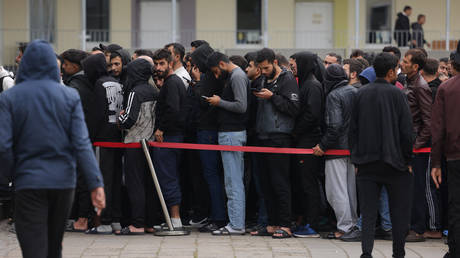
History shows that when conditions in Cuba become completely unbearable, the regime opens the valves. During the 1980 Mariel boatlift and the 1994 rafters crisis, Havana allowed tens of thousands of citizens to take to the sea on makeshift vessels, effectively weaponizing mass migration against the White House.
With Cuba's electrical grid failing and food supplies dwindling, another mass exodus across the Florida Straits is a genuine contingency that U.S. Southern Command tracks daily. In that event, the U.S. Navy and Coast Guard would surge into the waters between Key West and Havana—not to invade the island, but to intercept vessels, prevent mass drownings, and manage a humanitarian emergency before it overwhelms South Florida's infrastructure.
Separating Campaign Noise From Policy
Veterans of Washington foreign policy know how to read the signals. When a political leader floats military action at a campaign rally, the target audience isn't sitting in the Pentagon's Tank, and it isn't sitting in the Palace of the Revolution in Havana. The target audience is standing right in front of the podium, holding campaign signs and preparing to cast ballots.
Using Iran as a rhetorical bridge allows Trump to project strength, frame complex geopolitical crises as simple tests of willpower, and satisfy a crucial constituency in Florida without committing to a specific timeline or operational plan. It keeps the base energized and forces political opponents onto the defensive, where any call for caution can be painted as weakness toward communist dictatorships.
Yet words carry weight, especially when spoken by someone who commands—or seeks to command—the world's most powerful military. In Havana, aging apparatchiks are watching those clips closely, calculating whether to hunker down, tighten the screws on their own population, or look for quiet backchannels to survive another storm. In Washington, military planners are quietly updating contingency binders they hope never to open, knowing full well that starting a war ninety miles off the American coast takes a single order, while ending it could consume a generation.