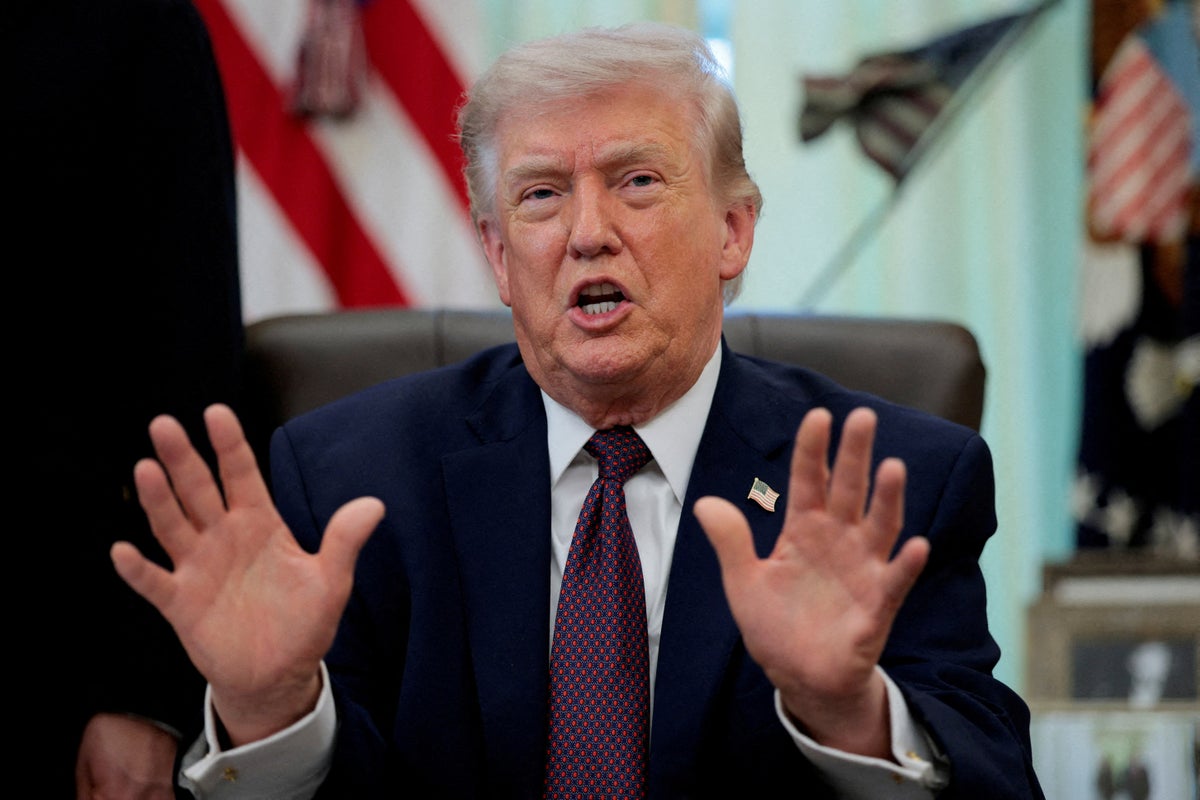
Mainstream tech journalists are predictably missing the forest for the trees. The headlines read like a massive policy pivot: "Trump signs executive order establishing oversight of AI models." They point to the newly minted 30-day pre-release review window and the creation of a classified benchmarking process for frontier systems as proof that Washington is finally cracking down on Silicon Valley. They treat this as a complete about-face from the administration’s aggressive deregulatory push earlier this year.
It is absolute theater.
If you believe this executive order represents genuine federal oversight, you are falling for a carefully choreographed public relations stunt orchestrated by the very labs it purports to monitor. This directive is not a leash on Big Tech. It is a protective shield, engineered to insulate a handful of monopoly-scale AI companies from actual accountability while cementing their dominance over the market.
The Illusion of the 30 Day Speed Bump
Let us dismantle the core mechanic of this order: the 30-day voluntary preview window. Under this framework, companies like OpenAI, Google, and Anthropic are invited to share their upcoming frontier models with the federal government a month before public release. The mainstream narrative screams that this is a bottleneck.
I have spent decades watching how regulatory capture works inside Washington and Silicon Valley. A 30-day "voluntary" window is not a bottleneck; it is a federal stamp of approval.
Consider the operational reality. If an AI lab hands over a model to the National Security Agency or the Department of Defense for a month, and the government discovers no glaring, immediate national security vulnerabilities, that model hits the market with an implicit government blessing. If anything goes sideways post-launch, the tech giants can simply shrug and say, "The federal government looked at it for 30 days and didn't flag it."
Worse, the timeline itself is a joke. Anyone who understands the technical architecture of a modern large language model knows that comprehensive red-teaming takes months, if not years. Evaluating a model for highly sophisticated autonomous cyber-defense capabilities or biochemical risks cannot be executed in 720 hours by an underfunded, understaffed federal clearinghouse.
The Absolute Lie of Voluntary Oversight
The media loves to debate whether this framework will eventually become mandatory. They are asking the wrong question. It does not need to be mandatory because the market dynamics ensure that the dominant players will gladly volunteer.
Why? Because this order explicitly protects the incumbents.
Look closely at the text. The directive states that nothing shall be construed to authorize mandatory government licensing or pre-clearance. By keeping the framework strictly voluntary, the administration has created a two-tiered system:
- The Elite Inside Track: The mega-labs (the ones who can afford the massive compute infrastructure required to build "covered frontier models") volunteer their systems. They get private, classified briefings with the Pentagon and the Treasury Department. They integrate their tools directly into federal cyber-defense procurement pipelines.
- The Open-Source Outcasts: Smaller startups and open-source developers who choose not to participate—or lack the back-channel access to do so—are instantly branded as "unvetted" and "high-risk."
This is regulatory capture disguised as national security. The major AI labs have been begging for federal guardrails for a year. Not because they fear the technology, but because they fear competition. By establishing a formalized, classified government relationship for "trusted partners," the White House has effectively built a moat around the existing monopoly.
The Hidden Threat of the State Law Preemption
To understand the true intent of the administration's broader tech strategy, you cannot view this executive order in isolation. You have to connect it to the executive order signed last December, which focused entirely on preventing individual states from regulating AI.
Silicon Valley is terrified of a fractured regulatory landscape where California, New York, and Texas all enforce conflicting compliance laws. The federal government's voluntary framework serves a highly strategic political purpose: it provides a weak, centralized alternative that the tech lobby can use to sue states into submission.
Imagine a scenario where California attempts to pass a stringent AI safety bill with real financial penalties for corporate negligence. The tech giants will immediately march into federal court, point to the June 2nd executive order, and argue that state-level rules interfere with federal national security initiatives and global competitiveness. This order exists to defang local governments, not to discipline tech executives.
The Flawed Premise of the "Cyber Clearinhouse"
The order also tasks the Treasury Department with creating an AI cybersecurity clearinghouse to identify software vulnerabilities at scale. The assumption here is that the state possesses the technical acumen to benchmark systems like Anthropic's Mythos more effectively than the engineers who built them.
This is a dangerous delusion.
The Office of Personnel Management has been told to expand federal cybersecurity hiring via the "U.S. Tech Force" within 60 days. But the federal government cannot compete with private sector compensation. A top-tier AI safety researcher or cryptographic engineer commands seven figures in the private sector. Washington is trying to police trillion-dollar technologies using bureaucratic oversight structures that still rely on legacy infrastructure.
The clearinghouse will not find the vulnerabilities. It will merely act as a rubber stamp for reports compiled and sanitized by the AI labs themselves.
The Trade Off of Consensual Regulation
Let us be completely honest about the alternative. True, rigid regulation—such as mandatory licensing or the 90-day pre-clearance window that was reportedly scrapped from the initial draft—comes with severe downsides. It absolutely risks slowing down American innovation at a moment when geopolitical rivalries demand rapid deployment. The administration’s stated desire to maintain a technological edge over global competitors is a legitimate geopolitical priority.
But we must stop pretending that this executive order is a tough-on-tech compromise. It is a massive concession. It gives the illusion of safety to the public, provides political cover to the administration, and hands an elite cartel of tech companies an exclusive, government-sanctioned monopoly over the most powerful technology of our generation.
The administration did not tighten its grip on Silicon Valley. Silicon Valley just finalized its grip on Washington.


