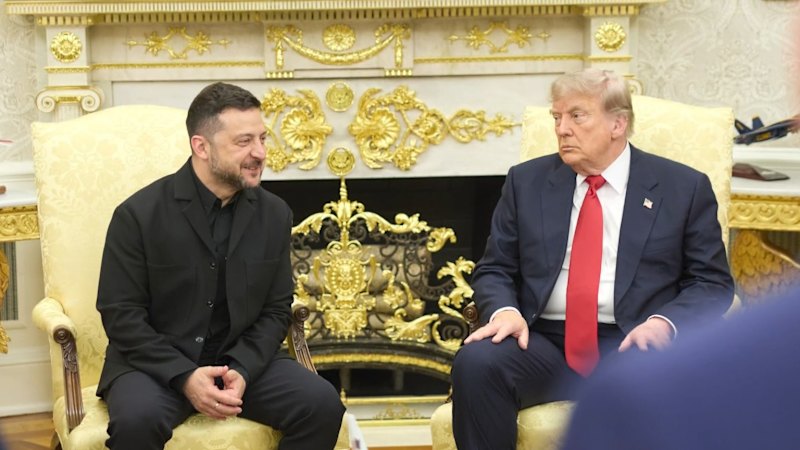
You can tell a lot about where global power sits by who ends up in the Oval Office on the same afternoon. President Donald Trump didn't just host routine diplomatic visitors this week. He welcomed both Ukrainian President Volodymyr Zelenskyy and Israeli Prime Minister Benjamin Netanyahu to the White House for high-stakes, closed-door talks. While both leaders made the trip to Washington partly to pay respects at the funeral of the late Senator Lindsey Graham, the timing tells a much larger story about how American foreign policy is shifting under pressure.
If you think these meetings were just polite photo ops, you're missing the entire board. Trump is balancing two grinding conflicts that refuse to stay contained. On one side, Ukraine is pushing for domestic manufacturing licenses for advanced defense systems while trying to cut off Russian supply lines. On the other side, Israel is navigating a volatile standoff with Iran and looking to secure American backing for its long-term security strategy. Let's look at what actually happened behind those closed doors and what it means for the months ahead.
The Changing Dynamic with Kyiv
Relations between Washington and Kyiv haven't always been smooth. But lately, things look different. Zelenskyy walked into the White House with a concrete agenda centered on defense production and technological cooperation.
The biggest win for Ukraine coming out of these discussions involves the green light to produce Patriot interceptors locally. Kyiv wants to stop relying entirely on rolling shipments from Western stockpiles and start building its own defensive shield. Beyond the Oval Office sit-down, Zelenskyy met with defense contractors like Lockheed Martin to hammer out tech-sharing agreements.
At the same time, Ukrainian officials are tying their fight directly to broader regional dynamics. Zelenskyy has repeatedly pointed out how shared intelligence and logistical support flow between Russia and Iran. When Russian satellite imagery of Gulf bases pops up in Iranian hands, it changes the calculus for Western leaders. Trump's administration is listening more closely because Ukraine has managed to slow down Russian battlefield advances while ramping up domestic output.
Friction and Strategy with Israel
While the tone with Kyiv has warmed, Trump's meeting with Netanyahu carried a distinct undercurrent of tension. The two leaders sat down for nearly an hour and a half, but Trump didn't hide his annoyance beforehand.
Ahead of the sit-down, reports surfaced that Netanyahu planned to brief Trump on new intelligence regarding Iran's underground nuclear sites, specifically around Pickaxe Mountain. Trump brushed it off publicly on television, making it clear he didn't need a public announcement to know what was happening on the ground. He bluntly suggested that Netanyahu was just trying to keep the United States deeply entangled in active military campaigns.
Despite the public sparring, the official readout called the meeting positive. Netanyahu needs American alignment as his government manages domestic political pressures and regional security risks following the outbreak of the Iran conflict earlier this year. Trump has spent months trying to weigh continued military deterrence against the heavy economic and diplomatic costs of a prolonged regional war.
The Lindsey Graham Factor
You can't separate these Washington visits from the reason both leaders were in town. The memorial for Senator Lindsey Graham brought an unusual cast of international figures to the capital. Graham had long positioned himself as an aggressive advocate for both Ukraine and Israel on Capitol Hill.
Before his passing, Graham helped push through crucial legislative packages, including heavy sanctions targeting countries purchasing Russian oil and gas. With lawmakers gathering to honor his legacy, both Zelenskyy and Netanyahu used the occasion to lobby key senators directly. The proposed sanctions bill remains a major priority for Kyiv, while Israel continues to lean on its bipartisan support in Congress to keep aid flowing and maintain deterrence against regional adversaries.
What Happens Next
We're watching a rare moment where American foreign policy is being rewritten in real-time. Trump isn't letting foreign leaders dictate the pace, whether it's pushing back on Netanyahu's public posturing or negotiating production licenses with Zelenskyy.
If you're tracking international markets, defense stocks, or global stability, keep your eyes on how these defense manufacturing deals pan out. Ukraine is shifting from a pure aid recipient into a co-producer of military tech, and Israel is having to accept that Washington wants tighter control over the timeline of Middle Eastern conflicts. The era of writing blank checks or following pre-set alliance playbooks is officially over. Watch how the upcoming congressional votes on sanctions shake out, because those legislative moves will dictate whether these White House meetings translate into actual policy changes on the ground.