Donald Trump says the United States does not need a deal with Iran. Sounds tough, right? On the surface, it plays like classic maximum-pressure politics—walk away from the table, let the other guy sweat, and wait for him to blink.
Except there's a massive catch. You can't just walk away from a conflict when you've got three carrier strike groups parked near the Arabian Gulf and an active naval blockade strangling a country's economy. That isn't walking away. That's freezing a war in place and hoping nobody lights a match. If you enjoyed this article, you should read: this related article.
Right now, in late November 2026, that exact standoff is hitting a breaking point. The US blockade of Iran has stretched past 130 days. Washington insists it has already won and doesn't need to sign a piece of paper to prove it. Tehran, squeezed to the brink of economic collapse, is signaling that it's done sitting still. If you're trying to figure out what Trump's "no deal" posture actually means for oil prices, the Middle East, and the risk of a wider war, you have to look past the press conference soundbites and look at the math on the ground.
What Trump Actually Means by Not Needing a Deal
When Trump tells reporters he doesn't need a deal with Iran—or, as he put it at a White House press conference after returning from Asia, that Washington wants "a real deal, not a fake deal"—he's betting on one simple theory. Time is on America's side. For another look on this story, check out the recent update from NPR.
Secretary of State Marco Rubio summed up the administration's thinking with brutal bluntness. "The pain that they're feeling is, eventually you have to eat," Rubio told reporters.
From Washington's perspective, why bother giving up sanctions relief or unfreezing billions in Iranian assets when economic suffocation is already doing the heavy lifting? The administration's "Economic Outcast" campaign—backed by fresh Treasury sanctions targeting dozens of individuals and entities—is designed to starve Tehran until its leaders capitulate on their nuclear program.
Trump's own goal here is actually narrower than a lot of people realize. In a late November interview with the New York Post, he admitted openly that Washington's objectives diverge from Israel's. While he remarked that regime change in Tehran is "probably doable," he stressed that it was never his benchmark. "I just don't want them to have a nuclear weapon. I was never for or against regime change, that was never a criteria for me," Trump said.
That distinction matters a lot. If your only real requirement is stopping an Iranian bomb, and you believe your military strikes plus a naval blockade have already crippled their ability to build one, then a formal diplomatic agreement starts to look like a distraction. Why sign a treaty that Democrats or foreign allies might criticize when you can just keep the lid bolted shut?
Because lids blow off when the pressure gets too high.
The Real Cost of the 130-Day Blockade
Let's look at the actual numbers, because they explain why this standoff is way more volatile than it looks on cable news.
Before the blockade tightened in mid-2026, Iran was loading roughly 2 million barrels of crude and condensate a day, according to data from Kpler and Vortexa cited by Reuters. By September, Kpler recorded zero loadings. Not a dip. Zero. That was the first full month without seaborne crude exports since the 1979 revolution.
The US military estimates the blockade has already cost Tehran at least $25 billion in lost revenue. Every month it continues, Iran stands to lose another $3 billion to $6 billion. The broader economy is in freefall. The International Monetary Fund projects a 7.6 percent contraction in Iran's economy for 2026, and the Iranian rial has blown past 2 million to the dollar.
On paper, that looks like a total American victory. If you're sitting in the Pentagon or the State Department, those numbers validate the entire strategy.
Here's the problem with cornering a state that has nothing left to lose. It stops acting cautiously.
Why Tehran Refuses to Live in Limbo
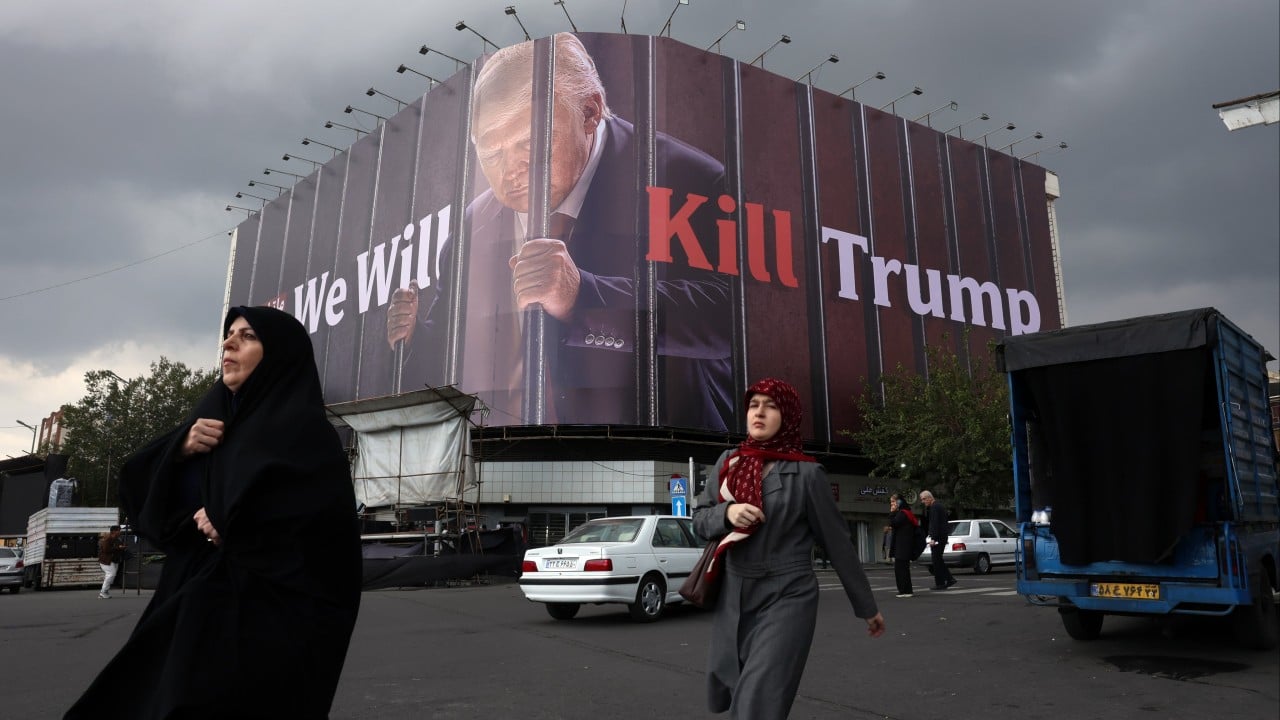
For months, the conflict has sat in a weird twilight zone—not full-scale daily bombardment, and definitely not peace. Iranian leaders have a phrase for it: "neither war nor peace". And they've made it crystal clear they won't accept it as the new normal.
Parliament Speaker Mohammad Bagher Ghalibaf, who also serves as Iran's top negotiator, told lawmakers this month that Iran "will not remain in a state of 'neither war nor peace'". Reports out of Tehran indicate Supreme Leader Mojtaba Khamenei has issued the exact same directive to his officials. Even back in April, his message was blunt: Iran didn't seek war, didn't want it, but wouldn't renounce its rights under any circumstances.
This isn't just empty rhetoric for a domestic audience. Look at Kharg Island, Iran's primary oil export terminal. According to reporting from Al-Monitor and Iran International, more than 14 Iranian tankers have gathered near the terminal, most with their tracking transponders switched off. Tehran is openly preparing to test the US blockade.
Think about the trap that creates for Washington. If those tankers sail, Trump faces a binary choice he has spent months trying to avoid. Either the US Navy lets them pass—which instantly shatters the credibility of the blockade and hands Tehran a massive propaganda win—or American warships open fire. And Iran has already warned that if its tankers are fired on, Persian Gulf oil infrastructure is fair game.
The Swiss Cheese Status Quo
If you want a sharp, honest assessment of why Trump's "we don't need a deal" line doesn't hold up under scrutiny, look at what Trita Parsi, executive vice president at the Quincy Institute for Responsible Statecraft, told NPR in mid-November.
Parsi calls the current mess a "Swiss cheese status quo". His argument is simple, and honestly, it's hard to poke holes in it. A naval blockade is legally and practically an act of war. You cannot maintain an active blockade and simultaneously claim you've walked away from the war. As long as US ships are enforcing a perimeter, Washington can't stay away—it will keep getting dragged back in.
Even worse for the US, this limbo doesn't actually solve the nuclear issue. Without a verified diplomatic agreement, Iran isn't handing over its 60 percent enriched uranium. It isn't making nuclear concessions. Back in May, Trump reportedly floated five steep preconditions for resuming talks, including demanding that Iran surrender 400 kilograms of enriched uranium to the United States and keep only a single operational nuclear facility. Tehran rejected that flat out.
Meanwhile, the fighting never completely stopped. On November 2, the US struck Iran's Qeshm Island, and the Islamic Revolutionary Guard Corps announced it had shot down an American MQ-9 drone over the eastern Strait of Hormuz. That's not a finished conflict. That's a slow burn waiting for a gust of wind.
The January Clock and the Global Wildcards
There's another layer to this that most casual observers completely miss. Trump doesn't have unlimited time, even if he talks like he does.
In that same New York Post interview, Trump noted that the US military effort is "funded" up until roughly the end of January, hinting at a narrow window if Washington decides to launch a fresh offensive. He also warned that Democrats in Congress would "take a total win and make it a loss" once the political calendar shifts. Analysts at the Atlantic Council have pointed out that as Trump moves deeper into his lame-duck period, both Democrats and Republicans are going to push harder to take the wheel on Iran policy—especially over intelligence reports suggesting Russia and Iran are sharing information on US troop locations.
Then there's the Shenzhen wildcard. On November 19, Trump met with Chinese President Xi Jinping and Russian President Vladimir Putin on the sidelines of the APEC summit in Shenzhen. The official joint statement didn't mention Iran, the Strait of Hormuz, or the nuclear standoff once. Yet two days later, US Treasury Secretary Scott Bessent claimed Xi and Putin had agreed with Washington on Iran.
Nobody outside those rooms knows for sure if a backroom understanding was reached, and officials in Tehran are visibly divided over whether Moscow and Beijing just sold them out. What we do know is that China's oil imports disguised as Malaysian crude dried up once the US blockade took hold. Beijing and Moscow have both opposed further military escalation because of the economic fallout, which gives them every reason to want the Strait of Hormuz calm—even if it means leaving Tehran twisting in the wind.
What This Means for Gulf Allies and Your Gas Tank
If you think this is just an abstract foreign policy chess match, check the pump. Trump himself tied American gasoline prices directly to how Washington resolves the Iran standoff.
Right now, oil prices have actually softened slightly amid broader market shifts, and the International Energy Agency has even projected that the prolonged Iran conflict could shave more than 4 percent off global oil demand by 2035 as importers accelerate their pivot away from volatile Gulf supplies. Qatar, for instance, has already turned to US liquefied natural gas to cushion its own war-related losses, even after a missile strike hit one of its LNG tankers.
Still, Arab Gulf states are nervous. Really nervous. They've absorbed collateral hits since this conflict kicked off, and UAE official Anwar Gargash has publicly stressed that escalating tensions benefits nobody. Qatar is still trying to mediate indirect talks in Doha centered on unlocking more than $6 billion in frozen Iranian funds in exchange for reopening the Strait of Hormuz and restarting nuclear discussions.
If the US tries to "moonwalk out of the war," as Parsi put it, while leaving a bruised, cornered Iran sitting right across the water from Saudi Arabia, the UAE, and Qatar, those Gulf allies are the ones left holding the bag.
How to Read What Happens Over the Next Eight Weeks
Because both sides are posturing hard, it's easy to get whiplash from the daily headlines. One day Trump says the US doesn't need a deal; the next day he's talking about wanting a "real deal" or giving Tehran until early 2027.
If you want to know whether this standoff is heading toward a quiet diplomatic off-ramp or a sudden shooting war, ignore the speeches and track four concrete signals:
- The tankers at Kharg Island: Watch whether those 14-plus Iranian vessels actually leave port and try to run the blockade. If they sail and the US Navy fires, the "no war, no peace" era ends overnight.
- The Doha backchannel: Keep an eye on Qatari mediation. If Washington quietly agrees to unfreeze a portion of that $6 billion in Iranian funds, it means the White House knows the blockade has hit its limit.
- The late-January funding cliff: Pay attention to congressional appropriations and Pentagon deployments as January approaches. A surge in regional assets before that window closes would signal a final military push rather than patient pressure.
- Oil and shipping insurance rates: Tanker war-risk premiums in the Persian Gulf usually spike days before the public realizes a clash is imminent. Markets price in real risk faster than politicians admit it.
Trump's bet is that Iran's economy will crack before its military lashes out. That's a high-wire act with zero net underneath it, and the next two months will show whether Washington actually holds all the cards—or just walked itself into a trap it can't easily exit.