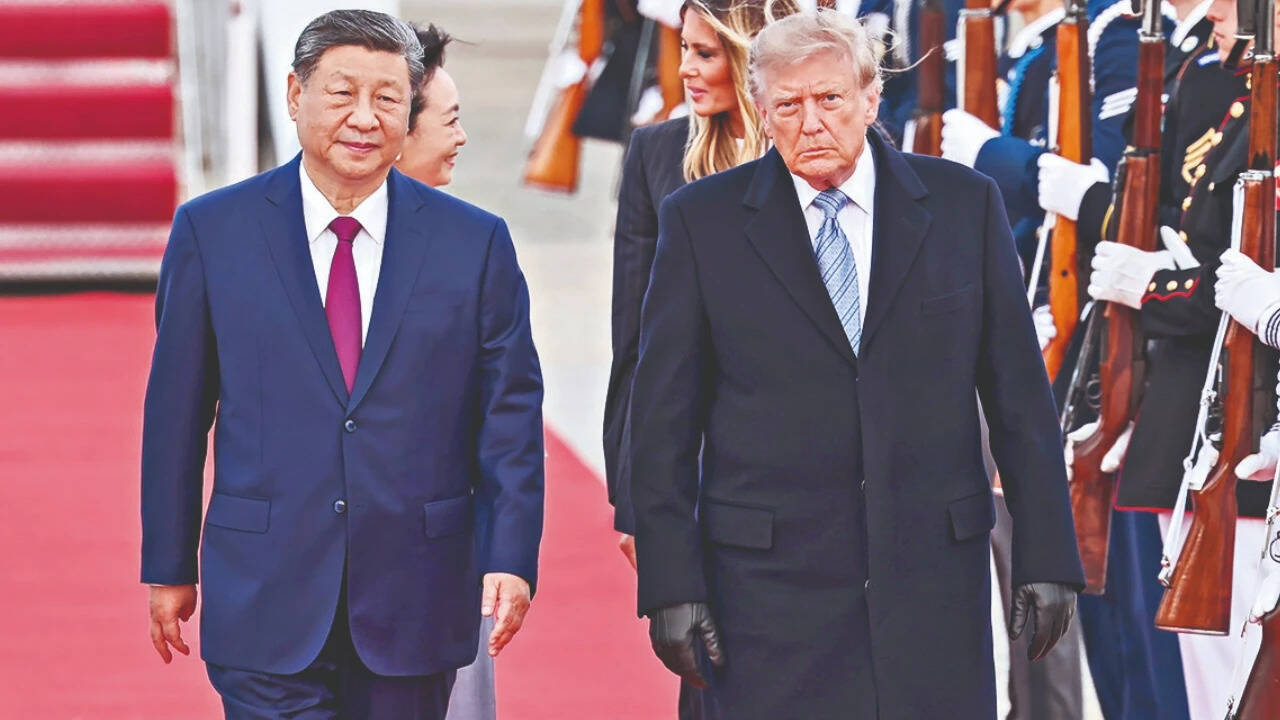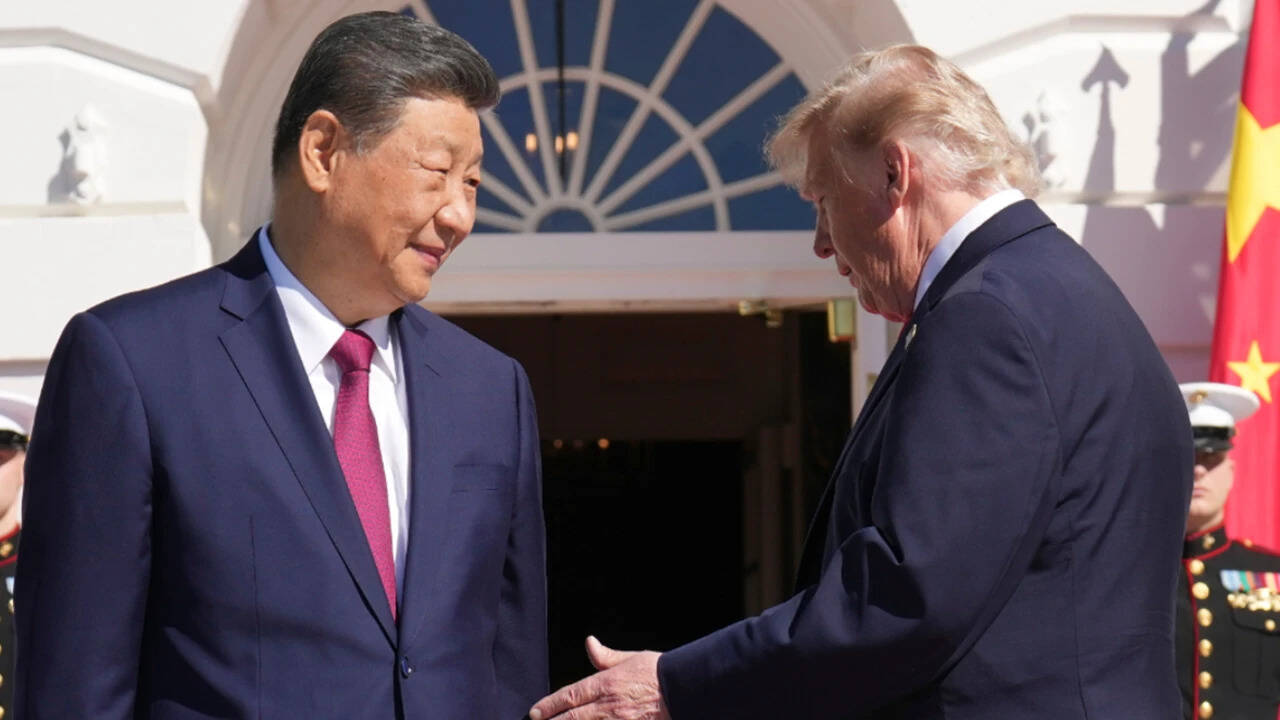
Red carpets don't fix structural rivalry. Yet when Donald Trump rolled out an unmistakable show of personal deference for Xi Jinping in Washington, treating Xi as a peer rather than a systemic adversary, partners and critics heard a louder message than any joint statement could hide.
Honestly, the contrast jumped off the screen. During Xi's September 23 to 25, 2026 state visit—his first trip to Washington in more than a decade—Trump greeted him at Joint Base Andrews, staged a military review, gave him a South Lawn tour of a newly built White House helipad and Marine One, and hosted a black-tie East Room dinner with red decor and a toast to Richard Nixon's 1972 opening. Trump repeatedly praised a "truly great friendship" and called their roughly 90-minute talk a "great meeting". Meanwhile, Xi offered measured talk about keeping competition within bounds, sent two pandas to Zoo Atlanta, pledged to host 100,000 American youth over five years, and kept China's red lines intact.
For allies who rely on American deterrence and critics who view Beijing as Washington's primary long-term challenger, that dynamic looks lopsided. You don't erase deep disputes over trade, technology, Taiwan, or regional security with warm personal billing. When a U.S. president elevates an authoritarian counterpart to equal standing on stage, smaller democracies wonder what gets traded away behind closed doors, and hawks wonder whether Washington just handed Beijing status for free.
What Happens When Trump Treats Xi as a Peer
Peer framing changes the room before a single policy paper is signed. In traditional U.S. statecraft since the Cold War, presidents have tried to balance engagement with clear asymmetric boundaries—signaling that American alliance networks, democratic norms, and market rules aren't just bargaining chips. Treating Xi as a peer flips that posture into a leader-to-leader handshake where personal rapport is treated as the main stabilizing engine.
Look at how asymmetrical the exchange actually was. Trump talked about friendship and personal chemistry. Xi talked about structure. In his public remarks, Xi said Chinese and American interests are deeply intertwined and urged that competition stay within bounds. He also insisted that artificial intelligence stay under human control and called for a negotiated end to the Iran war, while setting firm red lines on Taiwan, AI, and Iran. Notice what wasn't on offer: a retreat from Beijing's industrial subsidies, a halt to military pressure around Taiwan, or a commitment to trilateral arms control talks with Washington and Moscow.
There's a practical trap here. Personal flattery works best when both sides share similar incentives. Xi doesn't answer to voters in swing states or congressional committees. His domestic authority rests on party discipline and national strength, and analysts at the Brookings Institution have noted that Xi is already looking past the current U.S. political cycle toward China's next Party Congress. When Trump treats Xi as a peer, Beijing gets symbolic equality at the top of the world while keeping its operational freedom on the ground.
Why Capitol Hill and Critics Call It Diplotainment
Criticism didn't come from just one corner of Washington. It cut across party lines and policy shops, often with sharp language.
Republican Senator John Kennedy of Louisiana didn't mince words during the visit, calling Xi "the chief reptile, the quarterback," and warning that Beijing's leadership lies like timeshare salesmen. Republican Senator Roger Wicker of Mississippi said he would have advised against inviting Xi for such a lavish welcome given Beijing's record and ongoing disputes with the United States. Senate Democrats joined in, arguing the summit favored pageantry over real concessions on AI, trade, Taiwan, and the war with Iran.
Former Obama-era diplomat Danny Russel captured the skepticism in a single phrase: "diplotainment." Pandas are cute, Russel noted, but what the United States needs are rare earths and concrete fixes. Look at what the Washington summit actually produced on paper. Both sides pointed to general agreement on favorable tariff treatment for $30 billion in goods in each direction, ongoing fentanyl cooperation, and plans for future summits at APEC in Shenzhen and the G20 in Doral, Florida. That's thin gruel after a multi-day state production.
Scholars at the Center for Strategic and International Studies (CSIS) raised an even sharper point. Edgard D. Kagan described the visit as heavy on symbolism and light on substance. Thomas J. Christensen warned that the roughly year-long trade truce remains fragile. When Washington treats Beijing so generously in return for modest, reversible gestures, critics argue it erodes deterrence and makes future pushback harder. If the U.S. rolls out the red carpet for a partial tariff pause, what's left in reserve when Beijing tightens export controls on critical minerals or ramps up gray-zone pressure in Asia?
How Allies and Partners Read the Signal
Washington's partners don't experience U.S.-China summits in the abstract. Every shift in tone ripples through defense budgets, supply chains, and domestic politics in Tokyo, Taipei, Brussels, and New Delhi.
Take Japan. Following the Washington summit, Japanese Premier Sanae Takaichi boasted of very strong ties with the United States while telling reporters she had "no comment" on the Trump-Xi meeting itself. That polite dodge spoke volumes. Tokyo has spent years trying to lock in unambiguous U.S. backing against Chinese maritime coercion in the East China Sea. When Takayuki Kobayashi, policy chief of Japan's ruling Liberal Democratic Party, flagged concerns over potential three-way summits involving Trump, Xi, and Vladimir Putin, he was voicing a quiet fear in Asian capitals: a "Yalta" style bargain where big powers carve up spheres of influence and leave allies holding the bag.
European capitals have their own headache. Constanze Stelzenmüller and other analysts watching U.S.-China diplomacy have pointed out that Europeans want economic stability, yet fear two things at once. First, a bilateral U.S.-China deal could divert even more subsidized Chinese manufacturing exports into Europe. Second, side deals on security or Ukraine could sideline European voices on issues that directly affect European borders. Even where Washington insists no decisions will be made about Europe without Europe, the optics of peer-to-peer superpower bargaining breed anxiety.
Taiwan sits in the most sensitive spot of all. Taipei had plenty of reason to worry that a warm Trump-Xi hug would come at Taiwan's expense, especially after the 2026 National Defense Strategy omitted Taiwan by name even as broader defense texts kept it central. Yet policy continuity hasn't collapsed. Following a 2026 Washington summit, U.S. Ambassador to China David Perdue stated plainly that Washington was not changing its language or position on Taiwan and wanted peace across the Strait. Joint U.S.-Taiwan Coast Guard operations and arms sales discussions have continued. Still, reassurance statements after a lavish state dinner don't erase the unease caused by watching Trump treat Xi like an equal partner.
Meanwhile, CSIS analyst Yun Sun has noted that pressing India economically while chasing strategic stability with Beijing risks convincing New Delhi that raw leverage matters more than partnership. After more than two decades of steady U.S.-India alignment work, watching Washington court Xi as a peer sends a confusing signal across the Indo-Pacific.
Where Trade, AI, and Security Actually Stand
Strip away the East Room dinner and the helipad tour, and the working-level relationship looks far more contested than "great friendship" suggests.
On trade, friction is ongoing. China extended the suspension of an additional 24% tariff on U.S. goods for two months starting November 10, 2026, while keeping a 10% additional tariff in place, alongside licensing and review rules affecting American entities. In a November 6, 2026 call with Chinese Vice Premier He Lifeng, U.S. Treasury Secretary Scott Bessent and U.S. Trade Representative Jamieson Greer pressed on agricultural purchases, rare earths, and critical minerals. Beijing has linked bigger farm buying to reciprocal tariff cuts on $30 billion of goods each way. That's hard-nosed bargaining, not warm camaraderie.
Artificial intelligence shows the same split between rhetoric and reality. Trump has talked about "superintelligence" and suggested he wants to leave rules where they are, claiming that matches Beijing's view. Xi has emphasized keeping AI under human control. On November 10, 2026, Bessent outlined plans for bilateral dialogue on superintelligence, including pre-release model evaluations and an incident reporting channel, building on September's agreement. Yet even officials have left open how fast those channels actually operate, and intense tech rivalry limits how far either side will go.
Security and regional crises add another layer of strain. China has not agreed to Trump's push for trilateral arms control talks with Russia, and its stance on Iran stops short of Washington's demand that Tehran can never acquire a nuclear weapon. Stimson Center China Program director Yun Sun has cautioned that Beijing is unlikely to make major concessions on Iran, such as cutting oil purchases sharply, and that congressional oversight after midterm elections will keep pressure on Taiwan, trade, and investment.
If you're tracking this relationship—whether as an executive managing supply chains, a policy researcher, or a voter trying to read the news—stop grading summits by guest lists and photo ops. Watch three concrete markers instead: whether rare earth and critical mineral licenses actually loosen, whether AI incident channels move from speeches to working protocols, and whether U.S. defense and trade commitments to allies like Japan, Taiwan, and India stay steady when Beijing pushes back. You can see how Beijing frames its own pitch in Xi Jinping calls for US and China to be partners. Watching that clip alongside Washington's trade and security readouts shows why treating Xi as a peer buys calm on camera while leaving the hardest disputes unresolved.