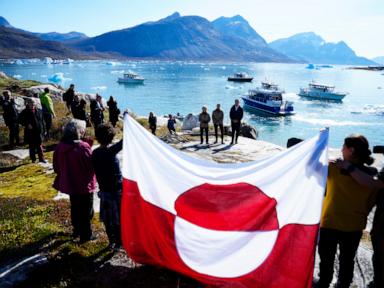
When Donald Trump walked up to reporters and declared that the United States had secured "permanent control" over Greenland's security, political analysts scrambled. Headlines screamed about annexation, sovereignty, and sudden geopolitical shifts. But beneath the dramatic statements lies a very real, highly strategic trilateral agreement signed by the U.S., Denmark, and Greenland that fundamentally rewires how the Arctic will be defended.
You’ve probably wondered if the U.S. actually owns the world's largest island now, or if this is just another loud headline. The short answer is no, sovereignty hasn't changed. Denmark still holds the crown, and Greenland continues marching toward self-determination. What did change is the absolute lockdown of military access, defense areas, and foreign investment across the High North.
Let's break down what this historic deal actually means, what Washington managed to lock down, and why the geopolitical map of the Arctic looks entirely different today.
What the 2026 Trilateral Agreement Actually Says
Forget the rumors of an outright purchase or a forced takeover. After months of intense diplomatic friction—including tariff threats and high-stakes posturing—the United States, Denmark, and Greenland inked a comprehensive defense supplement that updates the aging 1951 framework.
The text of the agreement does not transfer land. Instead, it establishes permanent security architecture that addresses Washington's core anxiety: keeping rival superpowers out of North America's backyard.
Here are the operational shifts written into the pact:
- Expanded Military Footprint: The U.S. gets the green light to modernize and significantly expand operations at Pituffik Space Base, its critical northernmost installation.
- New Defense Zones: The agreement carves out two new strategic defense areas at Narsarsuaq and Mestersvig, securing footholds in southern and eastern Greenland.
- Unrestricted Access: The American military gains robust overflight, land, and undersea access across Greenlandic territory.
- The Golden Dome Shield: The framework lays the groundwork for deploying advanced missile defense infrastructure, frequently referred to as the Golden Dome system.
Crucially, the treaty specifies that even if Greenland eventually votes for full independence from Denmark, the defense obligations remain completely binding. The island stays anchored to NATO security protocols whether Copenhagen is in the picture or not.
Why Washington Won’t Back Down on the High North
To understand why U.S. leadership treats Greenland as an absolute non-negotiable asset, look at a globe from the top down. The shortest flight path for intercontinental ballistic missiles between major global adversaries and North America arcs right over the Arctic ice sheet.
For decades, Pituffik Space Base—formerly known as Thule Air Base—has operated as an irreplaceable early-warning outpost. Its phased-array radar systems track incoming threats before they can cross the horizon. As ice recedes due to shifting climate patterns, shipping lanes are opening up, and untapped critical mineral deposits are becoming accessible.
Russia has steadily reopened Soviet-era bases along its northern coast, while foreign competitors have tried to stake economic claims through infrastructure investments near sensitive zones. Washington views the Arctic as a porous flank. Closing that gap means ensuring no rival state can lease a port, build a dual-use airstrip, or plant surveillance gear within striking distance of the U.S. mainland.
The Local Reality in Nuuk and Copenhagen
While American strategists celebrate a major victory, the reaction in Greenland and Denmark is a mix of tactical relief and lingering exhaustion.
Danish Prime Minister Mette Frederiksen and Greenlandic leaders framed the deal as a necessary compromise that preserves territorial integrity while acknowledging hard geopolitical realities. Local politicians managed to secure vital guardrails: environmental protections, respect for traditional Indigenous hunting and fishing practices, and preferential contracting rules that give Greenlandic businesses a piece of the construction pie.
Even so, trust took a hit. The months of intense pressure and public demands left a mark on Greenland's political class. Critics in local parliaments have pointed out that binding an independent Greenland to foreign military pacts limits future sovereign choices. The deal ensures protection, but it also ties the island's economic and foreign policy mast firmly to Washington's strategic priorities.
What Happens Next in the Arctic
The noise surrounding annexation claims has faded, replaced by the quiet, heavy machinery of military logistics. Construction crews, radar upgrades, and supply ships operating during the brief summer thaw will soon bring the expanded defense areas to life.
The U.S. secured its permanent security perimeter without firing a shot or triggering a trade war. For anyone watching global security, the message is blunt: the High North is no longer a forgotten wilderness. It's the new front line, and the rules of engagement have been permanently rewritten.