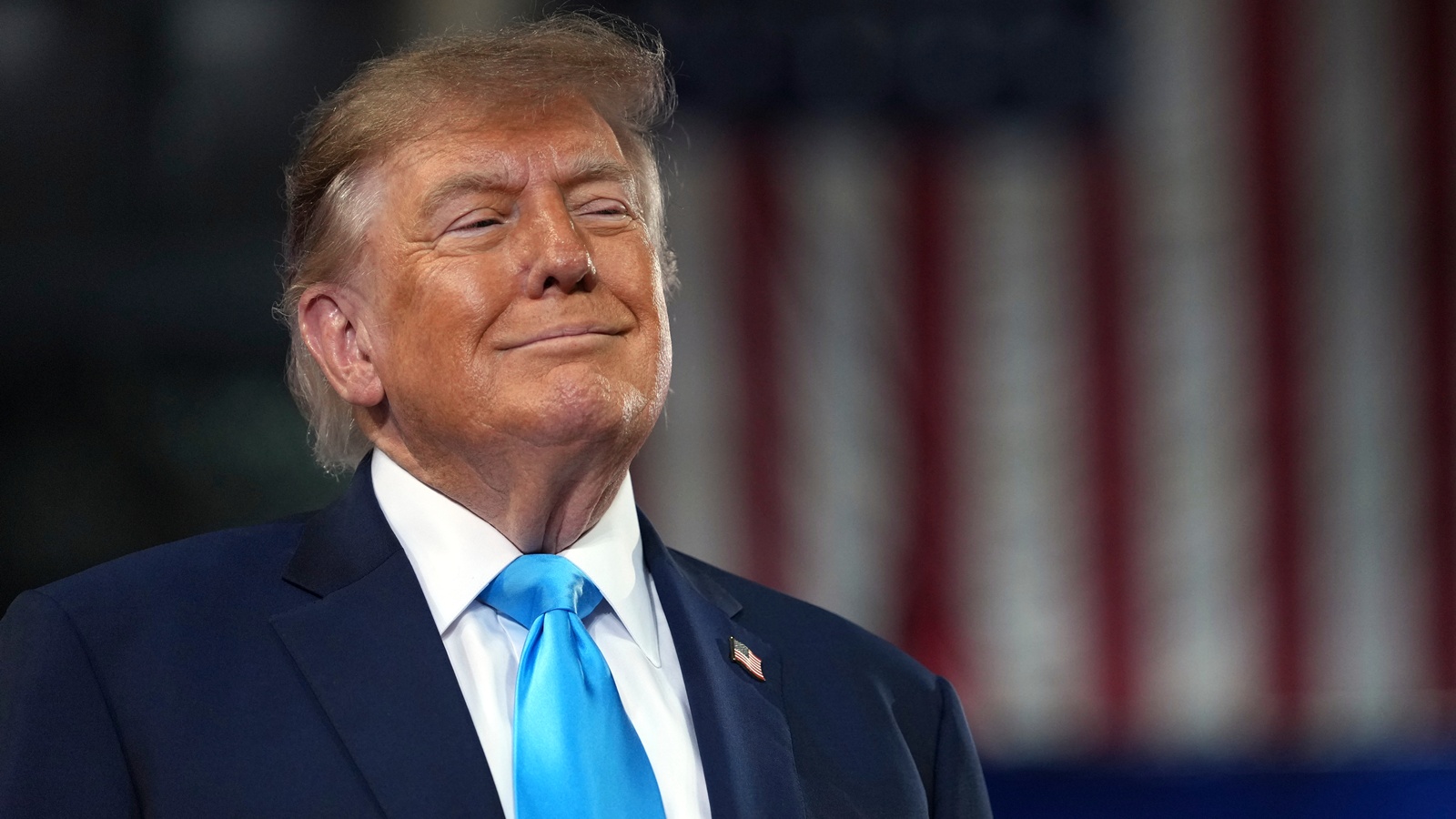
Trump talked about male candidates' builds at rallies. Pundits called it a joke. They missed the real mechanics.
Conventional political commentary treats President Donald Trump’s remarks about candidates like Jon Husted and Mike Collins as sheer absurdity. The lazy consensus says an aging leader wandered off script, praised jawlines and athletic builds, and handed late-night comedians easy material. When Husted lost his Senate seat to Sherrod Brown and Collins lost to Jon Ossoff in the 2026 midterms, critics declared the "physique pitch" dead on arrival.
That analysis is lazy. It mistakes a symptom for the cause.
I have spent years watching political campaigns burn tens of millions of dollars on polished policy white papers that nobody reads while voters respond to raw visual and status cues. In communications and political marketing, salience—the degree to which a cue grabs attention in a crowded information environment—beats nuance almost every single time. Voters rarely make ballot decisions by auditing legislative scorecards. They rely on mental shortcuts, or heuristics, to judge strength, competence, and tribal belonging.
The Lazy Consensus Misses the Real Question
Most pundits ask: Why is Trump talking about how male candidates look?
Wrong question. The better question is: Why did Trump reach for physical dominance cues during a midterm cycle where his party faced headwinds?
Political scientists like Alexander Todorov have demonstrated for years that snap judgments about competence and dominance from facial appearance happen in milliseconds, even when those judgments are wildly inaccurate. In media-saturated elections, attention is the scarce resource. A candidate who is invisible loses by default. Trump has always operated like a reality-television producer rather than a traditional party chairman: if a line spikes audience reaction in the room and clips cleanly for cable news and social feeds, he repeats it.
Consider a thought experiment: Imagine a scenario where a challenger runs a spotless, disciplined campaign built entirely on ten-point tax plans and committee hearings, yet gets zero earned media outside local press releases. Meanwhile, an opponent triggers viral arguments over every rally line. The disciplined candidate may look respectable in a briefing book, but the loud candidate owns the room's oxygen.
Physique as a Proxy for Tribal Strength
When Trump praised Husted’s former college football background, called Collins "all man," or contrasted his picks with rivals like Ossoff or James Talarico, he was not conducting a literal modeling audition. He was translating political alignment into primal status language.
In coalition politics, leaders constantly signal who belongs to the in-group and who looks like an outsider. Calling an ally rugged and dismissing an opponent with a cartoon comparison serves two functions at once:
- Status signaling: It frames the endorsed candidate as tough, physical, and capable of taking a punch—qualities voters often associate with executive grit.
- Contrast framing: Mocking an opponent's appearance creates an instant visual hierarchy in the minds of supporters, turning a policy debate into a contest of archetypes.
Veteran strategists—figures like Karl Rove on the right and David Axelrod on the left—have long understood that campaigns succeed when they compress complex choices into a single memorable story. Trump simply compresses that story into blunt physical metaphors.
Why the Pitch Still Lost Seats in 2026
Here is where the contrarian take has to stay honest. Recognizing that a tactic is strategic does not mean it works in every environment.
In the 2026 midterms, Democrats won control of Congress and flipped key races amid broader voter frustration over economic pressures, foreign entanglements, and incumbent fatigue. Husted lost by five points in a state Trump had carried comfortably in 2024, and Collins fell to Ossoff in Georgia.
A sharp rally quip cannot outrun macro-level voter dissatisfaction. When wallets feel tight or voters turn against the party in power, clever framing around a candidate's build acts like premium rim wax on a car with a flat tire. It shines, it draws stares, and it still does not get you up the hill. There is also a clear downside to leaning on physical tropes: they alienate swing voters who view the rhetoric as juvenile or off-putting, and they give opponents an easy hook to argue the campaign lacks serious answers on cost of living or governance.
What Smart Candidates Should Actually Do Instead
If you are running a campaign—or building any brand in a noisy market—do not copy the gimmick. Copy the underlying discipline.
- Audit your attention hook first. If voters do not know who you are or why you matter in ten seconds, your policy platform does not exist yet.
- Pair toughness with receipts. Strength cues only persuade persuadable voters when backed by tangible proof on prices, jobs, or local results.
- Never confuse applause with persuasion. A roar from friendly partisans at a rally measures enthusiasm in the base, not swing votes in the suburbs.
- Watch the macro tide. When national headwinds are blowing hard against your side, double down on kitchen-table competence rather than spectacle.
Spectacle gets you into the ring. Results decide who walks out with the belt.