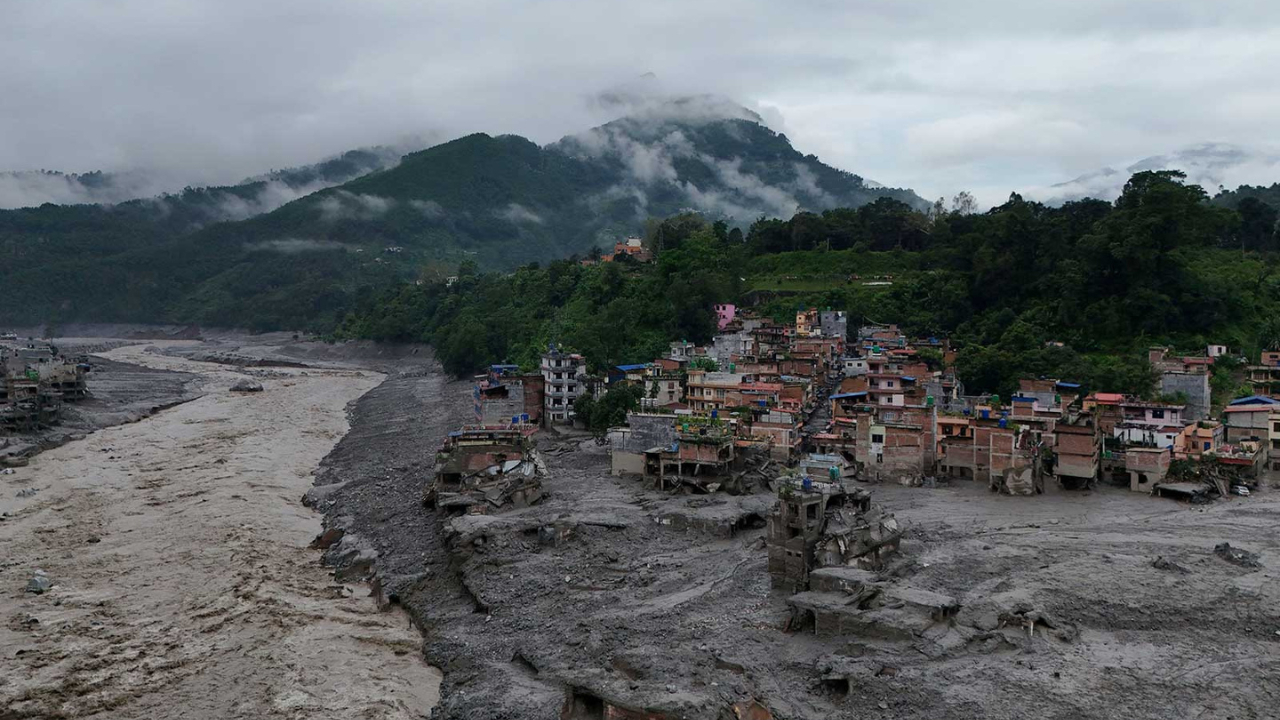
Cold.
It does not arrive like a sudden storm, loud and theatrical, announcing its intention to break you; instead, it seeps upward through the soles of worn leather boots at eleven thousand feet, numbing the toes first, then creeping past the ankles until every step along the narrow slate shelf above the Phoksundo River feels like walking on wooden stilts over a hundred-foot drop.
I remember the exact sound the wind makes in Lower Dolpo just after four in the afternoon. It is not a howl. It is a dry, insistent hiss, scraping across shale cliffs and flattening the stunted juniper bushes against the rock, carrying the fine dust of pulverized mountains straight into the back of your throat. Anyone who has spent time on the trails of western Nepal knows that the clock in the Himalayas does not run on hours. It runs on light and shadow. The moment the sun drops behind the jagged ridge of Kanjiroba, the temperature plummets twenty degrees in ten minutes, and the trail you walked effortlessly at noon turns into a maze of black ice and invisible ledges.
That is the stage onto which six Indian tourists stepped when they set out for Shey-Phoksundo, Nepal's deepest lake, and vanished into the vast, sparsely populated expanse of the Dolpa district.
When headlines flash across our screens—six missing trekkers, a search-and-rescue mobilization, anxious families waiting by silent phones in cities thousands of miles away—we tend to read them as tidy, self-contained tragedies. A news ticker runs at the bottom of the screen. We shake our heads, feel a brief pang of sympathy, and scroll on. We treat the disappearance of six travelers in the Himalayas like a simple logistical error, as if they merely missed a bus or took a wrong turn on a suburban highway.
We get the entire reality of high-altitude wilderness completely backward.
Where the Map Stops Telling the Truth
To understand how six grown adults can simply disappear on a route toward one of Nepal’s most famous natural landmarks, you have to strip away everything you think you know about modern travel. We live in an era of blue dots on glowing glass screens. We expect cell towers to follow us into canyons, satellite beacons to ping our locations every thirty seconds, and paved roads to connect every destination worth seeing.
Dolpo does not care about our expectations.
Located in the rain shadow of the Dhaulagiri massif in northwestern Nepal, Dolpa is the country's largest and least-populated district. Reaching Shey-Phoksundo—a glacial lake sitting at roughly 11,850 feet (3,611 meters) above sea level and plunging to a verified depth of 2,130 feet (650 meters)—is not a casual weekend excursion. Even after taking a weather-dependent bush flight from Nepalgunj into the narrow, cliff-hanging airstrip at Juphal, trekkers face days of grueling foot travel along the Thuli Bheri and Phoksundo rivers.
Consider a hypothetical scenario to see how quickly margin for error evaporates on this trail. Imagine a group of six friends—let us call them the Mumbai contingent, though they could hail from Bengaluru, Delhi, or Kolkata—who have spent months planning this trip. They are fit, enthusiastic, and armed with expensive fleece jackets and smartphone cameras. They fly into Juphal, bypass the slower acclimatization schedules recommended by seasoned high-altitude guides because their corporate leave only stretches for nine days, and push hard up the valley through Dunai, Chepka, and Rechi.
On day three, the trail climbs relentlessly toward Ringmo, the ancient Bon village perched right at the southern rim of the lake. The path here is carved directly into vertical cliff faces, supported in places by logs wedged into rock crevices. Below them, the Phoksundo River roars through a narrow gorge, fed by the highest waterfall in Nepal.
Now, introduce a single variable. A late-season snowfall rolls over the high passes, obliterating the faint footpath. Or an afternoon cloudburst turns a dry gully into a funnel of sliding scree. Or, even simpler, one member of the group develops the dull, throbbing headache and sudden lethargy of Acute Mountain Sickness, slowing their pace by half as twilight closes in.
Suddenly, the six travelers are no longer tourists admiring turquoise water. They are biological organisms fighting physics in a place with zero infrastructure.
The Architecture of a Disappearance
Why do people still go missing on a trail that has been walked by yak caravans for centuries?
The answer lies in a dangerous psychological trap that catches both seasoned hikers and first-time visitors alike: the illusion of proximity. On a paper map, or even on a downloaded offline trail app, the distance between the checkpoint at Sulighat and the shores of Shey-Phoksundo looks modest—roughly twenty-five to thirty kilometers depending on the exact route taken. In flat country, an average walker covers that distance in six hours.
In Dolpo, horizontal distance is a lie. Every kilometer is stacked vertically. You climb three thousand feet, drop two thousand feet into a freezing river valley, cross a suspension bridge swaying in crosswinds, and climb four thousand feet back up the other side. Your lungs are pulling in roughly thirty-five percent less oxygen than they do at sea level. Decision-making degrades long before your legs give out. You stop checking your compass at forks in the trail where herding paths branch off toward high summer pastures. You convince yourself that the next ridge holds the tea house, the warm fire, the bowl of dal bhat.
When six Indian nationals were reported missing during their trek toward Shey-Phoksundo, local authorities, Nepal Police, and personnel from the Nepali Army immediately began piecing together the timeline. In a region where mobile network coverage vanishes entirely shortly after leaving the district headquarters at Dunai, silence is not automatically proof of disaster—until the silence stretches past the expected return date.
Days pass without a check-in. A hotel owner in Juphal notices unclaimed luggage or an unconfirmed return flight. A worried family member in India calls a tour operator in Kathmandu, who in turn calls a local contact in Dunai. By the time an official search party straps on crampons and heads up the gorge, the wilderness has already had forty-eight or seventy-two hours to erase footprints, cover cairns, and swallow voices.
The Invisible Stakes Behind the Search
Rescue operations in the West often involve thermal-imaging helicopters, coordinated drone sweeps, and rapid-response mountain rescue teams arriving within an hour of a distress call.
In Dolpa, rescue looks like twenty local men walking uphill in the dark with flashlights and bamboo poles.
While helicopters can be chartered from Kathmandu or Pokhara when weather permits, aviation in the narrow gorges of western Nepal is notoriously treacherous. High winds funneling through the canyon walls can ground aircraft for days at a time. When the rotors cannot spin, the burden falls entirely on human endurance—local police officers, park rangers from Shey-Phoksundo National Park, and villagers from Ringmo and Dunai who know every cave, overhang, and river bend by heart.
I have watched search parties return from high passes in Nepal, and the exhaustion on their faces is something you never forget. They carry not just extra rations and medical kits, but the crushing weight of knowing that every hour of sub-zero night reduces the odds of finding someone alive. Hypothermia does not announce itself with dramatic shivering in its final stages. Paradoxically, victims often feel a sudden wave of warmth, shed their coats, and lie down to sleep in the snow.
And then there is the silence waiting at the other end of the phone line.
For the families of the six missing trekkers, the agony is amplified by distance and bureaucracy. Cross-border rescues require coordination between Indian diplomatic missions in Kathmandu, Nepal’s Ministry of Home Affairs, local district administration offices, and private trekking agencies. Every rumor becomes a lifeline or a heartbreak. Did they take an alternate route toward Phoksundo Bhanjyang? Did they stay back at a stone shelter in Chhepka waiting out bad weather? Did they lose their footing on the notoriously slick wooden planks near the waterfall?
Uncertainty is its own kind of altitude sickness. It starves the mind of air.
What the Lake Never Gives Back Easily
There is a reason people risk everything to stand on the southern shore of Shey-Phoksundo.
When you finally crest the final ridge past Ringmo and see it for the first time, the breath leaves your chest all over again—not from lack of oxygen, but from sheer disbelief. The water is an impossible, opaque aquamarine, glowing like liquid mineral against barren, rust-colored cliffs that rise straight out of the depths. There is no aquatic life in the lake; the water is too cold and too mineral-rich to sustain fish. No boats cut across its surface. In the ancient Bon religion practiced by the people of Ringmo, the lake is sacred, a living sanctuary where the purity of the water must never be disturbed.
That stillness is intoxicating. It makes you feel small in the best possible way, reminding you that the world is still vast, untamed, and indifferent to human schedules.
Yet that exact indifference is what demands humility. Too often, modern adventure tourism packages the Himalayas like an amusement park ride—buy the ticket, pack the gear, collect the photographs, fly home on Sunday. We forget that the mountains operate under older, harder rules. Guides are not optional luxuries; they are translators of terrain and weather. Satellite communicators are not paranoid gadgets; they are the only thread tying a human being to civilization when the canyon walls block the sky. Registration at national park checkpoints is not tedious paperwork; it is the breadcrumb trail that tells rescuers which valley to search first.
As search teams comb the trails, riverbanks, and high ridges leading to Shey-Phoksundo, every footprint in the mud and every report from passing mule drivers becomes a vital clue. Whether the six trekkers are huddled in a shepherd's stone hut waiting for skies to clear, stranded along a washed-out section of trail, or caught in something far grimmer, their disappearance strips away the glossy veneer of Himalayan travel and exposes its raw truth.
Up there, above the treeline, the turquoise water does not bend to human urgency. The wind keeps scraping the shale, the shadows keep racing across the gorge at four in the afternoon, and the mountain waits—patient, silent, and entirely unforgiving—to see who came prepared to listen.