The fluorescent lights of a hospital corridor at three in the morning do not forgive. They hum with a low, metallic buzz that vibrates in your molars, turning skin the color of wet chalk and magnifying every smudge on the linoleum floor.
In that sterile glare, time stops moving forward. It pools.
If you have ever sat in a plastic chair beside a crib with steel bars, listening to the rhythmic hiss-click of a ventilator or watching an infusion pump drip clear fluid into a vein no thicker than a piece of thread, you know the specific geometry of pediatric terror. The room shrinks until the entire universe is contained within the rise and fall of a tiny chest. Everything outside those walls—mortgages, traffic, the weather, the relentless churn of the news cycle—evaporates.
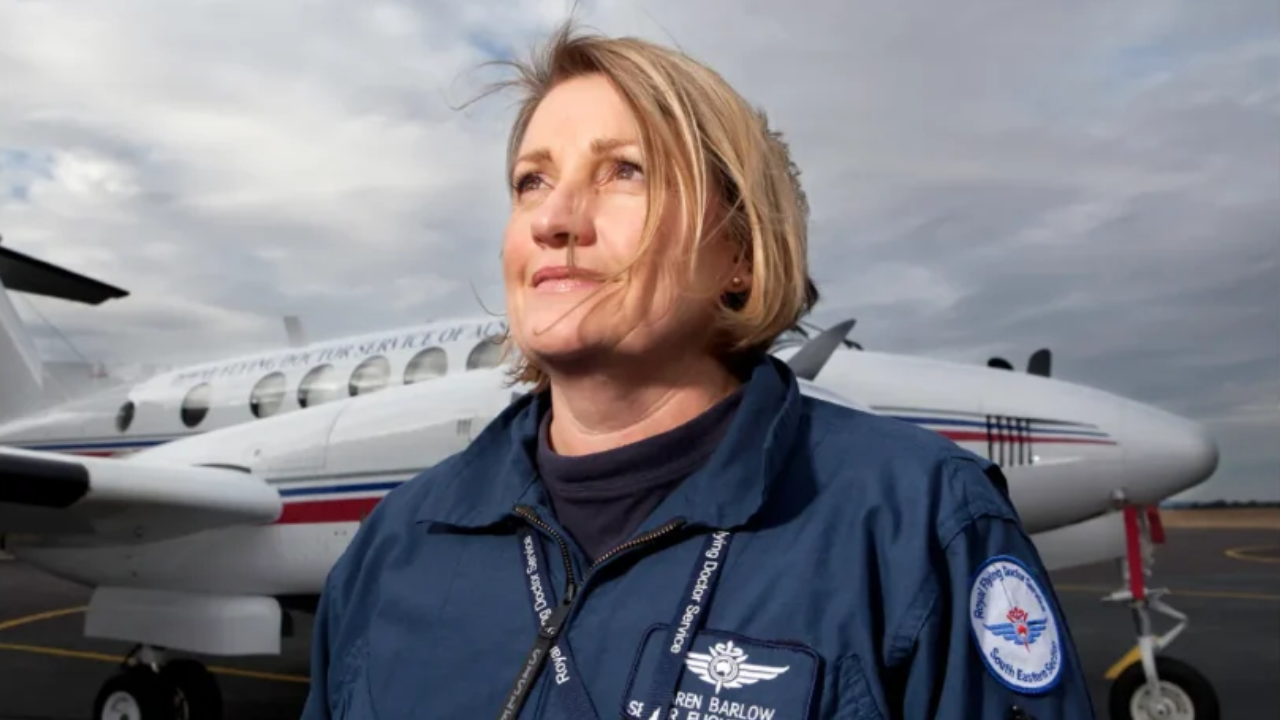
For twenty-seven years, Karen Barlow walked into that exact terror every single shift.
When a local news blurb announces that a veteran nurse is retiring, the headline usually reads like a polite ledger entry. A name. A number of years. A pleasant, sanitized quote about "cherished memories" and "looking forward to the next chapter." In Karen Barlow’s case, the summary notes that after nearly three decades on the job, her most enduring memories are of parents holding their sick children’s hands.
Read that sentence again, slowly, and strip away the journalistic shorthand.
It is easy to skim past a phrase like "parents holding sick children’s hands" as if it were a Hallmark card sentiment. It is not. In the clinical reality of pediatric nursing, that simple physical bridge—an adult’s calloused fingers wrapped around a child’s burning palm—is the frontline of human endurance. It is the silent anchor keeping two people from drifting off into sheer panic while medicine tries to do its slow, uncertain work.
The Architecture of a Twenty-Seven-Year Shift
To understand what twenty-seven years at the bedside actually means, you have to measure it not in calendar pages, but in weight.
Consider a single twelve-hour shift. According to research on nursing workflows, a floor nurse walks an average of four to five miles during a standard shift. Multiply that by three or four shifts a week, fifty weeks a year, for twenty-seven years. Karen Barlow has walked roughly twenty-five thousand miles—the circumference of the Earth—without ever leaving the unit.
She walked those miles while medicine itself mutated around her.
When Karen first pinned on her badge in the late nineteen-nineties, patient charts were thick, three-ring binders filled with handwritten cursive notes in black and blue ink. Blood pressure cuffs were pumped by hand with a rubber bulb, and nurses listened for the korotkoff sounds through stethoscopes draped around their necks like talismans. Smartphones did not exist. Parents couldn't frantically search symptoms on a glowing screen at two in the morning; they had to look at the nurse in the room and read the truth in her posture.
Over the next three decades, the room filled up with screens. Paper gave way to electronic health records. Beeping monitors grew smarter, louder, and more insistent. Treatment protocols for childhood illnesses—from severe asthma exacerbations to complex pediatric cancers—evolved at a dizzying pace, turning once-fatal diagnoses into manageable chronic conditions.
Yet, ask a nurse who survived all twenty-seven years of that technological revolution what stays etched in her mind when she finally hangs up her scrubs, and she does not mention the machines. She does not mention the computerized charting systems or the miraculous pharmacology.
She remembers the hands.
Why? Because technology can measure oxygen saturation to the decimal point, and pharmacology can break a hundred-and-four-degree fever, but neither can absorb the psychological shockwave that hits a parent when their child is admitted to the hospital.
The Invisible Patient in the Chair
If you have never worked on a pediatric floor, you might assume there is only one patient behind each curtain. Any veteran nurse will tell you that is a dangerous illusion. There are always two—and often three.
The child is the biological patient. Their charts track white blood cell counts, fluid intake, urinary output, and heart rate variability.
The parents are the emotional patients, and they have no chart.
Imagine, for a moment, a hypothetical scenario that plays out every night in hospitals across the country. Call the father David. He is thirty-four, an electrician who spent his Tuesday wiring a commercial kitchen, completely in control of his tools, his schedule, and his physical strength. By midnight, he is sitting in a reclining chair in Room 412, wearing a grease-stained sweatshirt, watching his four-year-old daughter struggle to pull air into her lungs through an oxygen mask.
David cannot fix the circuit. He cannot rewire her bronchioles. For the first time in his adult life, his size, his income, and his willpower are entirely useless. His nervous system is flooded with cortisol and adrenaline, trapped in a fight-or-flight response with nowhere to fight and nowhere to flee.
So he does the only thing left to him. He leans forward, rests his forearms on the cold metal rail of the hospital bed, and holds her hand.
Now, step into Karen Barlow’s shoes as she enters Room 412 at 2:15 AM to check vitals and administer a breathing treatment.
A novice nurse sees a task list: check the pulse oximeter, auscultate the lungs, verify the wristband, log the medication, move to Room 414.
A twenty-seven-year veteran sees the entire ecosystem of that room in half a second. She sees the slight tremor in David’s thumb as he strokes his daughter’s knuckles. She notices the half-empty bottle of warm water on the windowsill that he hasn't touched since dinner. She hears the shallow, rapid cadence of his breathing—almost matching his daughter’s.
If Karen walks in with sharp, hurried movements and a clipboard held like a shield, David’s panic spikes. When a parent’s panic spikes, the child feels it instantly through that joined hand. Heart rates climb. Oxygen demand increases. The biology of the room deteriorates because the psychology of the room was neglected.
Instead, the veteran nurse slows her own physical tempo. She lowers her voice. She explains what she is doing before she touches the child, speaking to both the four-year-old and the terrified electrician with calm, unhurried authority. She doesn't just treat the airway; she steadies the anchor.
That is the unspoken craft of pediatric nursing. It is emotional alchemy performed under fluorescent lights, repeated thousands of times until it becomes muscle memory.
Why We Get Nursing Legacy Completely Backward
We live in a culture obsessed with dramatic medical heroics. Television dramas and blockbuster headlines train us to look for the lightning-bolt moments: the frantic dash to the operating room, the shouted orders over a crashing monitor, the miracle surgical save that beats impossible odds.
Those moments happen, of course. But they represent a tiny fraction of what actually heals people—and an even smaller fraction of what sustains a nurse over a nearly thirty-year career.
In reality, the healthcare system is currently bleeding experienced nurses at an alarming rate. Data from the National Council of State Boards of Nursing and workforce studies consistently show that high burnout, emotional exhaustion, and administrative overload are driving hundreds of thousands of nurses toward early retirement or career exits. When a nurse with twenty-seven years of institutional memory walks out the door, the hospital doesn't just lose a pair of hands. It loses a walking library of pattern recognition.
Think of the difference between a weather app and an old fisherman who has watched the horizon for thirty years. The app gives you raw data—barometric pressure, wind speed, humidity percentages. The fisherman smells the shift in the salt air and knows a squall is coming twenty minutes before the radar picks it up.
In pediatrics, children compensate remarkably well when they are sick—until suddenly, they don't. Their vital signs can look deceptively stable right up to the moment they crash. A nurse with nearly three decades of bedside experience develops an almost preternatural sensitivity to micro-changes. A slight grayness around the lips. A subtle shift in how a toddler responds to their mother’s voice. A quietness that feels too heavy.
When Karen Barlow retires, that intuition walks out of the building with her.
And yet, when she looks back over those twenty-seven years—through all the policy shifts, the staffing shortages, the global health crises, and the relentless physical toll on her knees and lower back—the thing that lingers in her memory isn't her own clinical brilliance. It is the quiet, fierce devotion she witnessed between strangers and their children.
The Anatomy of a Held Hand
Why does that specific image—a parent holding a sick child’s hand—carry so much gravity for someone who has seen everything a hospital can throw at a human body?
Because in a hospital, almost every human dignity is stripped away. You wear a thin cotton gown that ties in the back. Your body is poked, scanned, weighed, and measured on someone else’s schedule. You surrender your autonomy to strangers in scrubs.
Holding a hand is the one act of sovereignty the hospital cannot take away.
Psychologists and neuroscientists have spent decades studying what happens during physical touch under extreme stress. Research into interpersonal synchronization—sometimes called "social baseline theory"—demonstrates that when a person in pain or fear holds the hand of a trusted loved one, measurable physiological changes occur. The brain’s threat-response centers quiet down. Stress hormone levels drop. In remarkable clinical studies using electroencephalography, researchers have even observed that a caregiver’s brainwaves and heart rate can literally synchronize with those of a suffering partner or child, acting as a biological buffer against pain.
Karen Barlow didn't need a neuroscience journal to tell her that. She watched it happen in real time, shift after shift, for ten thousand nights.
She saw mothers curled into impossible pretzel shapes on narrow vinyl cots, refusing to let go of a sleeping toddler’s fingers even as their own arms went numb. She saw stoic grandfathers with weathered hands sitting motionless for hours beside oncology beds, offering the only comfort left when nausea and fatigue stole every word. She saw parents holding hands through the glass ports of neonatal incubators, resting a single fingertip against an infant’s palm when the baby was too fragile to be lifted.
Witnessing that level of raw, unfiltered love changes a person.
Most of us go through our daily lives insulated from existential stakes. We argue about trivialities. We complain about slow internet connections or delayed flights. We guard our emotions behind curated profiles and polite small talk.
A pediatric nurse lives in the truth booth. When you spend twenty-seven years watching families strip away every superficial layer of life down to the bare bone of please let my child be okay, you develop an immunity to nonsense. You learn what actually matters, and you learn it with terrifying clarity.
The Weight of Carrying Other People’s Grief
Still, we shouldn't romanticize the job to the point of dishonesty. Standing witness to that kind of love comes at a steep, invisible price.
There is a clinical term for what happens to caregivers who absorb trauma day after day: compassion fatigue. It is different from ordinary exhaustion. Ordinary exhaustion is cured by a good night’s sleep and a quiet weekend. Compassion fatigue settles into the marrow. It is the cumulative weight of every scared mother’s eyes you couldn't quite reassure, every difficult diagnosis delivered behind a pulled curtain, every shift where you held your own tears back until you reached the driver’s seat of your car in the parking garage.
Many nurses quietly admit that the hardest part of the job isn't the twelve-hour shifts on concrete floors. It is the emotional whiplash.
At 10:00 AM, you are celebrating with a family whose child just rang the bell to mark the end of chemotherapy, cheering and hugging in the hallway. At 10:15 AM, you walk ten doors down to sit silently with a family whose world just collapsed under the weight of a devastating scan. You have to metabolize joy and heartbreak in the span of fifteen footsteps, and you have to keep your hands steady through both.
To survive twenty-seven years in that environment without growing cynical or cold requires a rare kind of psychological stamina. Cynicism is the easiest armor in healthcare; if you stop caring deeply, it stops hurting when things go wrong.
The fact that Karen Barlow reached the finish line of a twenty-seven-year career and still points to the tenderness between parents and children as her defining memory is proof that she refused the armor. She stayed open. She let the humanity of the room touch her, even when it hurt.
What Happens When the Scrubs Come Off
Retirement for a career nurse is rarely a clean break. You do not simply turn off twenty-seven years of hyper-vigilance like a kitchen light.
For months, perhaps years, a retired nurse still hears phantom monitor alarms in the quiet of a grocery store aisle. She still instinctively checks the color of a stranger’s nail beds in a coffee shop or notices the labored breathing of a child sitting two rows ahead on an airplane. Her body is still wired to respond to crisis, to step forward when everyone else steps back.
Eventually, though, the quiet settles in. The mornings arrive without the 5:30 AM alarm. The badge goes into a drawer. Another younger nurse, fresh out of clinical rotations with nervous eyes and crisp scrubs, takes over the hallway assignments, walking those same four miles a shift under the same humming fluorescent lights.
That new nurse will learn the pharmacology. She will master the charting software, the IV pumps, and the emergency protocols.
If she is lucky, someone like Karen Barlow trained her before leaving—teaching her the unwritten curriculum that never appears on a nursing board exam. She will have learned when to speak and when to simply pull up a chair. She will have learned that a parent hovering at the bedside isn't an obstacle to clinical care, but its most vital partner.
Because long after the medical charts are archived and the hospital equipment is upgraded and replaced, the architecture of healing remains stubbornly, beautifully primitive. It still comes down to two human beings in a quiet room, skin against skin, refusing to let go of each other in the dark—and a nurse standing quietly nearby, making sure neither of them has to face the night alone.