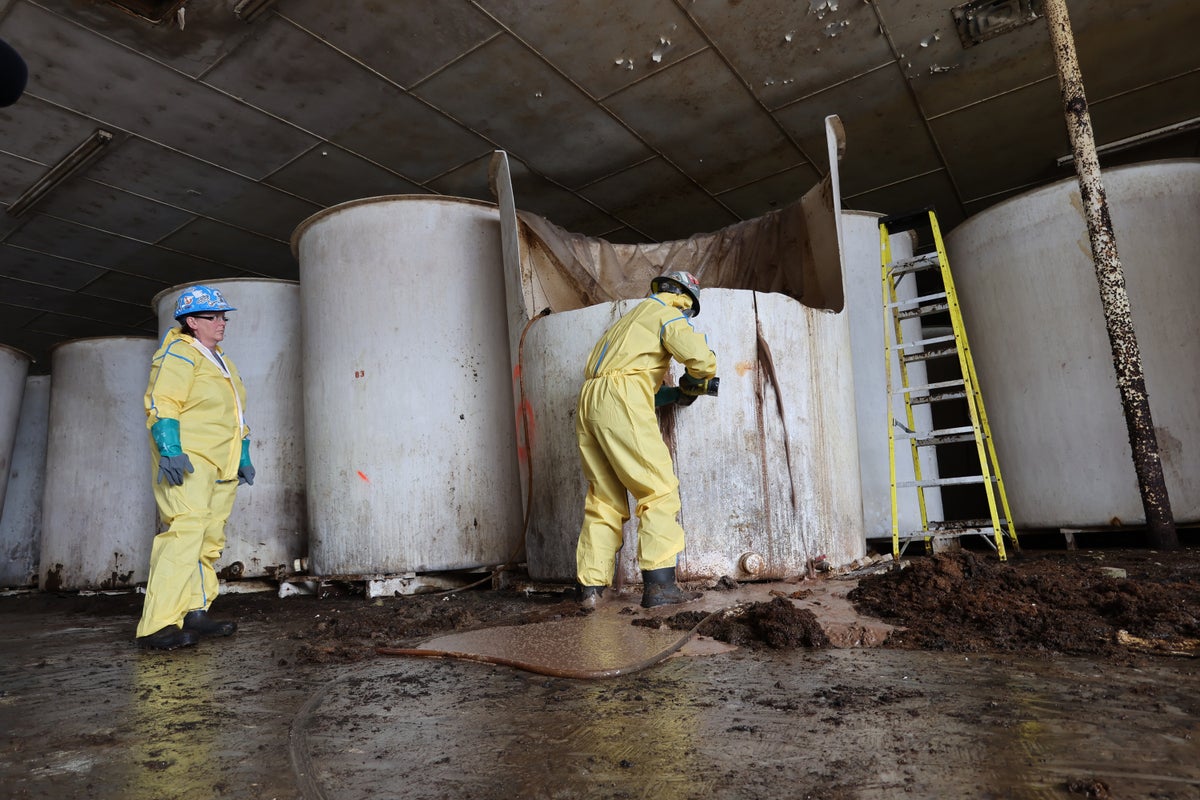
Some smells do not merely linger. They take up residence. They sit at your breakfast table, coat your clothes before you even step outside, and turn the simple act of drawing a breath into a quiet calculation.
For two decades, the residents of one coastal community woke up to an invisible weight pressing down on their lungs. It was not a subtle odor. It was heavy, persistent, and entirely inescapable—the scent of decaying marine protein, rotting fish scales, and industrial processing wastewater that had settled deep into the soil, the walls, and the collective memory of a town.
Imagine opening your windows on a crisp spring morning, longing for fresh air, only to be met with a wall of sulfur and rot so dense you could almost taste it.
That was not a hypothetical scenario for the people living near the local processing facilities. It was Tuesday. It was twenty years of Tuesdays.
To understand why a community tolerates such an assault on the senses for so long, you have to look past the chemistry and look straight at human survival. Economics are a cruel master. When a factory provides the paychecks that keep food on the table and shoes on children's feet, you learn to hold your breath. You trade your senses for stability. You tell yourself that the stench is just the smell of hard work.
Yet, there is a limit to what a human body and spirit can endure. Over time, the toll manifested in ways that public health data struggles to capture. Headaches that became chronic companions. Nausea that spiked with every shifting offshore wind. Property values plummeting into a chasm while neighboring towns flourished under clear blue skies. Children growing up believing that the natural scent of the outdoors was something foul and spoiled.
The problem wasn't a lack of caring. It was a failure of scale. The older wastewater management systems were built for a different era, a time when volume was low and environmental oversight was loose. As production scaled up over the decades, the infrastructure didn't just age; it collapsed under the invisible weight of its own output.
Consider what happens when a community reaches its breaking point.
It starts with whispered complaints at the grocery store. It moves to packed town hall meetings where voices crack with a mix of exhaustion and fury. Neighbors who had never spoken before find themselves united by a shared grievance, forming an informal coalition of the weary. They document the days the wind carries the worst of it. They log the headaches, the cancelled outdoor barbecues, the birthday parties driven indoors by an invisible invader.
Pressure, applied consistently enough, forces change.
Local authorities and plant operators finally found themselves cornered by the sheer volume of public outcry and stricter environmental compliance mandates. The solution required more than a quick fix or a temporary masking agent. It demanded an engineering overhaul—a complete redesign of how waste was captured, treated, and neutralized before it ever touched the municipal systems.
New containment domes, advanced bio-filters, and modernized wastewater treatment channels were engineered to trap the volatile organic compounds responsible for the devastation. Millions of dollars poured into infrastructure designed to do one quiet, miraculous thing: nothing. Good environmental engineering, after all, makes itself invisible.
Today, the wind shifts, and something remarkable happens.
Nothing.
Just the clean, sharp scent of salt water rolling in from the open ocean.
Walk down Main Street now, and you will see people doing something they forgot how to do years ago. They are lingering outside. They are leaving their windows wide open to catch the afternoon breeze. The twenty-year shadow hasn't vanished entirely from their history, but it has finally lifted from the air they breathe.
The tide turns. The air clears. And the town remembers what the world is supposed to smell like.