Silence. That is the first thing neighbors usually remember after sirens tear through a quiet street in the San Gabriel Valley.
On a residential block in Arcadia, California, a teenage girl lost her life inside a family home. Minutes, hours, or miles later—across the invisible border into neighboring Pasadena—the person police identify as the suspected shooter attempted suicide. Two cities. Two crime scenes. One fractured family and a community left staring at a wall of unanswered questions while detectives piece together timelines, motive, and digital trails.
I have sat in living rooms where the air felt too heavy to breathe after news like this hits a neighborhood. You smell fresh coffee from a kitchen across the cul-de-sac, hear a sprinkler ticking against dry leaves, and realize how ordinary the setting looks compared to the horror that just visited it. Everything looks intact from the curb. Inside, a life has ended, and another person’s final desperate act has tangled the investigation even tighter.
When headlines read like police blotter summaries—a teenage girl killed at an Arcadia home, a suspected shooter attempting suicide in Pasadena—it is tempting to treat the tragedy like a puzzle with missing pieces. We scan for motive. We ask how someone got from one city to the other. We look for a neat psychological label that explains why a young life was cut short and why the suspected perpetrator turned violence inward.
Sometimes there is no neat explanation. Only grief, shock, and a chain of events that police must verify one witness statement and one piece of evidence at a time.
The Geography of Sudden Grief
Arcadia and Pasadena sit side by side along the foothills of the San Gabriel Mountains, separated on maps by city limits and avenues that commuters cross without thinking twice. A drive between parts of Arcadia and Pasadena can take less than twenty minutes depending on traffic along Huntington Drive, Foothill Boulevard, or the 210 freeway. To outsiders, they feel like twin chapters of the same suburban story: tree-lined streets, historic bungalows and newer estates, school drop-off lines, youth sports fields, and quiet evenings.
Yet when violence crosses between two jurisdictions, the emotional weight stretches across both communities at once.
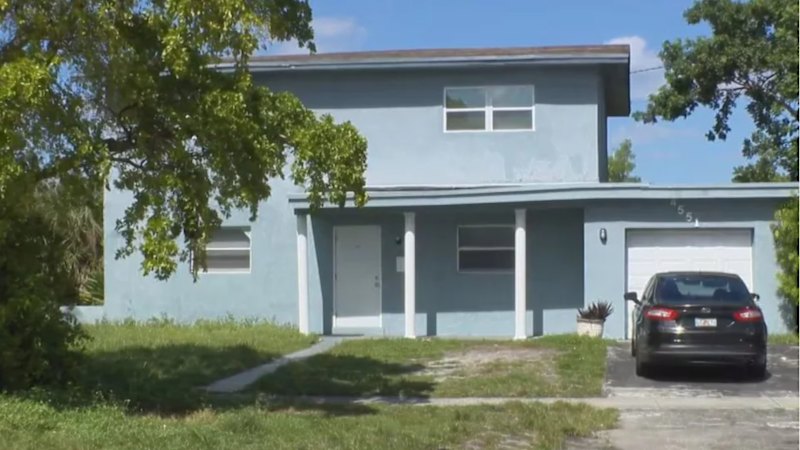
In Arcadia, a household becomes the center of an active homicide investigation. Crime scene tape blocks a driveway that yesterday held a teenager’s backpack or sports gear. Patrol cars sit under jacaranda or ficus trees while investigators document what happened inside. Neighbors stand on porches with their arms crossed, speaking in hushed tones, trying to reconcile the safety they assumed their street possessed with the reality unfolding a few doors down.
Across the line in Pasadena, another scene demands immediate emergency response as a suspected shooter attempts suicide. Paramedics, officers, and hospital staff confront a crisis of their own—trying to preserve life or secure a scene while detectives work to connect the dots between the two locations.
To understand how communities process a dual shock like this, consider a hypothetical family—let’s call them the Morales family, living three blocks away from the scene in a fictionalized scenario meant to illustrate the ripple effect rather than any real household. Mateo Morales is a high school junior who plays varsity soccer. His younger sister is in middle school. When police lights flash down the block on a weekday, Mateo’s phone lights up with group chats full of rumors before official details exist. One text claims it was a random break-in; another names someone nobody even knows; a third asks if their school is going into lockdown.
By dinner, nobody at the Morales table is hungry. Mateo’s mother keeps looking out the window toward the street corner, not because she expects danger at their front door, but because her brain is trying to map where safety ends and risk begins. That reaction—hyper-vigilance mixed with disbelief—is one of the most consistent behavioral patterns after violent crime in residential areas.
When a suspect attempts suicide following a fatal shooting, that search for meaning hits a brick wall. In many violent incidents, investigators rely on interviews, court hearings, or an arrest to clarify the sequence of events and establish accountability. When the suspected shooter attempts suicide, the narrative often loses its primary voice, leaving loved ones, classmates, and neighbors suspended in uncertainty while police examine physical evidence, communications, and relationship history.
What Police Look For When the Story Fractures
Police investigations into a homicide paired with a suspected shooter’s suicide attempt move along parallel tracks. One track focuses on immediate scene preservation, forensic evidence, and medical care; the other focuses on reconstruction—figuring out how the parties knew each other, how the suspected shooter traveled between Arcadia and Pasadena, and whether any warning signs existed beforehand.
Investigators rarely rush public conclusions in the opening hours. Early statements from police departments are often brief for a reason: releasing unverified details can compromise an active investigation, retraumatize surviving family members, or spread misinformation across a tight-knit community.
Think of an investigation like assembling a glass mosaic after someone drops the tray on tile floor. A bystander might pick up two bright blue pieces and assume the picture is a clear sky. A detective has to gather the dull gray pieces along the edges, check the lighting, and see how the pieces actually fit before declaring what the image shows.
In cases involving a teenage victim and a suspected shooter who attempts suicide, investigators typically examine several core questions:
- Relationship and context: Was there a prior connection between the teenager and the suspected shooter—such as a current or former dating relationship, peer group, family tie, or acquaintance—or was the encounter tied to a specific dispute?
- Timeline and movement: How do timestamps, surveillance footage, witness accounts, and location data connect the scene in Arcadia to the attempt in Pasadena?
- Weapons and access: How was the firearm obtained, and were there prior reports, restraining orders, or concerning behaviors known to adults or authorities?
- Digital footprint: What do text messages, social media activity, or call logs reveal about the hours or days leading up to the incident?
Not every question yields a clean answer right away. Sometimes the most painful truth for a family is that investigators uncover clues that explain the sequence of events without ever making the cruelty feel understandable.
I remember talking with a community advocate years ago after a violent tragedy in a quiet Southern California suburb. She told me something that stayed with me: people want a villain they can hate or a simple mistake they can fix, and when tragedy involves young people and self-harm, the sheer waste of life leaves everyone feeling powerless.
Admitting that feeling—that helplessness when you read about a teenager whose life ended at home and another crisis unfolding in a neighboring city—is not a sign of weakness. It is the honest starting point of empathy.
The Hidden Weight on Young People and Families
When a tragedy involves a teenager, the shockwaves do not stop at the property line or the city border. High school and middle school hallways become rumor mills within minutes. Teenagers process grief and fear differently than adults; some go quiet and withdraw, some crack dark jokes to hide panic, and others scroll endlessly through feeds looking for updates that aren’t there yet.
Parents face a difficult balancing act. If you say too little, kids fill in the blanks with terrifying fantasies. If you share every graphic detail or unverified rumor from social media, you can overwhelm a child who is already struggling to feel safe at home.
Consider another hypothetical example—this time a parent, Elena, whose fourteen-year-old daughter attends a school near the Arcadia–Pasadena border. Elena isn’t sure whether to bring up the news at bedtime or wait to see if her daughter asks. She worries about sounding alarmist, yet she also knows her daughter has already seen screenshots circulating on group chats.
What Elena decides to do in that kitchen matters less than how she shows up: calm, present, willing to listen without lecturing, and clear about boundaries. Kids rarely need a perfect speech from a parent after a tragedy. They need to know that hard questions are allowed and that their home remains a place of steadiness.
At the same time, when a suspected shooter attempts suicide, families and communities confront a second, distinct layer of pain: the intersection of interpersonal violence and mental health crises or acute despair. A suicide attempt by a suspected perpetrator does not erase the harm done to the victim or her family, nor does it replace criminal accountability where applicable. Yet for counselors, crisis workers, and educators in both Arcadia and Pasadena, it underscores how volatile emotional spirals can become when anger, obsession, or crisis collides with access to lethal means.
In the San Gabriel Valley, where neighborhoods are closely knit and schools often draw students or families across adjacent cities, a single event can feel local to everyone. A coffee shop in Pasadena and a park in Arcadia might sit miles apart, yet both belong to the same everyday rhythm of people working, studying, and trying to build ordinary lives.
Why Ordinary Streets Never Look Quite the Same
Days and weeks after the initial news cycle fades, the visible police tape comes down. Traffic flows normally again. Street sweepers pass through. Life resumes its surface routine.
Still, something shifts underneath.
For the family grieving a teenage girl killed at home in Arcadia, normal never really comes back. Holidays carry an empty chair. Photos on a phone become sacred archives of a future that will never happen. Every siren in the distance can trigger a knot in the stomach that takes minutes—or hours—to release.
For those connected to the Pasadena scene, or trying to make sense of a suspected shooter’s suicide attempt alongside a fatal shooting, the aftermath is heavy with unanswered whys and lingering sorrow. Communities are left asking how a young person’s life could end in a place meant to be a refuge, and how two neighboring cities became linked in a single heartbreaking story.
There is no tidy moral waiting at the end of a tragedy like this. No single sentence resolves the grief of a parent in Arcadia or untangles the crisis that unfolded in Pasadena.
Only the quiet truth that behind every police report is a real human life, a grieving family, and a neighborhood trying to breathe again in the stillness after the sirens fade.