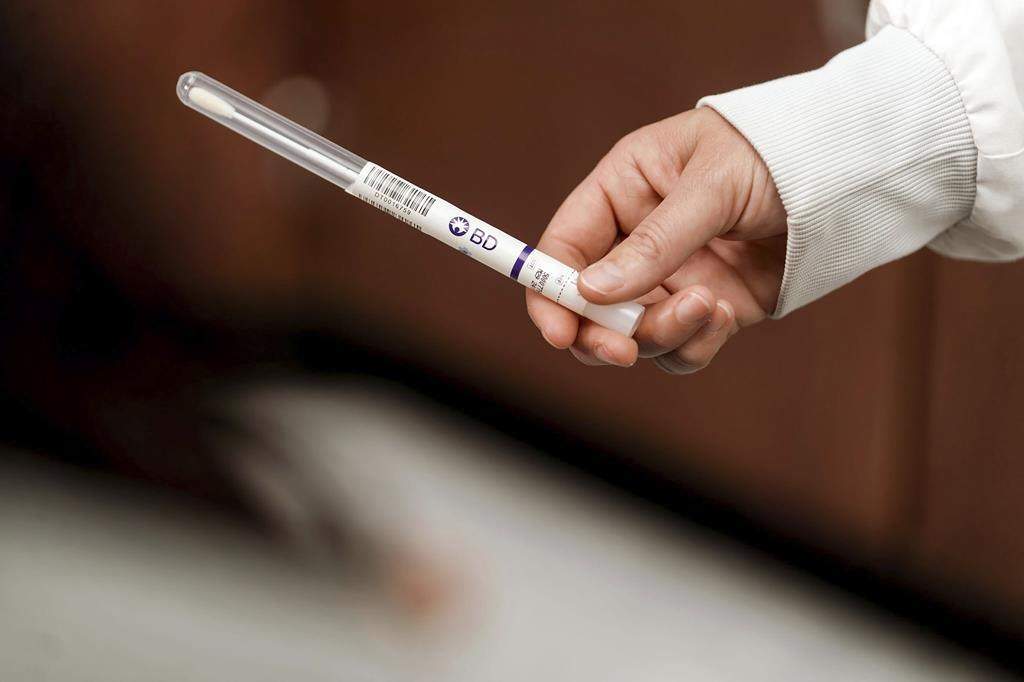
Cold.
That is the first thing you notice in an examination room, no matter how brightly the fluorescent bulbs buzz overhead or how cheerfully the paper crinkles beneath you as you shift your weight on the vinyl table. You sit there in a thin cotton gown that never quite closes in the back, staring at a laminated diagram of the female reproductive system taped crookedly to the drywall, waiting for a knock on the door that feels like it takes three hours to arrive.
Every woman knows this room. If you have ever scheduled an appointment months in advance, taken an afternoon off work, driven across town in traffic, and braced yourself for the sharp, clinical pinch of a speculum, you know the quiet vulnerability of cervical cancer screening.
Now picture two women sitting in nearly identical examination rooms on a Tuesday morning in Atlantic Canada. To illustrate the stark reality of provincial healthcare policy, let us look at a hypothetical comparison of two neighbors.
In Moncton, New Brunswick, thirty-four-year-old Sarah sits on that crinkling paper. Across the provincial border, just an hour’s drive down the Trans-Canada Highway in Amherst, Nova Scotia, thirty-four-year-old Claire sits on a table that looks and feels exactly the same. They share the same Maritime weather, the same coastal air, and the same quiet dread of routine medical checkups. Yet the diagnostic standard waiting behind their respective clinic doors belongs to two entirely different eras of medicine.
Sarah is getting a primary human papillomavirus test. Claire is getting a traditional Pap smear.
One of these tests looks for the smoke. The other looks for the fire before the match is even struck. And right now, health advocates, physicians, and patients across Nova Scotia are asking why a geographical line drawn through the Isthmus of Chignecto determines whether a woman receives twentieth-century screening or modern preventive care.
The Architecture of a Missed Warning
To understand why New Brunswick’s recent shift to primary HPV testing has sent ripples of urgency through Nova Scotia, you have to understand what these two tests are actually doing under the microscope.
Think of a house fire. For nearly eighty years, the Pap test—invented by Georgios Papanicolaou in the 1940s—has been our primary alarm system. During a Pap smear, a clinician collects cells from the cervix, smears them onto a glass slide or suspends them in liquid, and sends them to a laboratory. There, a trained cytotechnologist peers through a microscope, hunting for cells that have already begun to change shape, mutate, and turn abnormal.
In our house fire metaphor, the Pap test is looking for charred walls and scorched floorboards. It is looking for damage that has already started.
And for decades, that alarm saved millions of lives. Before the Pap test, cervical cancer was one of the leading causes of cancer death among women in North America. By catching cellular changes early, doctors could intervene before localized abnormalities became invasive cancer.
Yet the Pap test has a well-documented blind spot. Human eyes get tired. Abnormal cells can hide behind blood, mucus, or inflammation, or they can simply look too subtle to flag on a single slide. Studies have consistently shown that a single Pap test misses roughly thirty to fifty percent of high-grade precancerous lesions. That is why women have been told to come back every one to three years—not because cervical cancer grows overnight, but because repeating an imperfect test over and over again is the only way to catch what slipped through the net the first time.
Primary HPV testing changes the entire equation.
Almost every single case of cervical cancer—more than ninety-nine percent—is caused by persistent infection with high-risk strains of the human papillomavirus. Instead of waiting around to see if cells start mutating into charred wreckage, the HPV test looks directly for the genetic fingerprint of the virus itself. It checks whether the arsonist is inside the house with a box of matches, long before a single spark touches the carpet.
Because molecular testing detects the presence of viral DNA or RNA rather than relying on a human technician spotting subtle visual changes in cell shape, its sensitivity is dramatically higher. A primary HPV test catches over ninety percent of high-grade precancers on the very first pass. Even better, a negative HPV test provides such strong reassurance that screening intervals can safely stretch from every three years to every five years for people at average risk. Fewer speculums. Fewer anxious waiting periods for phone calls from the clinic. Far fewer false alarms, and far fewer missed cancers.
Crossing the Border in New Brunswick
For years, medical organizations across the globe—including the World Health Organization, the Canadian Partnership Against Cancer, and the Society of Obstetricians and Gynaecologists of Canada—have pointed to the same mountain of evidence. Primary HPV testing is not an experimental luxury. It is the global gold standard.
New Brunswick finally acted on that evidence. By transitioning its provincial cervical screening program from cytology-based Pap tests to primary HPV testing, New Brunswick joined jurisdictions like British Columbia and Prince Edward Island in modernizing how it protects women and people with a cervix.
Consider what happens next for Sarah, our hypothetical patient in Moncton.
When she walks into her clinic, the physical exam feels familiar, though the science behind it has leaped forward. Her sample is analyzed first for high-risk HPV strains. If the test comes back negative, Sarah gets a clear, reliable answer and does not need to think about another cervical screening test for five full years. If the test comes back positive for high-risk HPV, the laboratory does not immediately panic or send her straight to an invasive biopsy. Instead, the same sample undergoes reflex cytology—essentially, the lab runs a traditional Pap check on the cells already collected to see if the virus has caused any visible cellular changes yet.
It is an intelligent, two-step safety net. High sensitivity first to make sure nobody slips through the cracks, followed by targeted visual inspection to separate harmless, transient infections from genuine cellular risk.
More importantly, shifting to primary HPV testing unlocks a door that traditional Pap smears can never open: self-collection. Because an HPV test looks for viral genetic material rather than needing a clinician to scrape specific cells directly from the transformation zone of the cervix, patients can collect their own vaginal swab in the privacy of a clinic bathroom or even in their own living room.
Stop and think about what that means for the people who never make it onto that crinkling examination table in the first place.
The Invisible Barriers in the Exam Room
Medicine often talks about screening rates in clean percentages, as if the difference between seventy percent and ninety percent were just a tidy statistical gap. In reality, that missing twenty percent is made up of real people carrying real reasons for staying away.
It is the survivor of sexual trauma whose heart pounds against her ribs at the mere thought of stirrups and a metal speculum.
It is the transgender man who experiences acute gender dysphoria every time he has to navigate a gynecological clinic designed exclusively around cisgender women.
It is the single mother working two hourly shifts in rural Cape Breton who cannot afford unpaid time off, gas money, and childcare just to drive forty-five minutes for a fifteen-minute appointment.
It is the immigrant woman who has never had a female doctor available in her community, or the older woman whose vaginal tissue has thinned after menopause, turning a routine Pap smear into an agonizing ordeal.
When you rely solely on clinician-collected Pap tests, every one of those barriers becomes a wall between a patient and early detection. Over half of all cervical cancers diagnosed in Canada occur in people who were either never screened or were under-screened. They are not ignoring their health out of carelessness. The system itself was built in a way that locked them out.
Self-swab HPV testing hands the key back to the patient. In countries like Australia and the Netherlands—and increasingly in British Columbia—self-collection programs have reached thousands of women who had avoided screening for a decade or more. You open a sterile package, follow three simple diagrams, swirl a soft cotton swab for a few seconds, seal the tube, and drop it in the mail or hand it to a nurse. No stirrups. No cold metal. No taking a full afternoon off work.
Without a primary HPV screening program in place, however, self-collection cannot even get off the ground. You cannot mail someone a glass slide and ask them to perform a Pap smear in their bathroom. The technology simply does not allow it.
The Quiet Pressure Building in Nova Scotia
Which brings us back across the border to Nova Scotia.
Right now, Nova Scotia remains tethered to the traditional Pap test as its primary screening tool. For Claire, our hypothetical thirty-four-year-old in Amherst, her routine checkup still depends on cytology first. If she wants the peace of mind of an HPV test, or if her doctor believes an HPV test would help clarify an ambiguous Pap result, access remains patchy, restrictive, or tied to out-of-pocket costs rather than an integrated, province-wide standard.
Advocates, gynecologic oncologists, and public health experts in Nova Scotia have grown increasingly vocal—and increasingly frustrated. They watch neighboring provinces modernize their infrastructure while Nova Scotia lags behind, despite having some of the highest cancer incidence rates in the country.
Why does a transition like this stall? Usually, it is not because anyone in a health ministry doubts the science. Nobody in Halifax is arguing that 1940s cytology is superior to molecular virology. Instead, progress gets bogged down in the quiet, unglamorous machinery of healthcare bureaucracy.
Switching an entire province from Pap smears to primary HPV testing requires upfront capital. Laboratories have to purchase new molecular testing platforms, retrain cytotechnologists whose daily workflows will shift dramatically, overhaul electronic medical record reporting systems, and rewrite clinical guidelines for thousands of family doctors and nurse practitioners. When a provincial healthcare system is already stretched thin—grappling with emergency room overcrowding, family doctor shortages, and surgical backlogs—a multi-million-dollar laboratory overhaul can easily get pushed down the priority list into the vague territory of "next fiscal year."
Yet delaying preventive screening never saves money. It merely defers the bill, and adds compound interest measured in human suffering.
Treating a single case of invasive cervical cancer costs the healthcare system tens of thousands of dollars in radical surgeries, pelvic radiation, chemotherapy, and palliative care. More devastatingly, it costs families mothers, daughters, sisters, and partners in the prime of their lives. Cervical cancer disproportionately strikes women in their thirties, forties, and fifties—women raising children, building careers, and anchoring communities.
What Confusion Looks Like on the Ground
If you feel confused trying to keep track of which provinces offer what, when you are supposed to get tested, or how the HPV vaccine fits into all of this, you are not alone. Even clinicians sometimes struggle to keep pace with shifting guidelines across Canadian jurisdictions.
A common misconception is that anyone who received the HPV vaccine in school no longer needs cervical screening at all. While the vaccine protects against the most aggressive cancer-causing strains—such as HPV 16 and 18, which account for roughly seventy percent of cervical cancers—it does not cover every single high-risk strain in circulation. Vaccinated people still need regular screening, though their risk is substantially lower.
Another point of confusion is what a positive HPV result actually means. Because HPV is transmitted through intimate skin-to-skin contact, a positive test often triggers immediate shame, panic, or suspicion of infidelity in relationships. Patients hear the word "virus" and assume they have contracted something yesterday, or that a cancer diagnosis is inevitable.
Neither is true.
HPV is so common that roughly three out of four sexually active adults will acquire at least one strain during their lifetime. In the vast majority of cases, a healthy immune system clears the virus quietly within one to two years without the person ever knowing it was there. Furthermore, HPV can lie dormant in the body for years or even decades before becoming detectable on a test, meaning a positive result reveals nothing about when the virus was acquired.
Primary HPV testing is not about stigmatizing normal human intimacy. It is simply about identifying the small fraction of infections that refuse to clear on their own—the persistent infections that quietly nudge cervical cells toward malignancy over ten to fifteen years.
The Clock Ticking Between Borders
Canada has committed to an ambitious, historic goal: eliminating cervical cancer as a public health problem by 2040. Reaching that target requires hitting three clear benchmarks—ninety percent of girls fully vaccinated against HPV by age fifteen, seventy percent of women screened with a high-performance test by age thirty-five and again by age forty-five, and ninety percent of people identified with cervical disease receiving timely treatment.
Notice the exact phrasing of that second pillar: a high-performance test.
By international public health standards, a traditional Pap smear no longer qualifies.
New Brunswick recognized that reality and took the leap, aligning its screening infrastructure with the science of 2026 rather than the habits of 1956. By doing so, it sent a clear signal across the Maritimes that preventive women’s health is not an optional line item to be postponed until budgets feel comfortable.
Every month that Nova Scotia delays its own transition, thousands of women walk into clinics across Halifax, Sydney, Truro, and Yarmouth, climb onto those cold vinyl tables, and receive a test that misses up to half of early high-grade cellular changes. Some of them will walk out with a false sense of security. Others will never walk through the clinic door at all because the barrier of a speculum exam remains too high, while self-collection sits tantalizingly out of reach just across the provincial line.
Two women. One hour apart on the same highway. One gets a molecular test that catches danger years before it turns into disease, with the promise of simple, private self-swabbing on the horizon. The other gets a century-old scraping technique and a hope that nothing hid behind the slide.
Geography should never dictate whether a preventable cancer gets caught in time.