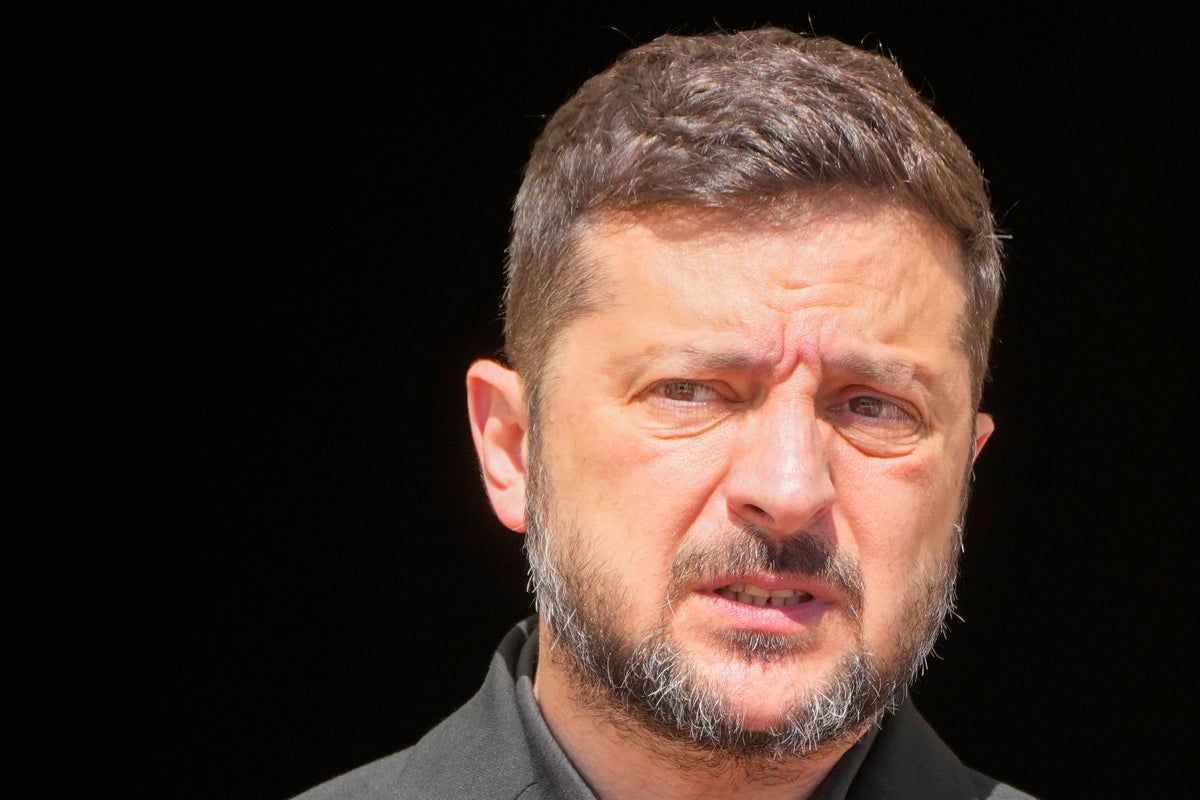
Ukrainian President Volodymyr Zelenskyy just took a massive step toward securing his country's skies by meeting directly with top executives from Raytheon in Kyiv. The goal is straightforward but massive. Ukraine wants to manufacture Patriot air defense interceptor missiles on its own soil in direct partnership with the American defense giant.
This move comes right after discussions at the NATO summit in Ankara, where U.S. President Donald Trump pledged that Washington would grant licensing rights for Ukraine to build Patriot interceptors locally. For a nation facing relentless ballistic missile attacks, moving from importing expensive interceptors to manufacturing them locally isn't just a convenience. It's a matter of national survival.
The Reality of Joint Patriot Production in Kyiv
Raytheon Vice President Joseph DeAntona led the American delegation in Kyiv to discuss how co-production can actually work on the ground. Ukraine has relied heavily on Patriot systems provided by Western allies to intercept incoming Russian ballistic missiles, hypersonic threats, and heavy airstrikes. But interceptor stockpiles burn fast. Every strike requires immediate resupply, and international supply chains move slowly.
By co-producing Patriot interceptors, Ukraine aims to cut reliance on overseas shipping schedules. Zelenskyy confirmed that government agencies and private defense sectors from both nations are aligning technical details. The agreement also covers non-offensive defense equipment to strengthen ground-based air shields.
Building advanced military hardware inside an active war zone carries obvious risks. Factories become high-priority targets. Yet, localizing manufacturing ensures that interceptors can move directly from production lines to battery launchers without crossing international borders or waiting on foreign political debates.
Why Technical Licensing Takes Time
Industry analysts and reports from defense publications caution that setting up PAC-3 or missile interceptor lines won't happen overnight. Establishing high-tech production facilities requires precise supply chains, specialized machinery, and strict security protocols.
- Supply Chain Assembly: Sourcing raw materials and specialized components like rocket motors, radar guidance systems, and microelectronics requires established global networks.
- Facility Protection: Manufacturing sites must operate underground or inside fortified bunkers to withstand deep-precision strikes.
- Quality Control and Testing: Missile interceptors require precise calibration. A single flaw in assembly means a failed intercept against a ballistic missile.
Even with full licensing support from Washington, defense experts estimate that full-scale local manufacturing could take years to reach peak output. However, assembling missile components from pre-made kits in Ukraine could start much sooner, giving Kyiv an immediate boost in supply while full facilities are built out.
How Ukraine's Strategy Fits a Broader Defense Shift
Kyiv isn't relying solely on foreign systems. Ukraine has rapidly expanded its domestic defense sector, producing long-range strike drones that hit military targets and energy infrastructure deep inside Russian territory. Ukrainian long-range strikes recently disrupted major supply routes and logistics hubs, proving that domestic production works.
Pairing home-grown drone tech with licensed U.S. air defense hardware gives Ukraine a dual strategy. Long-range drones disrupt enemy operations across the border, while locally built Patriot interceptors protect Ukrainian cities and infrastructure from incoming retaliatory strikes.
Political support in Washington has shifted as well. High-profile American political figures visiting Kyiv have signaled stronger backing for Ukrainian defense sovereignty. Granting production licenses fits neatly into this approach. It builds long-term Ukrainian defense capacity without requiring perpetual direct shipments from U.S. military stockpiles.
What Needs to Happen Next
For this joint venture to yield operational Patriot interceptors, several key steps must move forward quickly:
- Finalize Technical Agreements: U.S. and Ukrainian diplomatic teams must convert political promises into legally binding technical transfer contracts.
- Secure Industrial Sites: Defense engineers need to establish hardened, secure assembly facilities within Ukraine or near its Western borders.
- Train Local Personnel: Raytheon technical teams must train Ukrainian engineers on assembly protocols and software integration.
- Fund Manufacturing Lines: Defense funding must be allocated through bilateral security agreements and international support packages.
If Raytheon and Kyiv pull this off, Ukraine won't just be an importer of Western air defenses. It will become a core producer of some of the most advanced air defense technology in the world.


