Ukraine's strategy has shifted from holding the line to lighting up the Russian rear. Overnight, a massive wave of Ukrainian drones swarmed multiple Russian regions. They didn't just fly circles; they hit the gears of the Russian war machine. We're talking about direct hits on energy infrastructure and industrial sites across several territories, including Bryansk, Belgorod, and Kaluga.
The Kremlin likes to say everything's under control. It's not. These strikes show a sophisticated, evolving long-range capability that Kyiv didn't have a year ago. It's no longer just about symbolic hits on Moscow office buildings. Now, Ukraine's going after the oil and the factories that keep the tanks rolling and the missiles flying.
The geography of the drone swarm
This wasn't a random spray of drones. It was a calculated strike across a broad geographic arc. According to local Russian governors and Telegram channels that often leak the truth before the official censors can catch it, the explosions were loud and the fires were bright.
In the Bryansk region, the focus was clearly on industrial capacity. In Belgorod, which has become a de facto front-line city, the strikes hit closer to home for the Russian military's logistics chain. These areas serve as the primary staging grounds for the ongoing Russian offensive in Kharkiv. When you blow up a fuel depot in Belgorod, a tank on the other side of the border stops moving 48 hours later.
Then there’s Kaluga. It's further inland. Striking here proves that Russian air defenses are porous. You can't protect everything all the time. Ukraine is exploitng that reality. They're finding the gaps in the radar and threading the needle with low-cost, high-impact suicide drones.
Why energy targets are the new priority
Ukraine realized early on that it can’t win a pure war of attrition if Russia's economy stays fueled up. By targeting oil refineries and electrical substations, Kyiv is hitting Russia's wallet and its power grid simultaneously.
Think about the math. A drone costs maybe $30,000 to build. A high-tech refinery fractionating column costs tens of millions and requires Western parts that Russia can’t easily get because of sanctions. It’s an incredibly efficient way to fight. You trade a lawnmower engine and some explosives for a massive disruption in Russian fuel production.
I've watched this trend grow over the last six months. It's a deliberate campaign to bring the war home to the Russian public and the Russian elite. When the lights go out or the gas prices at the pump start to climb in regions far from the Donbas, the "special military operation" stops being something they just see on TV. It becomes a reality.
The tech behind the strikes
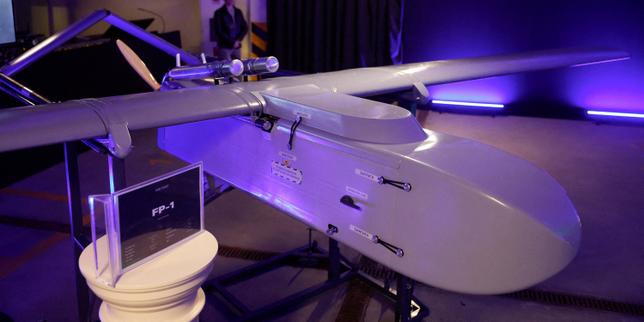
Kyiv isn't just relying on Turkish Bayraktars anymore. They’ve built an entire domestic industry of "long-range kamikaze" drones. These aren't the tiny quadcopters you see dropping grenades in trenches. These are fixed-wing aircraft, some with ranges exceeding 1,000 kilometers.
They’re using "grey zone" tech.
Cheap.
Effective.
Plentiful.
The drones often fly in swarms to overwhelm the S-300 and S-400 air defense systems. The Russian military has to decide: do we use a million-dollar interceptor missile to shoot down a drone made of plywood and fiberglass? If they do, they run out of missiles. If they don't, the refinery burns. It's a lose-lose situation for Moscow.
How Russia is reacting
The official line from the Russian Ministry of Defense is usually that "all drones were intercepted." But the grainy videos from local residents show a different story. You see the drones diving. You hear the distinct "moped" sound of the engine. Then the fireball.
Russia has tried to move more air defense units from the front lines back into the interior to protect these assets. This is exactly what Ukraine wants. Every Pantsir system sitting around an oil depot near Bryansk is one less system protecting Russian troops from HIMARS strikes on the battlefield.
Kyiv is forcing Moscow to choose between protecting its soldiers or protecting its economy. It’s a brutal, effective strategic squeeze.
What this means for the front lines
Don't expect the Russian army to collapse tomorrow because of these drone strikes. War doesn't work that way. But the cumulative effect is massive.
Logistics is everything in modern warfare. If you disrupt the production of lubricants, fuels, and industrial chemicals, you create a friction that slows down every part of the Russian military. It makes the offensive slower. It makes the repairs more difficult.
Ukraine is playing the long game. They're betting that by the time the next major push happens, the Russian machine will be grinding gears because of the damage done to its industrial heartland today.
Immediate steps for observers
If you're tracking this conflict, stop looking only at the map of the trenches. The real shifts are happening hundreds of miles behind the lines. Watch the satellite imagery of Russian refineries. Look for the black smoke. That’s the real indicator of how the power balance is shifting.
Keep an eye on the "DeepState" maps and independent Russian media outlets like Meduza or Astra. They often provide the ground-level verification that state media tries to bury. The war has entered a new phase where the "rear" no longer exists. Everywhere is the front line now.
Pay attention to the specific types of industrial targets being hit. If the strikes move toward chemical plants or steel mills, it signals an even deeper escalation in Ukraine's target list. The goal is clear: make the cost of the war's continuation higher than the cost of its end.