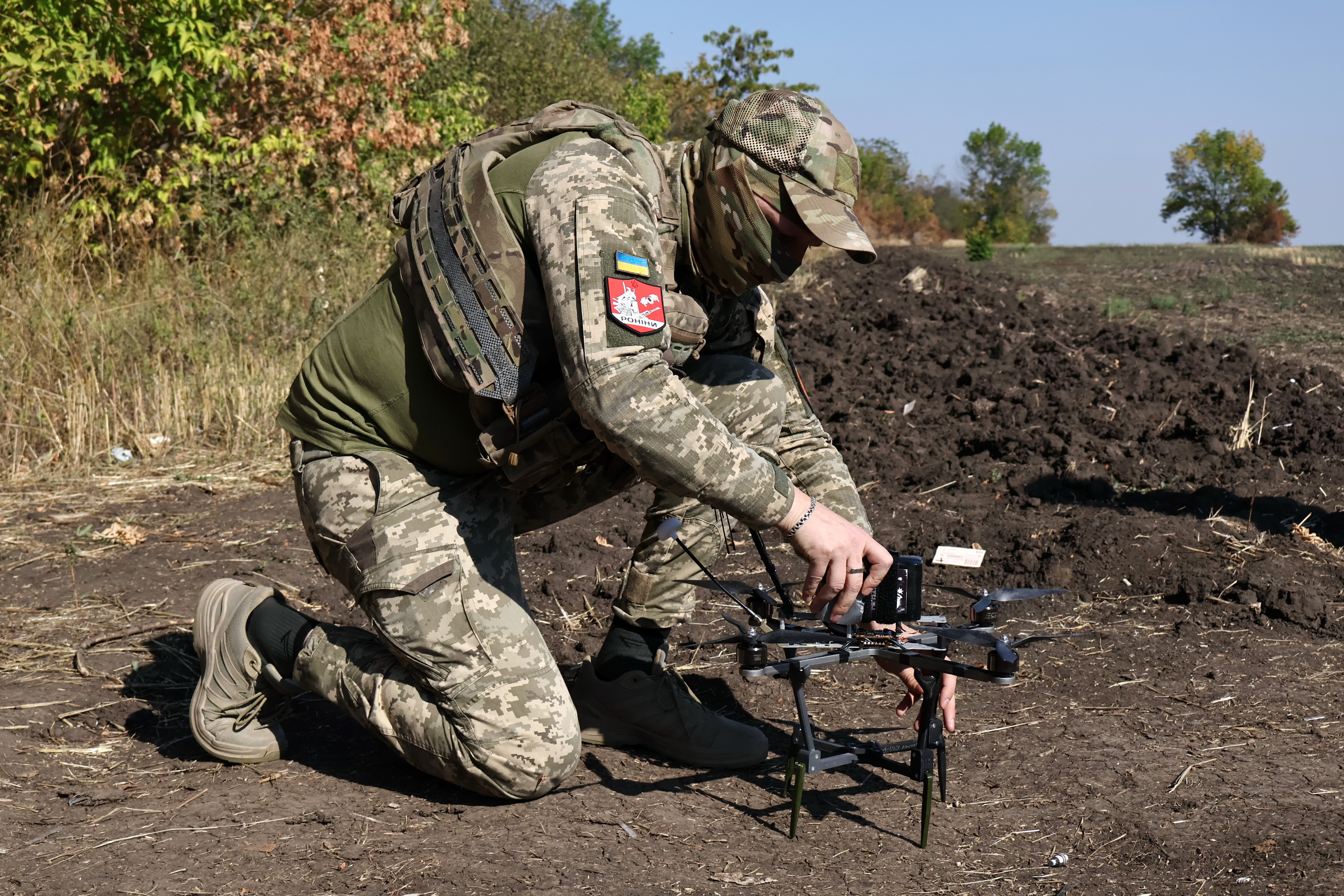
When a military force sends more than one thousand unmanned aerial vehicles across an international border in a single weekend, the nature of conflict changes forever. That is exactly what happened when Ukraine launched an unprecedented saturation aerial assault, hitting deep inside Russian territory and turning the skies over Moscow into a chaotic zone of anti-aircraft fire and explosions.
Moscow Mayor Sergei Sobyanin scrambled to address the public, labeling the onslaught the largest drone strike the Russian capital had ever faced. Hundreds of low-flying machines buzzed toward the city center, overwhelming legacy air defense systems and forcing emergency responders to battle massive fires at industrial and energy facilities, including the heavily guarded Moscow oil refinery.
Why the Aerial Strategy Has Shifted
Ground combat along the sprawling 1,250-kilometer front line has largely slowed to a grueling stalemate. Trenches, landmines, and ground robotics make mass troop maneuvers prohibitively costly. Both sides have realized that breaking the deadlock requires taking the fight hundreds of miles behind the front lines.
Kyiv's strategy centers on industrial attrition. By targeting oil refineries, fuel depots, and logistics hubs deep inside Russia, Ukrainian commanders want to systematically choke off the financial engine feeding the Kremlin's war machine. Refineries responsible for a major chunk of Russia's processing capacity have taken direct hits over recent months, proving that inexpensive, mass-produced drones can pierce airspace that billions of dollars in traditional defense budgets were meant to protect.
The Cost of Saturation Warfare
Air defense economics are broken, and this weekend proved it. Firing multi-million-dollar surface-to-air missiles at cheap, commodity-grade drones is a losing game of math. When hundreds of projectiles arrive simultaneously, radar screens saturate, operators get overwhelmed, and defensive batteries run dry.
The consequences aren't just military. Across the wider Moscow region, civilian infrastructure took hits, residential blocks sustained damage, and local officials reported casualties. Neighboring nations like Moldova and Romania have repeatedly reported airspace violations and debris drops as aerial armadas trade blows overhead, highlighting how easily the shockwaves of these campaigns spill across borders.
Diplomatic Fallout and What Comes Next
These massive aerial escalations don't happen in a vacuum. The timing of this thousand-drone offensive coincided with high-stakes international positioning, as Ukrainian leadership engages with Western allies to secure air defense ammunition and tactical support. While diplomatic channels stutter and restart, the message on the ground remains brutal and clear.
Wars are no longer decided solely by heavy armor and artillery divisions. They are shaped by software, supply chains, and the ability to scale cheap aerial technology faster than the enemy can shoot it down. As long as the conflict persists, expect these sky-high saturation strikes to define the new baseline of modern warfare.