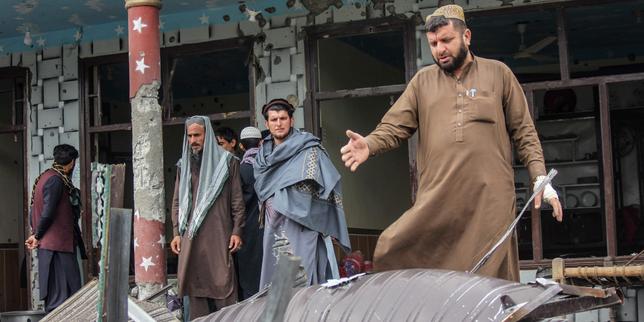
The ground in Afghanistan is shifting in ways that headlines often fail to capture. Recent deadly strikes have forced the United Nations to issue a series of urgent alarms. These aren't just bureaucratic memos. They're frantic signals that the safety of regular people has become an afterthought in a region where conflict hasn't actually ended—it's just changed its face.
You might think the chaos stopped when the international headlines moved on. It didn't. The UN Assistance Mission in Afghanistan (UNAMA) is currently tracking a terrifying rise in civilian casualties from aerial operations and explosive remnants. When bombs fall on residential areas or markets, the "collateral damage" isn't a statistic. It’s a family losing their home or a village losing its only doctor. The UN is demanding accountability, but in a country ruled by the Taliban, accountability is a ghost.
Why Civilian Protection is Falling Apart
The current situation is a mess of old weapons and new aggression. Even though the massive, large-scale battles of the past decade have subsided, the violence is more localized and unpredictable. Air strikes—whether from regional neighbors targeting militants or internal security operations—frequently miss their mark.
Data from human rights monitors suggests that a significant portion of these strikes hit non-combatants. When a strike occurs in provinces like Khost or Kunar, the information trickle is slow. By the time the world hears about it, the bodies are already buried. The UN's latest warnings emphasize that international law isn't a suggestion. It’s a requirement. Yet, who is there to enforce it?
The Taliban's own security apparatus often lacks the technical precision to avoid civilian areas. Simultaneously, regional players conducting cross-border strikes prioritize their own national security over the lives of Afghan villagers. This leaves the average person caught in a pincer movement of indifference.
The Invisible Threat of Explosive Remnants
It isn't just the stuff falling from the sky. Afghanistan is one of the most contaminated countries on earth when it comes to unexploded ordnance (UXO). Decades of war left a "tapestry"—scratch that—a literal minefield of hidden killers.
Kids are the primary victims here. They see a strange metal object in a field and think it's a toy. It isn't. The UN reports that hundreds of children are killed or maimed every year by these "legacy" weapons. Funding for demining has dried up since 2021. Without cash, the teams who find and neutralize these bombs can't work. It’s a direct correlation. Less money for demining equals more dead kids. It’s that simple and that brutal.
International Law vs Harsh Reality
The United Nations keeps citing the Geneva Conventions. They remind every actor involved that you have to distinguish between a fighter and a grandmother. This sounds great in a conference room in Geneva. On the ground in rural Afghanistan, those lines are blurred by bad intelligence and a lack of oversight.
Independent journalism in the country is basically dead. Most local reporters have fled or been silenced. This means the UN is one of the few entities left with the infrastructure to actually document what's happening. When they say a strike killed civilians, they aren't guessing. They're using a network of local contacts who risk their lives to share the truth.
We’re seeing a total breakdown of the "responsibility to protect." The international community has largely turned its back, focusing instead on Ukraine or the Middle East. This isolation gives those who pull the triggers a sense of impunity. They don't think anyone is watching.
The Economic Cost of Insecurity
Safety and the economy are linked. You can't have a functioning market if people are afraid to travel between villages. Every time a strike hits a road or a bridge, it severs a lifeline.
- Farmers can't get produce to the city.
- Prices for basic goods like flour and oil spike.
- Humanitarian aid gets blocked or delayed.
The UN's alarm isn't just about the immediate deaths. It's about the long-term erosion of Afghan society. When civilians aren't protected, the entire social structure collapses. People flee. They become internally displaced or try to cross borders, fueling the global migration crisis.
Moving Beyond Statements
Issuing a press release won't stop a missile. The UNAMA reports are necessary, but they're insufficient. We need a shift in how the world engages with the current Afghan authorities and neighboring states regarding military conduct.
First, there has to be a restoration of demining funds. This is a non-political issue. It doesn't matter who is in charge; children shouldn't be blown up by 40-year-old landmines. Donors need to decouple this specific humanitarian aid from their political stances on the Taliban.
Second, regional neighbors must be held to account for cross-border operations. Sovereignty is a two-way street. If you're going to fire into another country, you better be certain of your target. The UN needs to push for a formal investigative mechanism that includes neutral third parties to verify casualty counts after every major incident.
Third, the Taliban must allow human rights observers unhindered access to strike sites. Their current habit of cordoning off areas and controlling the narrative only breeds more distrust and covers up potential war crimes.
Stop looking at Afghanistan as a finished story. It’s an ongoing tragedy where the rules of war are being ignored because the world is too tired to pay attention. If you want to help, support organizations like the ICRC or the Halo Trust that still have boots on the ground doing the dirty work of clearing mines and treating the wounded. Pressure your representatives to keep Afghan civilian safety on the diplomatic agenda. Silence is the biggest killer in this conflict right now.