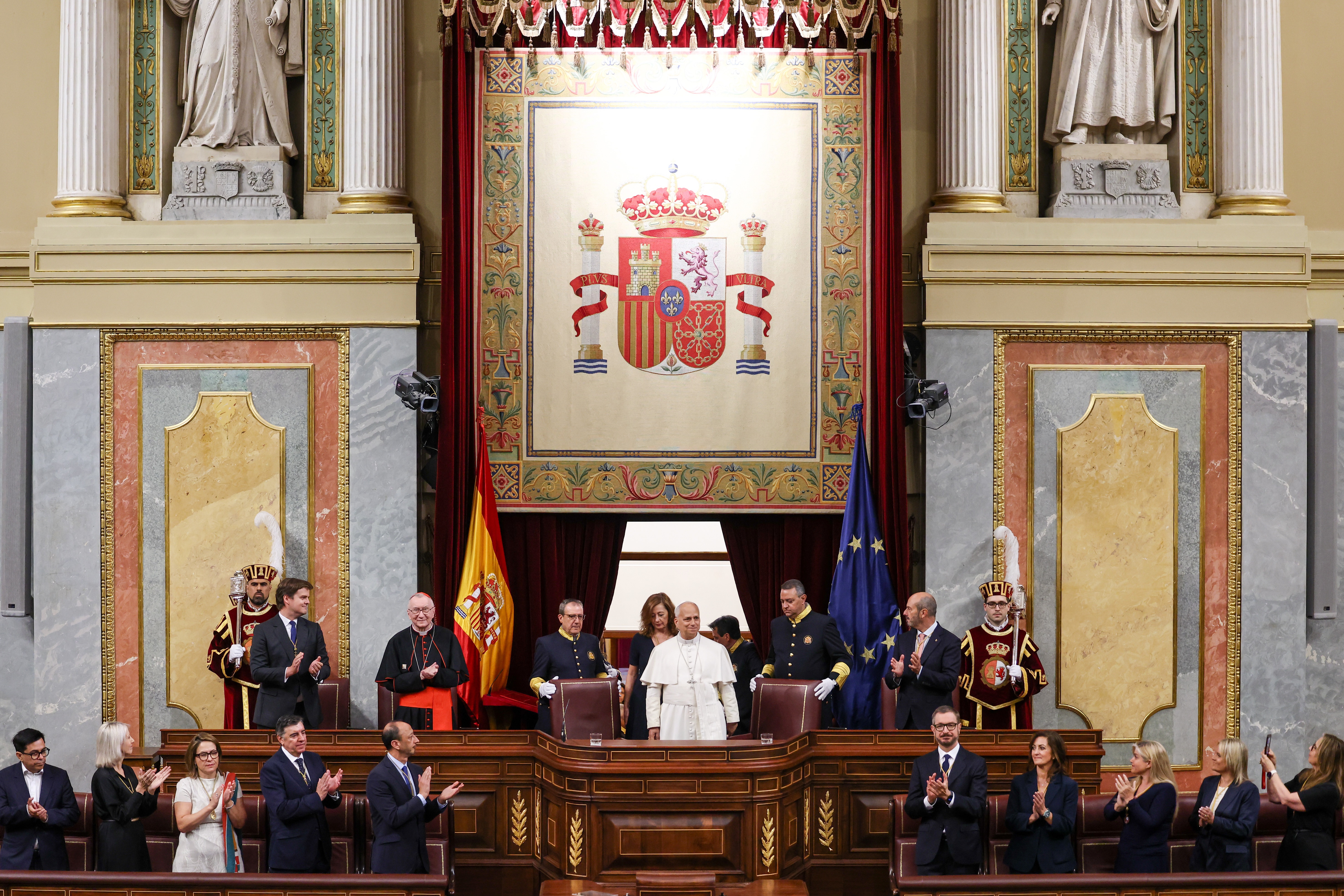
When Pope Francis stood before the Spanish parliament and demanded absolute respect for human dignity, the room erupted in predictable, polite applause. The media swallowed it whole. Editorial boards nodded in unison, celebrating another sermon on universal human rights.
They are all missing the point.
The lazy consensus loves a moral platitude. It feels good to demand dignity for everyone, everywhere, all the time. But in the cold reality of modern governance, "dignity" has become a semantic blank check—a word used by leaders to avoid making the brutal, necessary trade-offs that actual policy requires. When a concept means everything, it ultimately means nothing.
Political institutions are not churches. They do not run on grace; they run on scarce resources, competing jurisdictions, and hard borders. By framing complex socio-economic crises exclusively through the lens of abstract moral imperatives, religious and political leaders aren’t solving systemic problems. They are paralyzing the debate.
The Illusion of Policy via Platitude
Listen closely to the standard political speech on human rights. It treats dignity as a self-executing resource. The premise is simple: if we just respect people enough, the underlying systemic friction will magically dissolve.
It is a fantasy.
Let's look at the actual tension points in Spanish and broader European governance that these speeches conveniently gloss over:
- The Migration Paradox: A nation-state cannot simultaneously maintain an open-ended definition of universal resource access and a stable, funded domestic welfare state. Hard borders require drawing a line between the rights of citizens and non-citizens. Calling this a violation of dignity doesn't change the mathematics of public funding.
- The Labor Divide: Decrying high youth unemployment while ignoring the rigid labor regulations that protect aging insiders at the expense of the youth is cowardice. Moral scolding does not create jobs; deregulation and capital investment do.
- The Demographic Trap: Europe is aging rapidly. Spain’s birth rate sits well below replacement level. Shouting about the dignity of the elderly without addressing the fiscal reality that fewer workers are supporting more retirees is a recipe for generational collapse.
I have spent years analyzing how policy documents move from draft rooms to legislative floors. The most useless bills are always the ones stuffed with high-minded preambles about human worth. They pass unanimously, achieve zero measurable outcomes, and leave the structural rot untouched.
Dismantling the "People Also Ask" Fallacy
When public debates heat up around papal addresses or human rights declarations, the public searching online asks fundamentally flawed questions. Let’s dismantle two of the most common.
Does prioritizing national sovereignty inherently violate universal human dignity?
This question assumes that internationalist moral frameworks are inherently protective, while the nation-state is inherently predatory. The reverse is true. Historically, the abstract concept of "universal rights" is unenforceable without a sovereign state to back it up with a monopoly on violence and a functional legal system. If a state bankrupts itself or loses control of its borders trying to uphold an unquantifiable global ideal, it loses the ability to protect the dignity of anyone within its jurisdiction. Sovereignty isn't the enemy of human rights; it is their only practical guarantor.
Can economic policy be truly moral without explicit religious or ethical guidance?
Yes, and it is usually far more effective when it isn't. When economic policy tries to maximize "morality," it tends to distort market signals. For example, artificially inflating minimum wages out of a desire for "fairness" frequently prices the lowest-skilled workers out of the market entirely, driving them into the informal economy. A cold, utilitarian focus on market efficiency often produces better material outcomes—lower poverty rates, higher purchasing power—than a policy wrapped in theological guilt.
The Hidden Cost of Moral Monopolies
When institutions like the Vatican demand that secular parliaments adopt their specific ethical vocabulary, they create a dangerous rhetorical monopoly. Anyone who questions the practical execution of these ideals is immediately branded as cruel or xenophobic.
Consider a thought experiment: Imagine a municipal government with a fixed budget of €10 million. They can spend it on upgrading state-of-the-art medical equipment for a local hospital serving 50,000 taxpayers, or they can allocate it to process and house an unexpected influx of undocumented arrivals at the border.
There is no choice here that preserves everyone's absolute dignity. One group will suffer diminished care or diminished security.
[Fixed State Budget]
       │
       ├─► Option A: Fund Local Infrastructure (Prioritizes Citizens)
       │
       └─► Option B: Fund Global Humanitarian Aid (Prioritizes Non-Citizens)
This is the zero-sum reality of governance. When a religious leader demands "respect for all" without offering a framework for prioritization, they are not helping. They are grandstanding from a position of zero accountability. The church does not have to balance a budget sheet or answer to an angry electorate when public services collapse.
Flipping the Script: A Pragmatic Framework
If we want to actually improve human lives instead of just feeling virtuous, we have to abandon the vocabulary of universalism and embrace the vocabulary of constraints.
1. Define Rights by Capacity, Not Intent
Stop passing laws that declare housing, healthcare, and employment as universal human rights unless you have the capital to build the houses, train the doctors, and fund the enterprises. If a right depends on someone else's labor and money, it is a service, not a right. Treat it as a market commodity that needs optimization, not a sacred virtue.
2. Embrace Reciprocity Over Entitlement
The social contract is failing because it has become entirely one-sided. True dignity comes from agency and contribution, not passive reception. European policy should pivot toward strict reciprocity models: access to social safety nets must be explicitly tied to civic contribution, tax compliance, or community integration.
3. Reject Theological Guilt in Secular Spaces
Parliaments are engines for resource allocation and legal enforcement. When religious entities use their moral weight to influence secular legislation, they introduce variables that cannot be reasoned with. If a policy cannot be justified through raw data, economic viability, and national self-interest, it belongs in a homily, not a statute book.
The downside to this approach is obvious: it sounds harsh. It lacks the warm, fuzzy optics of a papal blessing. It forces societies to look directly at their limitations and admit that they cannot save everyone or solve every historical grievance.
But the alternative is worse. The alternative is the current status quo: a continent drowning in high-minded rhetoric while its infrastructure decays, its budgets bloat, and its citizens lose faith in the very concept of governance.
Stop listening to speeches about dignity from people who don't have to pay for the consequences of the words. It is time to trade the sanctimonious poetry for hard, cold prose.