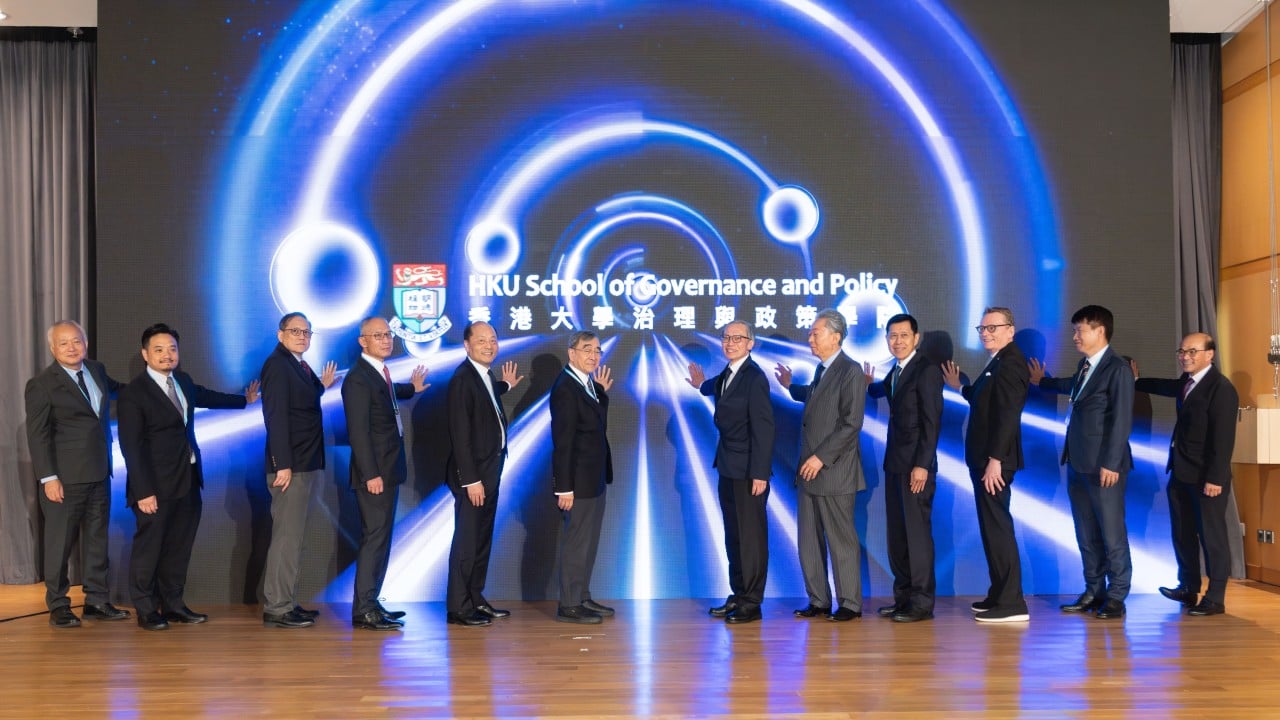
The press release landed with the predictable thud of institutional vanity. Hong Kong University is opening a School of Governance and Policy. The stated goal? To initiate global policy dialogue. The actual result? A manufacturing plant for expensive degrees that will likely prepare students for a world that does not exist.
This is the standard operating procedure for elite universities today. When they run out of ways to innovate in engineering or science, they turn to the soft sciences. They open a school. They hire a few well-connected former bureaucrats to sit on advisory boards. They issue press releases about "shaping the future." It sounds sophisticated. It looks good on a university ranking report.
It is also effectively useless for solving the problems that actually plague society.
The consensus is that these institutions train the leaders of tomorrow. I have spent two decades watching these graduates walk into the halls of power, and I can tell you they are rarely the ones moving the needle. They are the ones writing the memos that nobody reads, while the actual mechanics of governance are handled by people who skipped the seminar and spent their time in the trenches of reality.
The Theory Trap
The fundamental problem with the academic approach to governance is the assumption that policy is a rational, linear process. In these classrooms, you learn that if you gather enough data, consult enough stakeholders, and design a logical framework, you will produce a successful result.
This is fiction.
Real-world governance is chaotic, tribal, and deeply emotional. It is about interest groups fighting over scraps of power. It is about navigating broken systems that were never designed to be fixed. When a student enters a high-level policy seminar, they are taught how to write a policy paper. They are not taught how to survive a bureaucratic knife fight. They are not taught how to sell a difficult idea to an electorate that is actively hostile to change.
I once watched a brilliant academic proposal for urban transit fail within twenty-four hours of its announcement because the authors ignored the local power structure. They had the data. They had the logic. They had the best experts in the field. But they had zero understanding of the local ward leaders who held the real authority. The project died not because it was bad policy, but because it was naive politics.
This is the blind spot of the modern governance school. They teach the what and the why, but they fail to teach the how—the raw, gritty reality of getting things done when everyone is against you.
The Prestige Illusion
Why does a university like HKU launch a school like this? It is rarely about the quality of the policy output. It is about branding.
Universities compete for top-tier faculty and wealthy international students. To attract these groups, you need a sprawling portfolio of schools that sound important. "Governance and Policy" sounds prestigious. It implies proximity to power. It allows the university to host conferences where politicians come to give speeches, which then gives the school the veneer of influence.
But look at the hiring profile for these schools. Who gets the tenure track positions? It is usually academics who have mastered the art of publishing papers in journals that nobody reads. They write for other academics. They cite each other. They create a closed loop of self-congratulation.
This is not governance. This is an echo chamber.
If you are a student looking to make an impact, you are better off working as an intern for a local councilor, a labor union, or a trade association. You will learn more about how the world works in a week of that work than you will in four years of graduate school. You will see the compromise. You will see the dirty deal-making. You will see the messy reality of governance.
Dismantling the Global Dialogue Myth
The press release mentioned "global policy dialogue." This is a meaningless phrase. What does global dialogue actually produce? Mostly, it produces expensive airfare and high-end dinners in nice hotels.
The world does not need more dialogue. It needs more execution.
We have enough data on climate change, poverty, and healthcare. We do not need a committee to discuss the findings for the thousandth time. We need leaders who can navigate the existing structures to implement solutions. We need people who can walk into a room of hostile stakeholders and find the one sliver of alignment that allows for progress.
Academic centers of governance often view this kind of pragmatism as beneath them. They prefer the clean, sanitized version of policy. They like to stay in the abstract.
Imagine a scenario where a school actually taught students how to manage a budget crisis in a failing city. They would not use textbooks. They would put the students in a simulation where the unions are threatening to strike, the tax revenue is plummeting, and the political opposition is calling for their resignation. How many of the standard governance professors would actually know how to negotiate that? Very few. Most would retreat to the theoretical benefits of austerity or stimulus, missing the point entirely.
The Hiring Disconnect
Look at the resumes of the most effective policy makers. You will find lawyers, former community organizers, military veterans, and business operators. You will find very few people with Master’s degrees in Policy who have not spent time doing something else first.
The degree itself is often a signal of conformity, not competence. It tells an employer that the candidate knows how to navigate an institution, follow instructions, and write a coherent memo. It does not tell them the candidate can build a coalition or manage a crisis.
When I hire, I do not look for the governance degree. I look for the candidate who has failed. I look for the person who tried to build something and saw it crumble because they misread the politics. That failure is a badge of honor. It means they have been in the arena. The academic graduate who has never failed because they have never taken a real risk is a liability.
How Policy Actually Moves
Governance is a contact sport. It is about the friction between competing interests. If you want to change policy, you have to be willing to be disliked.
- Find the Chokepoint: Every system has a point where the decision is actually made. It is rarely the board room or the committee hearing. It is the backroom. It is the hallway conversation. It is the person who controls the budget, not the person who writes the report. You must identify that chokepoint and focus your energy there.
- Accept the Low-Resolution Win: Academic theory loves perfection. Real policy is a series of small, ugly compromises. If you hold out for the perfect plan, you will get nothing. Learn to accept the imperfect win and build on it later.
- Control the Narrative: Policy is as much about communication as it is about substance. If the public perceives your policy as a threat, it is dead. You have to be able to explain the benefit in a way that resonates with people who have no interest in your data.
Why Universities Should Stop Pretending
I am not saying we should burn the universities down. I am saying they should be honest about what they are.
If they want to be vocational, they should be training lobbyists, political aides, and campaign managers. Teach them the skills they need to navigate the system as it exists. Stop pretending that you are preparing them to design the perfect society.
If they want to be academic, they should be research institutes, not "Schools of Governance." Focus on the data. Focus on the history. Stop selling the illusion that these degrees are a ticket to influence.
The launch of a new school of governance is a signal of institutional stasis. It is a sign that the university is looking backward, trying to capture the prestige of the past rather than facing the mess of the present.
The next generation of effective leaders will not come from these halls. They will come from the sectors that are currently being disrupted—the tech founders who are bypassing bureaucracy, the local activists who are organizing outside of traditional channels, and the business leaders who are forced to solve public problems because the government is too slow.
They are the ones who understand that governance is not a subject to be studied. It is a system to be hacked.
Stop looking for the ivory tower solution. There isn't one. The policy world is a swamp, and if you want to change it, you have to be willing to get wet. The people inside these new schools are paying a premium to stay dry, clean, and entirely irrelevant.
Success in this arena requires a set of skills that cannot be taught in a lecture hall. It requires a high tolerance for ambiguity. It requires the ability to identify leverage points in an opaque system. It requires the willingness to engage with people you disagree with, not to find consensus, but to find a way to move the dial an inch further.
The industry is saturated with people who know the theory of policy. It is starving for people who know how to break the stalemate.
The university is betting that the world wants more policy wonks. The reality is that the world is desperate for operators.
If the new school at HKU wants to justify its existence, it should do the impossible: admit that the current way of teaching governance is broken. It should bring in people who have actually run governments, not just people who have studied them. It should pivot from theory to the mechanics of power.
Until then, treat these announcements for what they are: a marketing play designed to pad the university's reputation. Do not confuse the prestige of the institution with the impact of the graduates.
The real work is happening outside the classroom. If you want to be a part of it, get out there. Stop reading the policy white papers. Start watching where the money goes, who makes the decisions, and why the system keeps failing in the same ways.
That is your curriculum. That is where you learn to govern. The rest is just noise designed to keep you sitting in a desk until you are too disconnected to matter.