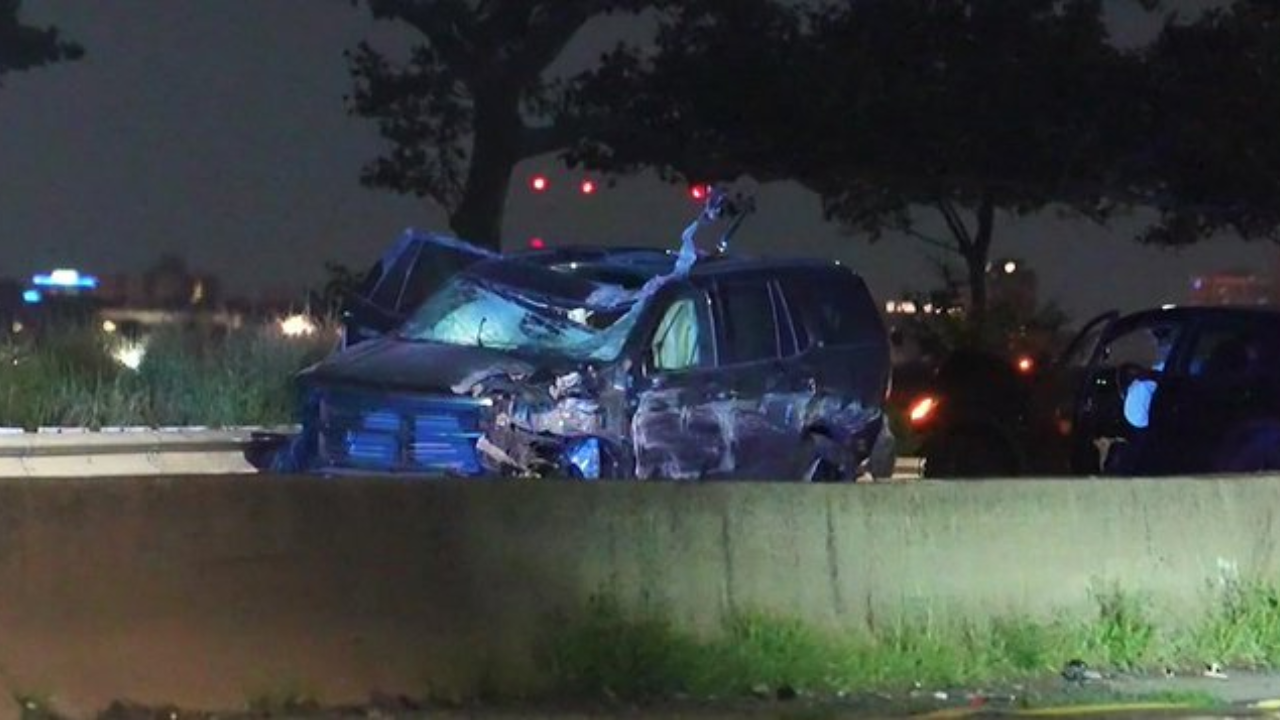
Traffic fatalities on municipal highways are rarely isolated anomalies; they represent the systemic failure of an intersection between human behavioral limits, vehicular kinetic energy, and roadway geometry. When a single collision results in multiple fatalities and severe injuries—such as the recent high-speed crash in Brooklyn involving teenagers—the public discourse typically focuses on proximal causes like speed or driver error. A rigorous, data-driven framework requires moving past surface-level culpability to examine the underlying structural variables governing urban transit safety.
To understand why urban arterial crashes yield catastrophic outcomes, we must deconstruct the physics of kinetic energy transfer, driver psychology in peer-group contexts, and municipal infrastructure design. This analysis establishes the core variables that transform a momentary driving lapse into a mass-casualty event.
The Physics of Kinetic Energy and Vehicle Mass
The destructive capacity of any vehicular collision is fundamentally governed by the physics of kinetic energy. The formula for kinetic energy depends heavily on velocity: doubling a vehicle's speed quadruples the kinetic energy it must dissipate upon impact.
$$\text{KE} = \frac{1}{2}mv^2$$
In urban environments, speed limits are engineered to balance traffic throughput with survivability thresholds. When operators exceed these thresholds, the margin for error collapses exponentially.
Three physical mechanisms dictate the severity of urban collisions:
- Deceleration Trauma: Rapid deceleration forces internal organs against skeletal structures, causing shearing injuries even without external passenger compartment intrusion.
- Energy Dissipation Paths: Modern passenger vehicles are engineered with crumple zones designed to absorb kinetic energy progressively. However, lateral impacts or collisions with rigid roadside infrastructure bypass these structural defenses, transmitting raw force directly into the passenger cabin.
- Occupant Load Multipliers: In vehicles carrying multiple passengers without proper spatial restraint or exceeding seating capacity, secondary impacts between occupants inside the cabin become a primary source of trauma during a rollover or sudden stop.
Behavioral Variables and Teenage Driving Dynamics
Addressing youth-involved transit fatalities requires analyzing adolescent risk assessment models through a neurodevelopmental lens. The adolescent brain exhibits a pronounced asymmetry between the prefrontal cortex, responsible for impulse control and long-term consequence evaluation, and the limbic system, which drives reward-seeking behavior.
When this neurodevelopmental state intersects with specific social variables, the probability of catastrophic driving outcomes increases.
- Peer Passenger Effects: Statistical analyses consistently show that the presence of teenage passengers significantly increases the risk of fatal crashes for young drivers. The social reward circuitry overrides defensive driving heuristics, encouraging competitive or aggressive maneuvers.
- Overestimation of Control: Inexperienced operators systematically underestimate stopping distances and overestimate their reaction times, a cognitive bias exacerbated by high-powered vehicles with handling capabilities that mask the true severity of high speeds.
- Circadian Vulnerability: A disproportionate number of severe juvenile traffic incidents occur during late-night hours, coinciding with natural circadian troughs in alertness and executive function.
Infrastructure and Environmental Contributors
Blaming solely the operator ignores the role of roadway design in facilitating high-velocity crashes. Municipal arterials often feature geometries that invite excessive speed despite posted limits.
Wide lanes, minimal visual friction, and inadequate physical separation between opposing lanes or roadside hazards create an environment where drivers feel comfortable operating at dangerous velocities. Without traffic-calming interventions such as narrower lane widths, chicanes, or automated speed enforcement matrices, the physical environment implicitly encourages the behaviors that precede fatal collisions.
Furthermore, lighting conditions, road surface friction coefficients during adverse weather, and the placement of rigid utility poles or concrete barriers without impact-attenuating buffers dictate whether a momentary loss of control results in a minor recovery or a fatal structural collision.
Systemic Interventions and Preventative Strategy
Mitigating the recurrence of high-fatality urban highway crashes demands a multi-tiered preventative architecture rather than reactive punitive measures. Traditional approaches rely on post-incident enforcement, which fails to alter systemic risk profiles.
A functional mitigation framework relies on structural interventions across three distinct vectors:
- Technological Governance: Implementation of mandatory intelligent speed assistance and geofenced speed-limiting systems in vehicles operated by provisional license holders.
- Roadway Redesign: Retrofitting urban highways with tactical urbanism principles that physically restrict excessive acceleration through narrow lanes and mandatory curve geometry adjustments.
- Dynamic Enforcement Arrays: Transitioning from static police patrols to automated, point-to-point average speed enforcement cameras along high-risk municipal corridors to eliminate the behavioral loophole of slowing down only near visible checkpoints.
Municipal transit safety will remain volatile until safety frameworks stop treating mass-casualty crashes as unpredictable accidents and begin managing them as preventable failures of systemic design.