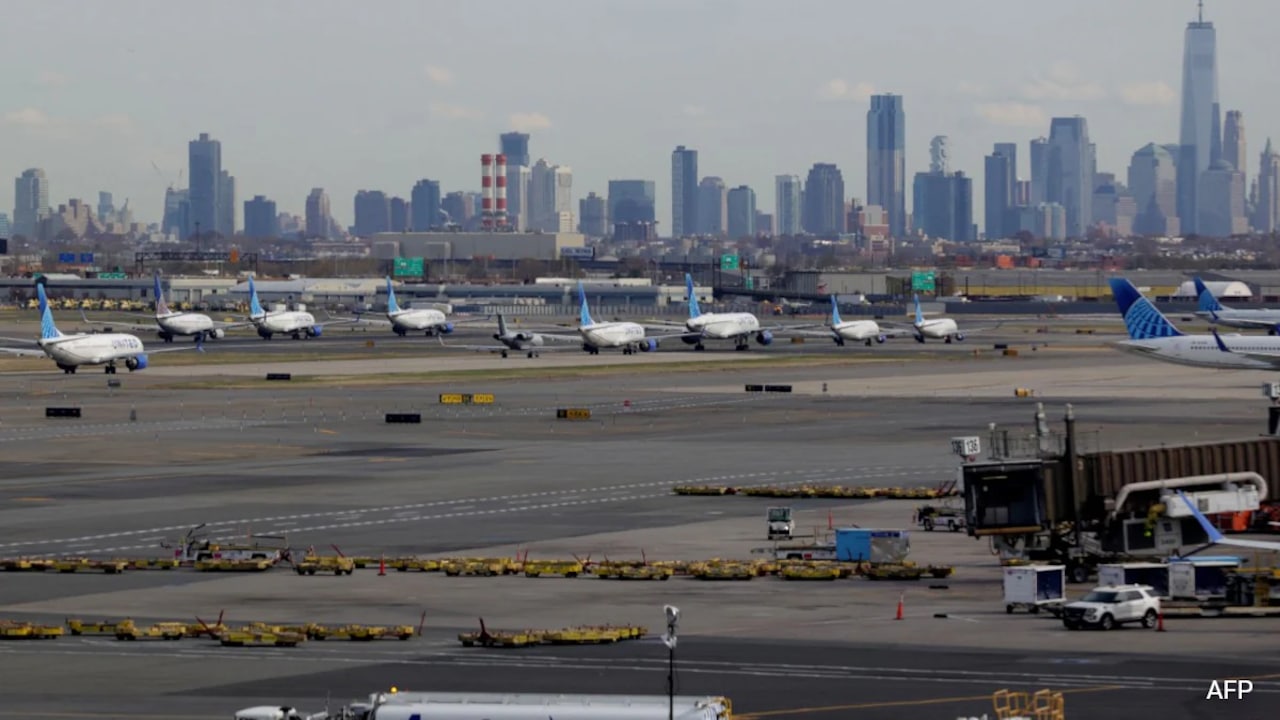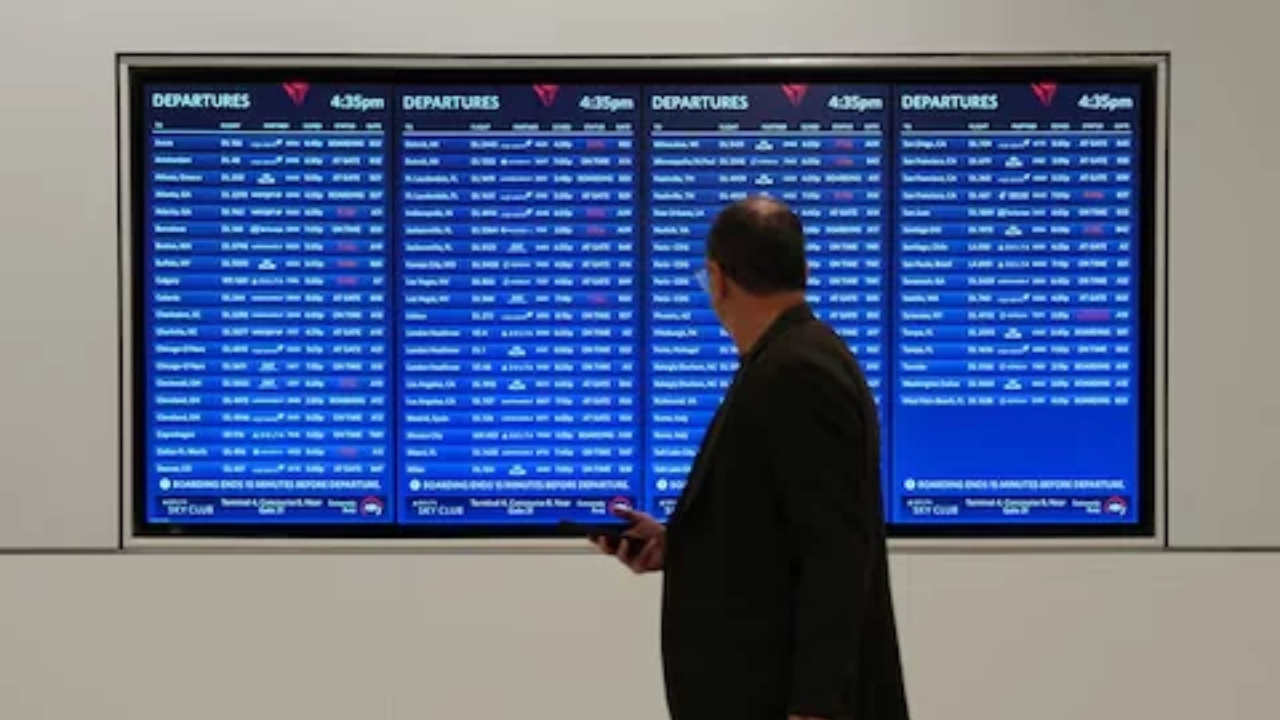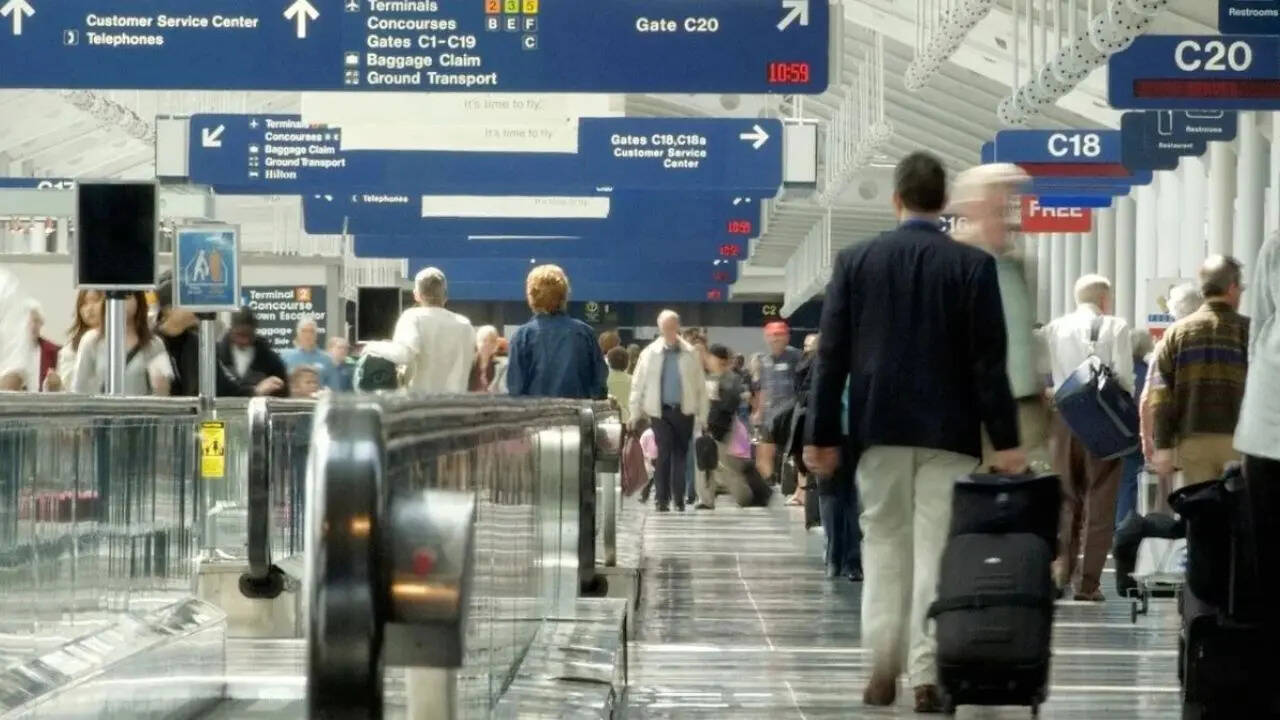
Every major holiday weekend, legacy newsrooms dust off the exact same photo gallery. You know the shots. A fluorescent-lit terminal at O'Hare or Atlanta. An endless snake of roller bags. A toddler sleeping on a backpack next to a gate agent who looks like she hasn't blinked since Tuesday. The headline always screams about "chaos," "meltdowns," and "passengers in limbo," framing the American aviation system as a broken machine run by incompetent executives who hate their customers.
That narrative is comforting. It gives frustrated flyers a clean villain. It is also completely wrong.
The packed terminals and razor-thin margins for error you see in those photos are not evidence of an industry failing to do its job. They are the exact, predictable mathematical outcome of what the American flying public demanded for forty years: rock-bottom ticket prices and maximum flight frequency. You cannot buy a $119 transcontinental fare on Tuesday and then act shocked on Friday when a single thunderstorm over the Midwest brings the entire network to its knees. The slack that used to absorb delays—spare planes sitting idle on the tarmac, reserve crews waiting in airport lounges, half-empty flights with plenty of open seats for rebooking—cost money. Passengers refused to pay for it. So airlines stripped it out.
The Economics of Zero Slack
To understand why a single weather event or air traffic control ground stop cascades into thousands of stranded travelers, you have to understand load factor. In aviation, load factor measures the percentage of available seats filled with paying passengers.
Back in the late 1970s, right around the time Congress passed the Airline Deregulation Act of 1978, domestic load factors hovered around 55 to 60 percent. Nearly half the seats on a typical flight were empty. If your 2:00 PM flight to Denver got canceled because of a mechanical issue, the gate agent casually moved you to the 4:00 PM flight. There were sixty empty seats waiting for you. Nobody slept on the terminal floor. Nobody made the evening news.
Today, according to Bureau of Transportation Statistics data, domestic load factors routinely exceed 85 percent—and on peak travel days, they sit north of 95 percent.
Think about the math of a 95 percent load factor across a hub-and-spoke network. On a 180-seat Boeing 737, that leaves nine empty seats. If one flight cancels, you need to re-accommodate 171 people onto subsequent flights that only have nine spare seats apiece. It takes nineteen fully operational flights just to absorb the fallout from one canceled plane. When a summer squall shuts down arrivals into Newark or Dallas for three hours, dozens of flights cancel simultaneously. The math breaks instantly. There is nowhere to put anybody.
I have sat in network operations centers during major irregular operations—what the industry calls IROPS—watching dispatchers try to solve a giant sliding-tile puzzle with zero empty squares. Critics love to ask why airlines don't just keep ten spare aircraft and twenty extra crews sitting at every major hub just in case.
Here is the answer: a narrowbody jet costs tens of millions of dollars, and pilots are expensive. An airplane sitting on the ground generates zero revenue while burning capital costs every second. If an airline maintains a 10 percent buffer of idle aircraft and standby crews, ticket prices across the board have to jump by 15 to 20 percent to cover the fixed overhead. Every time an airline has tried to prioritize operational cushion over lowest-fare competitiveness, price-sensitive consumers abandoned them on Google Flights and Expedia for the carrier offering a fare that was twelve dollars cheaper.
The Hub-and-Spoke Trap Nobody Wants to Admit
The second lazy myth in mainstream travel coverage is that airlines schedule too many flights at the exact same time out of pure greed. Look at the departure boards at Charlotte, Denver, or Atlanta, and you will see waves of forty flights scheduled to depart within a thirty-minute window.
This is called banking, and it is the foundational engine of the hub-and-spoke model pioneered by carriers like Delta and American following deregulation.
Imagine a scenario where you live in Des Moines, Iowa, and you want to fly to Savannah, Georgia. There are not enough people making that trip every day to fill a direct flight. Without a hub, you either drive twelve hours or you don't go. Under a banked hub system, a morning flight leaves Des Moines and lands in Atlanta at 10:15 AM alongside fifty other regional jets from places like Little Rock, Knoxville, and Green Bay. Passengers sprint across the concourse, swap planes, and by 11:15 AM, fifty outbound flights depart for Savannah, Tampa, Boston, and Seattle.
Banking creates massive connectivity. It allows mid-sized American cities to reach hundreds of destinations with a single stop.
It also creates a single point of catastrophic failure. Because the entire schedule depends on those fifty inbound planes arriving within the same forty-five-minute window, a ground delay program issued by the Federal Aviation Administration at one hub scrambles flight crews and aircraft assignments across thirty different states. The pilot supposed to fly your plane from Chicago to Phoenix is stuck on a taxiway in Philadelphia waiting for a departure slot.
When news outlets publish photos of crowded terminals, they treat the crowd as proof of mismanagement. In reality, you are looking at the physical byproduct of a system engineered to move 2.5 to 3 million people a day across a continent at inflation-adjusted prices roughly 40 percent lower than they were in 1980.
Why Air Traffic Control Is the Silent Bottleneck
Blaming airlines exclusively for terminal gridlock also ignores the elephant sitting inside the control tower. The FAA operates an airspace system struggling with chronic staffing shortages at critical facilities, particularly the New York Terminal Radar Approach Control (TRACON)—known in the industry as N90—and major en-route centers like Jacksonville.
New York airspace is the single most congested corridor in the world. Three major international airports—JFK, LaGuardia, and Newark—sit within twenty miles of each other, fighting for the exact same sky. When N90 is short-staffed, controllers legally and safely have to space aircraft further apart. Arrival rates drop from forty-four planes an hour to thirty.
Do the arithmetic on a twelve-hour operating day. Losing fourteen arrival slots an hour means 168 flights simply cannot land in New York that day. Because roughly 30 to 40 percent of all domestic air traffic touches the Northeast corridor at some point during its daily routing, a staffing-induced slowdown in New York ripples out to strand a family in Minneapolis trying to get to Phoenix.
Yet you rarely see headlines showing photos of empty controller desks at federal facilities. Reporters camp out at the Spirit or United ticket counter because desperate passengers make better visuals than radar screens.
Dismantling the Worst Travel Advice on the Internet
Because travelers misunderstand how the machine actually works, they follow terrible advice when things go wrong. Let's tear down the three biggest myths circulating on travel blogs and social media.
Myth 1: "Never book the first flight of the morning if you hate waking up early—midday flights are fine."
If you fly after 11:00 AM during summer thunderstorm season or winter snow months, you are gambling with loaded dice. Aircraft don't teleport. The plane scheduled to take you from Boston to Miami at 3:00 PM started its day in Detroit at 6:00 AM, flew to Atlanta, then to Boston. By mid-afternoon, it has accumulated every minor delay from three different airports. The 6:00 AM flight is sitting at the gate overnight. The crew is already at the airport hotel. Statistically, early morning departures have the highest on-time performance in the industry by a massive margin. If you want reliability, set your alarm for 4:30 AM.
Myth 2: "Third-party booking sites give you the best deals and protection."
Booking through an online travel agency like Expedia, Priceline, or Kiwi to save eighteen dollars is the fastest way to guarantee you will be the person sleeping next to a Cinnabon during a meltdown. When a flight cancels, the airline's automated rebooking engine prioritizes passengers who booked directly through the carrier's website or app. Third-party tickets often require the agency to reissue the itinerary before the airline can touch it. While you sit on hold with a call center in another time zone, direct-booking passengers have already grabbed the last nine open seats on the next flight out.
Myth 3: "Standing in the customer service line at the gate is how you get rebooked fastest."
Those viral photos of 200-person lines snaking down the concourse? Half of those people are standing there because they don't know how airline operations work. A gate agent can only process one passenger every three to five minutes. By the time person number eighty reaches the podium, every reasonable flight option for the next forty-eight hours is gone. The moment your flight shows a delay that threatens your connection, do not walk to the podium. Open the airline's mobile app, call the airline's international support line (such as the UK or Singapore desk, which often routes to the same global reservation system with a fraction of the hold time), and message their support team simultaneously. Let the people in line fight over the scraps while you lock in a confirmed seat from your chair.
The Uncomfortable Truth About "Fixing" Aviation
Could Congress and the Department of Transportation force airlines to run a more resilient system? Yes. Easily.
Washington could pass strict European-style compensation laws—similar to EU261, which forces carriers to pay up to €600 in cash compensation for severe delays within their control—and mandate minimum aircraft reserve ratios at major hubs. They could cap scheduling density at slot-controlled airports so runways aren't operating at 105 percent capacity on clear days.
Here is the catch that consumer advocates conveniently leave out of their press releases: you will pay for every single dime of it.
Aviation is a brutally low-margin business. Even in record-breaking years, net profit margins for major US carriers hover between 3 and 7 percent—less than what a grocery store chain or a regional bank makes. There is no secret vault of excess profits sitting in Fort Worth or Chicago waiting to be tapped to fund free hotel rooms and empty standby planes. If regulations force carriers to carry 15 percent more operational slack and pay out hundreds of millions in automatic delay penalties, base fares will rise accordingly.
Some travelers would gladly make that trade. Business flyers paying $800 for a last-minute ticket on Delta or United already subsidize a massive chunk of the network's reliability, which is why legacy carriers outperform ultra-low-cost carriers like Frontier and Allegiant when weather hits. Ultra-low-cost carriers operate point-to-point networks with high aircraft utilization—keeping planes in the air twelve to fourteen hours a day with thirty-minute turnarounds. When a plane breaks down in Orlando on a carrier that only flies that route three times a week, you aren't getting home until Thursday. That isn't a bug in their business model. That is the exact trade-off you agreed to when you bought a $49 ticket.
How to Actually Beat the System
Stop expecting a deregulated, ultra-competitive commodity market to behave like a luxury concierge service. If you want to avoid becoming an extra in the next viral airport photo gallery, change how you buy and fly:
- Buy the network, not just the seat. When traveling during high-risk weather windows or for non-negotiable events like weddings and cruises, book a legacy carrier with multiple daily frequencies on your route. Five daily flights give you four backup options. One daily flight gives you zero.
- Respect the two-hour connection floor. Automated booking engines will happily sell you a thirty-eight-minute connection in Chicago or Atlanta because it technically meets the airport's Minimum Connection Time (MCT). MCT assumes your inbound flight lands on time, taxis straight to an open gate, and you sprint like an Olympian. Build your own buffer. Book a two-hour layover and buy yourself the operational slack the airline removed.
- Track your inbound aircraft. Download FlightAware or Flightradar24. Four hours before your departure, check where your specific tail number is right now. If your plane is still sitting on the ground in a thunderstorm two states away, you know your flight is delayed long before the gate agent makes an announcement—giving you a thirty-minute head start to rebook before the stampede begins.
The next time you scroll past a dramatic photo essay of stranded passengers sprawled across airport carpets, look closely at the boarding passes in their hands. They didn't get cheated by a broken system. They bought a ticket on an airborne bus engineered to run at 96 percent capacity for pennies per mile—and nature just called their bluff.