The era of Europe treating the American military as a permanent safety net is officially winding down.
During a closed-door briefing at NATO headquarters in Brussels, Alexander Velez-Green, an envoy for US Defense Secretary Pete Hegseth, laid out a harsh new reality for European allies. The United States plans to dramatically slash the pool of conventional military capabilities it pledges to the NATO Force Model for emergencies.
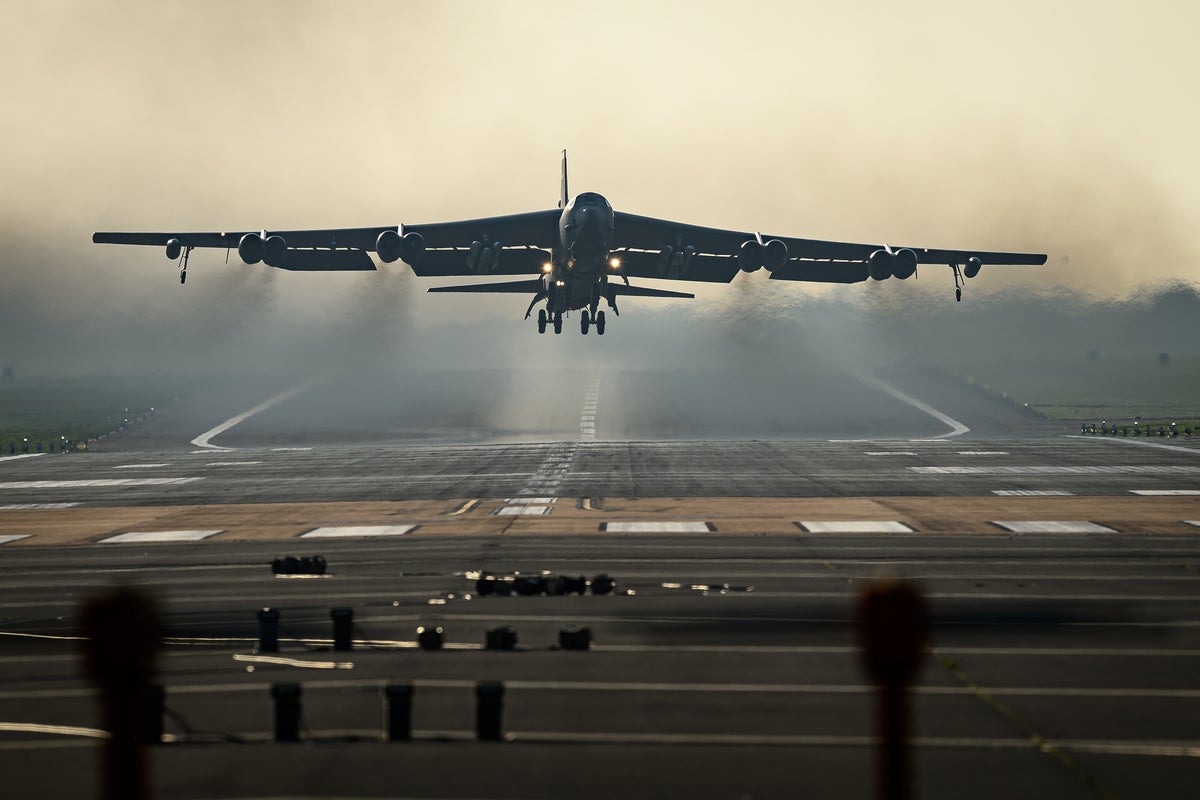
We aren't talking about minor bureaucratic adjustments. The numbers leaked from the meeting are massive. The US aims to cut its committed strategic bombers by half. Its fighter jet commitments will drop by a third. The US Navy will offer fewer destroyers and plans to provide zero submarines to the alliance's emergency pool. Furthermore, Europe will have to supply its own reconnaissance drones, as the Pentagon pulls back both armed and unarmed models.
If you've been paying attention to the shifting priorities in Washington, this shouldn't shock you. The Trump administration is pulling no punches about its expectations. The message is blunt: Washington will maintain its nuclear umbrella over Europe, but when it comes to boots on the ground, ships in the sea, and jets in the air for conventional defense, Europe must fend for itself.
The Reality Behind the NATO Force Model
To understand why this matters, you have to look at how NATO actually functions in a crisis. The alliance doesn't have its own standing army. Instead, it relies on the NATO Force Model. This framework requires member states to promise specific units—ships, aircraft, brigades—that can be activated and deployed rapidly if an adversary attacks an ally.
For decades, the US served as the backbone of this system. If a major war broke out on the eastern flank, American heavy armor, stealth bombers, and attack submarines were expected to do the heavy lifting.
The new directive upends that assumption. By cutting the availability of high-end assets like strategic bombers and attack submarines, the Pentagon is forcing European nations to fill the gaps. NATO Secretary-General Mark Rutte didn't sound the alarm over the news. He noted that the move was to be expected as the alliance looks to end its over-reliance on a single ally.
Why the Pentagon is Pulling Back from Europe
This policy shift isn't just about badgering European nations to spend more on defense. It's a calculated move driven by geography and math. The Pentagon faces a massive logistical challenge: it cannot defend Europe and deter a conflict in the Indo-Pacific simultaneously with the same set of finite resources.
Pentagon policy officials, including those aligned with strategist Elbridge Colby, have long argued that the Indo-Pacific is the primary theater of concern for American security. If a crisis erupts in Asia, the US Navy will need every single attack submarine and destroyer it can muster. By locking those assets into formal NATO crisis frameworks, the US limits its own operational flexibility.
Taking these capabilities off the table for European contingencies ensures the US military can pivot instantly if a flashpoint ignites elsewhere. The administration isn't abandoning Europe entirely, but it's clearly prioritizing its commitments.
The Hard Math Facing European Defenses
European defense ministers now face a brutal inventory check. Replacing American capabilities isn't a matter of simply signing a few checks. It takes years to build warships, train fighter pilots, and establish deep ammunition stockpiles.
Consider the specific areas where the US is scaling back:
- Submarines: The removal of US submarines from the NATO Force Model leaves a gaping hole in underwater surveillance and anti-submarine warfare, particularly in the North Atlantic and the Baltic Sea.
- Airpower: A one-third reduction in American fighter jets and a 50% cut in strategic bombers means European air forces must rapidly increase their flight hours, maintenance budgets, and munitions reserves.
- Drones and Reconnaissance: Pulling back American armed and unarmed reconnaissance drones leaves European forces blind in long-range intelligence collection unless they scale up their own production immediately.
While European nations have increased their defense spending since 2024, much of that money has gone toward replacing equipment sent overseas or fixing long-neglected readiness issues. It hasn't gone toward building the kind of power-projection capabilities that the US is now withdrawing.
How Europe Must Respond to the Gaps
The timeline for these changes is short. The US intends to provide granular details about the drawdown during a force generation conference in early June, ahead of the July NATO summit in Turkey. European leaders don't have the luxury of debating whether this policy is fair. They have to react.
First, major European military powers like Germany, France, and the UK need to coordinate their procurement. Buying fragmented, non-interoperable hardware will waste precious time. They must focus heavily on the specific enablers the US is pulling back: mid-air refueling tankers, air defense networks, and long-range surveillance assets.
Second, European states must accept that defensive depth requires manufacturing capacity. It doesn't matter how many advanced fighter jets a country owns if it runs out of missiles after two weeks of high-intensity conflict. Building up domestic defense industrial bases to produce artillery shells, air-to-air missiles, and spare parts is the only way to establish true strategic autonomy.
The upcoming June conference will lay bare exactly what Europe needs to build, buy, and deploy. The American safety net is shrinking, and the clock is ticking for Europe to stand on its own two feet.