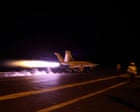
The brief illusion of quiet in the Middle East has officially shattered. After a tense, multi-day pause that raised faint hopes for de-escalation, the United States military launched a heavy wave of airstrikes against targets in Iran. Washington called it a powerful response to a fresh barrage of missiles aimed at American forces. Everyone else calls it what it actually is: a dangerous escalation in a wider regional war that neither side seems to know how to finish.
If you have been watching the headlines, you know the cycle. A temporary truce collapses over shipping lanes in the Strait of Hormuz, commercial tankers take hits, oil prices spike toward one hundred dollars a barrel, and the bombs start falling again. This latest resumption of hostilities proves that short-term pauses aren't peace deals. They're just breathers before the next round.
The Real Trigger Behind the Broken Pause
Most casual observers think these conflicts flare up randomly. They don't. The recent lull in fighting wasn't born out of sudden goodwill between Washington and Tehran. Omani mediators were working around the clock in Tehran to salvage a fractured interim agreement regarding how cargo ships navigate the Persian Gulf.
The core dispute boils down to basic control. Iran wants shipping routed strictly through its territorial waters where it can dictate terms and potentially collect fees. The United States and its allies insist on protecting a southern corridor along the coast of Oman where American air cover can keep global trade moving. When commercial vessels attempting to use that southern route faced attacks, the temporary memorandum of understanding unraveled instantly.
You can't negotiate maritime choke points while both sides are actively testing each other's naval boundaries. Iran's Revolutionary Guard Corps quickly moved to turn back unapproved ships with warning shots, while Washington responded by unleashing heavy air assets against coastal defenses and military command infrastructure. The brief window for diplomacy slammed shut because neither side is willing to compromise on who controls the flow of oil out of the Gulf.
Why This War Keeps Widening Beyond Borders
A regional conflict rarely stays local. What starts as a dispute over a narrow maritime strait quickly drags in a web of proxies, neighboring states, and global economic dependencies.
Look at the geographic spread over the last few weeks. Iranian missile and drone retaliation hasn't just targeted direct American assets; it has landed across neighboring countries hosting U.S. troops, resulting in tragic American casualties in Jordan. Meanwhile, shipping incidents have rippled far outside the Persian Gulf. A drone strike recently hit a gas storage tanker at Egypt's Mediterranean port of Damietta, threatening energy infrastructure thousands of miles away from the primary theater.
When supply chains stutter, the whole world pays the price. Energy markets react violently to every single explosion. Insurance costs for vessels navigating the Red Sea and surrounding waters have doubled overnight. Major energy companies are forced to reroute tankers around the entire African continent, adding weeks of transit time and massive expenses.
The Strategic Exhaustion Inside Washington and Tehran
Behind the public chest-beating, cracks are forming in how both governments manage this campaign. Reports from Washington indicate that top military commanders, including Admiral Bradley Cooper, have warned the White House that the U.S. bombing campaign is reaching the limits of its current effectiveness. Stockpiles of specific precision munitions are strained from supporting multiple global commitments, and the list of viable, unhit targets inside Iran is shrinking.
On the other side, Iranian leadership faces severe economic isolation under a tightened U.S. naval blockade that has choked off oil revenue. Yet, internal political pressure prevents Tehran from backing down publicly. Iranian officials regularly dismiss American threats as strategic fatigue, leaving a vacuum where long-term strategy should be.
President Donald Trump faces a stark political and military choice. Administration officials have oscillated between keeping all military options open for a more rapid campaign and testing whether back-channel diplomacy can yield a permanent settlement. But every day the bombing stops and restarts, the risk of a miscalculation grows exponentially. All it takes is one stray missile hitting the wrong target or killing the wrong personnel to lock both nations into a full-scale war neither leader originally wanted to fight.
Keep a close eye on maritime tracking data in the Strait of Hormuz and diplomatic movements in Muscat and Doha rather than getting distracted by daily political rhetoric. The true trajectory of this conflict won't be decided by social media threats or brief two-hour airstrikes. It will be determined entirely by whether commercial shipping can find a safe, permanent passage through the Gulf without triggering the next military retaliation.