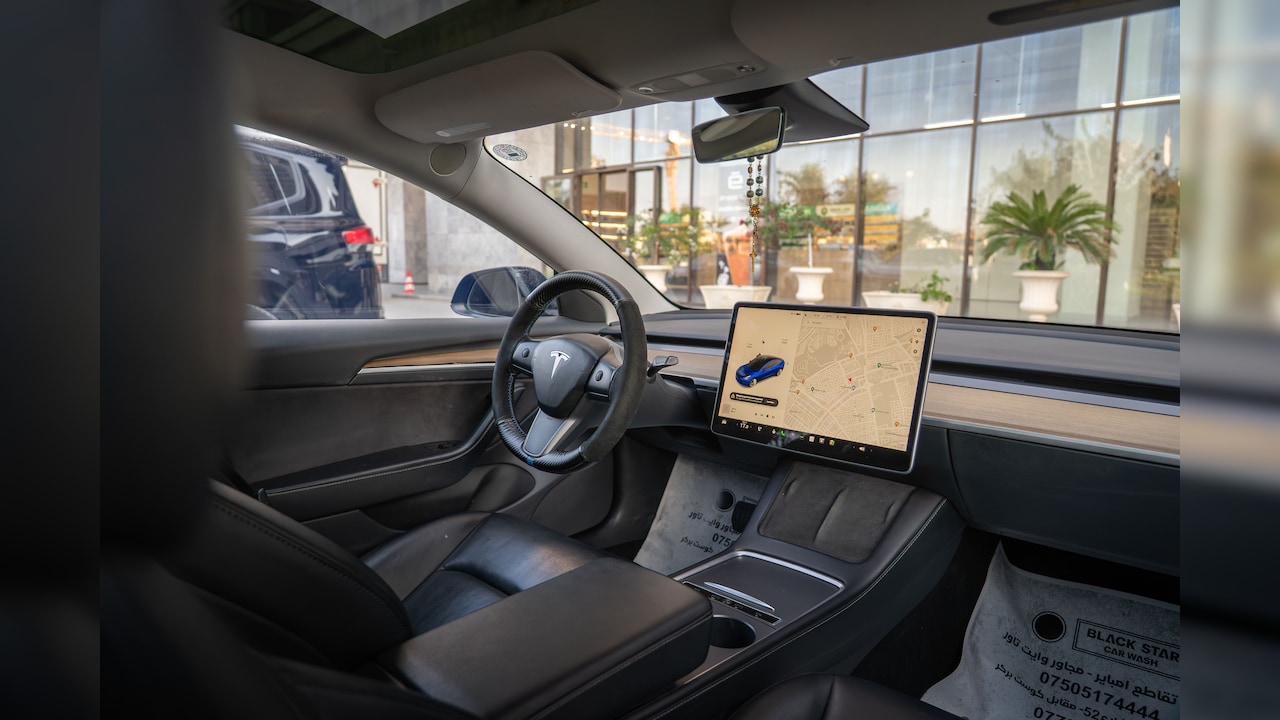
In the early morning hours of October 22, 2026, a 71-year-old man walking across westbound Interstate 80 in Vallejo, California, was struck and killed by a Tesla reported to have been operating in Full Self-Driving mode. According to California Highway Patrol accounts, a 26-year-old driver from San Francisco remained at the scene near the Interstate 780 interchange at roughly 2:30 a.m. and told officers the driver-assistance feature was engaged when the collision occurred. One tragic highway incident does not prove a software defect on its own, yet it exposes the sharpest fault line in modern automotive engineering: a feature called Full Self-Driving still requires a human driver to catch every mistake at freeway speeds.
Watch enough crash investigations over two decades in this industry and a familiar pattern emerges. Headlines treat any crash involving automation as proof that the machine went rogue, while enthusiasts treat every crash as proof that a human looked away. Both reactions miss how supervised driver-assistance software actually behaves when night falls, speeds climb above sixty miles an hour, and an unexpected human figure enters a lane where pedestrians are prohibited.
Why Freeway Pedestrians Break Software Assumptions
Freeways are engineered for predictable flow, steady speeds, and controlled access. Pedestrians are legally barred from walking across California freeways in normal circumstances, which means training datasets and edge-case testing naturally skew toward vehicles, lane markings, guardrails, and road debris rather than a person crossing high-speed lanes before dawn.
When an unexpected obstacle appears on a dark highway, perception latency becomes the enemy. A camera-based system must spot a low-contrast human silhouette against dark asphalt or background lights, classify the object correctly, estimate trajectory, and decide whether to brake, steer, or alert the driver. At highway speed, a car covers roughly ninety to over one hundred feet every second. A fraction of a second of hesitation or misclassification leaves almost no margin.
Naming a driver-assistance feature Full Self-Driving creates an expectation gap that no warning chime can fully close at 2:30 a.m.
Critics of camera-only architectures argue that removing radar or lidar strips away independent sensors that can spot obstacles when optical contrast is poor or lighting is tricky. Supporters counter that neural network vision improves rapidly through fleet data and software updates, and point out that human drivers also miss pedestrians on dark freeways. Both sides have a point. A human driver who is fatigued at 2:30 a.m. may react slowly, but a driver who assumes the car is handling hazard detection may react even slower—or not look up until milliseconds before impact.
What Federal Regulators Are Scrutinizing Right Now
The Vallejo fatality lands amid intense federal scrutiny of Tesla's Full Self-Driving system. After opening an initial evaluation in October 2024, the National Highway Traffic Safety Administration upgraded its probe in March 2026 to an Engineering Analysis covering roughly 3.2 million Tesla vehicles across multiple model years.
Regulators are examining whether the system's degradation detection and driver-alert mechanisms properly recognize reduced-visibility conditions—such as glare, fog, airborne dust, or low-light environments—and warn drivers in time to intervene. An engineering analysis is an investigative step rather than a final recall order, and safety agencies regularly test vehicles across multiple metrics. Notably, in late 2025 NHTSA announced that 2026 Model Y vehicles built from November 12, 2025 onward met new federal test criteria for features including pedestrian automatic emergency braking, lane keeping assistance, blind spot warning, and blind spot intervention.
Still, passing a standardized test track maneuver is not the same as solving every real-world freeway scenario. Test tracks use controlled targets, defined lighting, and repeatable speeds. Real highways throw unpredictable human behavior into the mix at odd hours.
The Human Factor Inside a Supervised System
Industry veterans know the hardest problem in Level 2 driver assistance is not steering around a curve. It is vigilance during long stretches of apparent calm.
Ask any experienced test engineer what happens when a machine handles ninety-nine percent of routine driving smoothly. Human attention drifts. Eyes scan mirrors less often. Hands hover near the wheel rather than gripping it with full readiness. Then comes the one percent moment—a stalled vehicle, debris, or a person crossing a dark freeway—where the car either misses the hazard or hands control back too late.
To see how this plays out in plain terms, consider a hypothetical example. Suppose a motorist engages a supervised driving feature on an unlit stretch of interstate after midnight. The car holds its lane and pace smoothly for forty miles. When a dark object enters the lane ahead, the system either does not classify it immediately as a pedestrian or alerts the driver with barely a second to spare. Even an alert driver needs reaction time to process the scene, move a foot to the brake, and steer cleanly without losing control.
Blaming the driver alone ignores how automation complacency interacts with product naming and interface design. Blaming the software alone ignores that the law still classifies the person in the driver's seat as the operator responsible for safe control.
| Aspect | Human Driver Alone | Supervised FSD Mode | Unanswered Investigative Question |
|---|---|---|---|
| Routine Lane & Speed Control | Can tire or drift over long drives | Holds lane and speed consistently | Does smooth automation lull drivers into lower alertness? |
| Low-Light Edge Cases | Limited by human night vision and glare | Relies on cameras and neural perception | How reliably does it classify unexpected freeway pedestrians at night? |
| Hazard Escalation | Acts directly on own perception | May alert late or misclassify objects | Is driver warning timing sufficient at freeway speeds? |
| Legal Accountability | Driver bears primary responsibility | Driver remains legally responsible | When should regulatory limits or recalls apply? |
Gray Areas in Crash Data and Public Debate
Investigating these crashes is rarely straightforward. Police preliminary statements often note what a driver reported at the scene—such as saying Full Self-Driving was active—while formal reconstruction and vehicle telemetry review take time to confirm exact software versions, engagement status, speed, braking inputs, and visibility conditions.
There is also a genuine policy tension that regulators and automakers have not settled. If an automaker restricts a feature too tightly, drivers turn it off or get frustrated by false alerts and abrupt disengagements. If the system stays engaged in marginal conditions without strong safeguards, the risk of a catastrophic miss rises.
Even on the regulatory front, reasonable experts disagree on the right remedy. Some safety advocates push for stricter limits on where and when supervised automated driving can operate, or clearer marketing standards so buyers do not confuse assistance with full autonomy. Others argue that well-engineered driver-assistance systems can eventually prevent more crashes than they cause, provided data transparency and validation standards keep pace with deployment.
What Must Happen Next After Vallejo
Every fatal crash on a public road demands more than outrage or partisan spin. Investigators need complete, verifiable facts from the Vallejo scene, vehicle logs, and federal engineering reviews so the public learns what actually happened rather than guessing.
Automakers deploying Full Self-Driving and similar systems must treat high-speed, low-visibility pedestrian scenarios as non-negotiable engineering priorities rather than rare anomalies, while proving through transparent data that their warnings give human drivers real time to act. Drivers, meanwhile, must treat every mile behind the wheel of a supervised system as active human supervision—keeping eyes on the road, hands ready, and skepticism intact whenever the machine acts as if everything ahead is clear.