The road was wet. Not with the clean, sharp sting of a morning frost, but with that greasy, oil-slicked film that coats a highway when a light rain hits asphalt baked dry by weeks of summer. It was late afternoon, the hour when fatigue turns highway driving into a slow-motion hazard.
Somewhere in the American interior, a white van drifted.
Just an inch too far over the fog line. Just a fraction of a second too slow on the correction. To a trooper running radar in the median, it was nothing. A mundane twitch on a grey ribbon of concrete. No sirens screaming from a dark alley, no midnight wiretaps humming with intercepted foreign codes. Just a vehicle that couldn't quite decide where it belonged in the lane.
That twitch changed everything.
When the cruiser's blue strobes flared against the wet tailgate, the driver didn't know it, but an entire subterranean architecture of deception had just begun to crack. It is a strange quirk of modern crime that empires built on millions do not fall to federal task forces with supercomputers. They fall because a tire touched a white line.
The Weight of Silence
Consider what we imagine when we think of fraud. We think of glass towers in lower Manhattan. We think of glowing terminal screens flashing red and green, algorithms slicing fractions of pennies from millions of accounts in milliseconds, invisible money vanishing into offshore accounts registered to shell companies in the Caymans.
Fraud feels clean. It feels weightless.
Reality is much heavier.
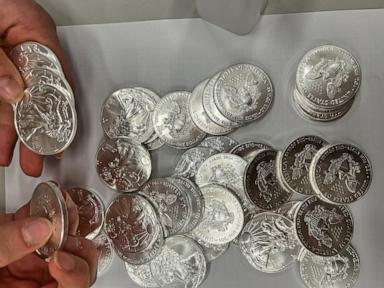
When the officers pulled the van over and stepped up to the window, the air inside didn't smell like corporate ledgers or dry-cleaned suits. It smelled like stale coffee, cheap air freshener, and absolute panic. And beneath the floorboards, hidden in compartments welded by someone who understood that freedom has a specific weight limit, sat sixty-six thousand United States silver coins.
Sixty-six thousand.
Let your mind sit with that number for a moment. Not as a statistical line item in a press release, but as a physical reality. Silver has density. It has a dull, heavy luster that absorbs light rather than throwing it back like gold. A single silver coin sits in your palm with an unmistakable, gravity-driven heft—an ancient promise of value that predates paper, banks, and digital ledgers by millennia.
Multiply that by sixty-six thousand.
The van's suspension was slouching toward the pavement, exhausted, hauling a fortune that wasn't supposed to exist, moving through the twilight like a beast burdened by stolen treasure. It was a literal migration of capital, fleeing the digital world for the cold, unyielding security of stamped metal.
The Anatomy of a Fracture
To understand how sixty-six thousand coins end up beneath the floor of a swerving van, you have to look backward. You have to trace the invisible lines that connect elderly vulnerability to boardroom calculation.
Fraud on this scale requires two things: an unshakeable system of trust and a terrifyingly efficient system of isolation.
The victims—though the paperwork usually refers to them coldly as "investors" or "clients"—were largely ordinary people. Retirees who had spent forty years waking up before dawn. Teachers who saved their pensions dollar by dollar. People who looked at a changing world, a stock market bouncing on the whim of a headline, and felt a cold knot of fear in their stomachs.
Enter the pitch. It always sounds reasonable at first. That is the genius of the grift. It never starts with a demand for everything; it starts with a conversation about safety.
Protect your wealth, the voice on the phone says. The system is fragile. Paper money is dying. Buy tangible assets. Buy silver.
It sounds wise. It sounds conservative. It echoes the generational wisdom of grandparents who buried mason jars in the backyard. The victims hand over their life savings, wire transfers clearing silently across state lines, trading their digital retirement funds for certificates of ownership in precious metals stored securely in a vault.
Except there is no vault. Or rather, the vault is a revolving door.
The money comes in. A tiny fraction of it is used to buy actual metal to show the occasional inspector or quiet an anxious auditor. The rest? It vanishes into the machinery of a lifestyle, or worse, into the endless cycle of paying off earlier victims with later victims' cash—the timeless, brutal geometry of a Ponzi scheme.
When the Music Stops
Every con has an expiration date. It arrives quietly.
Sometimes it’s a sudden wave of withdrawal requests that the organizers cannot meet. Sometimes it’s a bank that flags an erratic pattern of wire transfers. Or sometimes, it’s just a wet Tuesday afternoon, a tired driver, and a van that drifts across a lane line.
When the deputies opened that cargo area, they weren't just seizing evidence. They were unearthing a physical manifestation of broken trust. Each of those coins represented a broken promise, a sleepless night for someone who trusted the wrong voice, a lifetime of labor transmuted into a heavy, silent disk of metal being hauled away in the dark.
The investigation that followed read like an archeological dig through modern greed. Investigators found a labyrinth of shell companies, fake inventories, and meticulously falsified statements designed to look like statements from a major financial institution. The perpetrators had spent years constructing a fortress of paper.
Yet, when the walls came down, they weren't hiding behind encrypted servers. They were loading bags of metal into the back of a commercial vehicle, trying to outrun the inevitable with a suspension straining under the weight of stolen time.
The Echo in the Vault
Today, those sixty-six thousand coins sit in an evidence locker, cold, sterile, and cataloged. They are awaiting the slow, grinding wheels of the judicial process—a process that will eventually attempt to trace serial numbers, verify purchase orders, and figure out who, among the hundreds of devastated victims, has a legitimate claim to a fraction of the recovered silver.
Justice, in cases like this, is rarely whole. You can return a coin, but you cannot return the trust that was shattered when an elderly couple realized their golden years had been melted down into a highway escape plan.
The van is gone, towed to an impound lot and stripped of its secret compartments. The road has dried, the rain washing away the oil and the rubber marks of the stop.
But the story remains carved into the metal of those coins, a reminder of what happens when fear meets opportunity in the dark corners of the financial world. We like to think we are sophisticated now, living in an era of encrypted transactions and frictionless wealth. But beneath the apps, the algorithms, and the glowing screens, the oldest human motivations remain entirely unchanged.
Some people build empires of paper. Others build mountains of silver.
And somewhere out on the highway, a vehicle drifts just an inch across the line, carrying the weight of a secret that was never meant to see the light of day.