Silence.
Not the heavy, theatrical quiet of a funeral parlor, nor the hushed reverence of a library at dusk, but the thin, brittle stillness of a room where everyone is waiting for a door to open that might stay shut all afternoon. Learn more on a related issue: this related article.
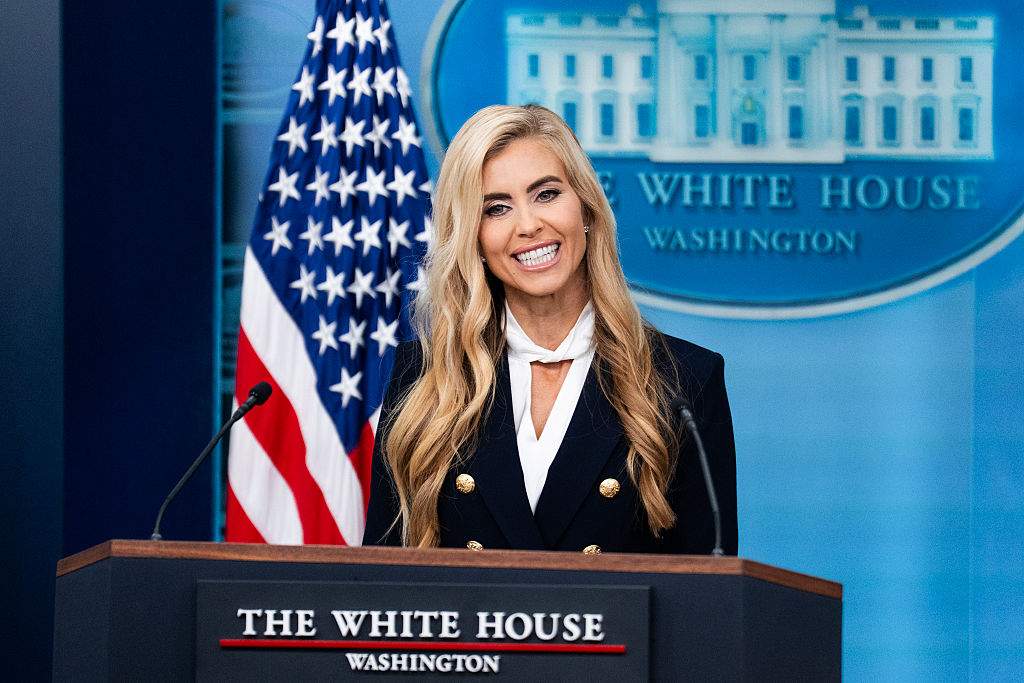
When Katie Zacharia stepped into the role of White House press secretary in October 2026, the most revealing line she offered wasn't a policy defense or a snappy retort from behind the lectern. It was a shrug disguised as candor. Asked how often she intended to brief the press, she said it was "unknown at this time," adding that President Donald Trump "is his best spokesperson" and that she would interact "as needed," following the president's lead.
On paper, that sounds like a routine scheduling note. A line for a wire brief. A sentence easily skimmed over between coffee sips. Additional journalism by USA Today delves into comparable views on this issue.
Look closer, though, and you start to see what that single word—"unknown"—actually does to the contract between the government and the people watching it. A press secretary isn't just a human microphone reading bullet points off a binder. Historically, the podium has functioned as a pressure valve, a daily appointment with accountability where citizens—through the reporters standing three feet from the seal—get to test whether official promises match lived reality. When the frequency of that contact becomes an open question, information doesn't just slow down. It drifts.
Let me be clear about how I am approaching this: to trace what happens when access turns unpredictable, I will weave verified reporting around two hypothetical figures—a beat reporter named Maya and a retired high school history teacher named Arthur—so the mechanics of public information feel less like Washington parlor games and more like what they are. Daily life.
When the Briefing Room Becomes a Guessing Game
Picture Maya sitting on a hard folding chair in the James Brady Press Briefing Room on a Tuesday morning, her notebook open to a blank page that has stayed blank longer than usual. For years, she has built her reporting life around rhythm. Even during chaotic administrations, there was a baseline expectation: at some point in the day, someone authorized to speak for the executive branch would stand in front of cameras, take questions they hadn't written themselves, and put an official answer—or an evasion—on the record.
Now imagine that rhythm breaking apart. In Zacharia's case, the sprint into the job happened at breakneck speed: a whirlwind appointment following Karoline Leavitt's late-August departure, a first briefing asked for on day two, intense scrutiny over her legal credentials and resume gaps, and within days, public questions from the president himself about whether the grueling role was even right for her. When a spokesperson arrives in the middle of a storm and already treats regular briefings as optional or contingent, Maya's job shifts from asking follow-up questions to chasing ghosts.
What does that feel like for a working journalist? It is exhausting, yes, and maddening. Yet the deeper toll isn't bruised egos in Washington. It is the widening gap between what happens behind closed doors and what reaches the public in real time.
Think of it like weather forecasting in a town that decides to turn off half its barometers because the forecasts keep making people grumpy. The wind still blows. Clouds still gather over the ridge. You just lose the early warning system.
If the president prefers to speak directly—on his own terms, in his own venues, or in bursts tailored to friendly audiences—there is an obvious political logic to sidelining a traditional press corps. Why stand in a room full of skeptics when you can bypass the middlemen? That argument isn't new, and it isn't unique to one party or one era. Presidents across decades have chafed against the press room, complaining that reporters care more about gotchas than governance.
Still, bypassing the briefing room carries a cost that rarely shows up in a single news cycle.
Why "As Needed" Changes the Balance of Power
There is a crucial difference between a leader speaking often and a government answering questions.
When a president posts a statement, gives a friendly television interview, or rallies supporters, the speaker sets the stage, chooses the lighting, and controls the exit. That is communication, and in modern politics, it is potent. Accountability, by contrast, requires friction. It happens when someone asks an uncomfortable question about a stalled policy, a disputed statistic, or a sudden personnel shake-up—and has to stand there while the cameras keep rolling.
In the wake of Zacharia's turbulent debut and uncertain briefing schedule, critics pointed to the broader pattern of restricted media access and unpredictable communication inside the administration. Supporters saw something else entirely: a candid admission that the president himself commands attention far better than any surrogate ever could.
Both readings capture part of the truth, and honestly, the confusion itself is disorienting. Even seasoned observers have struggled to read the signals when appointees arrive quickly, face immediate vetting controversies, and leave reporters guessing when—or whether—a formal briefing will happen next.
Consider what happens next when official answers become scarce:
- Rumors fill the quiet. Where verified facts are thin, speculation rushes in—from partisan commentators, anonymous accounts, and viral clips stripped of context.
- Coverage tilts toward spectacle. When substantive, on-the-record briefings are rare or brief, media attention naturally gravitates toward drama, gaffes, and interpersonal friction rather than policy mechanics.
- Trust frays on both sides. Skeptical citizens assume cover-ups when details are withheld, while loyal supporters see unfair piling-on when a newcomer stumbles under harsh scrutiny.
None of this requires malice to do damage. Sometimes it is just the natural consequence of improvisation and unpredictability.
A Kitchen Table Three Hundred Miles Away
To see why this matters beyond the Beltway, shift away from Washington to a hypothetical kitchen table in a small Midwestern town.
Arthur spent thirty-five years teaching civics and history before retiring. Every morning, he pours black coffee, reads two newspapers on his tablet, and listens to the news while his toast cools. He doesn't expect perfection from politicians—he has lived through enough administrations to know spin when he sees it—but he does expect basic visibility into how decisions get made.
Lately, Arthur has noticed a strange fatigue setting in. One day brings a dramatic headline; the next brings a flurry of conflicting claims; a few days later, the story vanishes beneath a newer shock. When the press secretary says she doesn't know how often she will hold briefings because the president is his own best spokesperson, Arthur doesn't throw his mug across the room. He just sighs and sets the tablet down.
Why bother untangling half-formed clues when the people at the center of the story haven't even settled on a routine?
That quiet disengagement is the real danger. Citizens rarely wake up one morning and declare democracy dead. More often, they slowly tune out because the signal feels noisy, erratic, or out of reach. And a tuned-out public is far easier to govern without explanation.
What We Lose When Access Becomes Optional
I have spent enough years watching political coverage to know that nostalgia for some golden age of pristine White House briefings is a trap. Briefing rooms have always been theaters of spin, half-truths, and carefully curated talking points. No press secretary in living memory has simply handed over unfiltered truth like a glass of cold water.
Yet even imperfect rituals matter. A regular briefing forces preparation. It requires staffers across agencies to nail down facts before someone stands at a microphone and faces follow-up queries. When that routine erodes—when a newcomer is rushed into the spotlight, grilled over her background, and left wondering how often she will even take the podium—the discipline around daily public explanation weakens.
You don't need to be a media insider to feel that shift. You feel it whenever you try to figure out a simple question—what a new rule actually means for your paycheck, your healthcare, or your local community—and end up wading through three layers of partisan shouting instead of a straight, verifiable answer.
The words "unknown at this time" sound small. Spoken softly into a microphone, they barely register as news.
Echoed across a government that treats daily accountability as optional, they sound like a door slowly swinging shut.
Watch: Trump's New Press Secretary Katie Zacharia Makes Her White House Debut
This video offers direct footage of Katie Zacharia's first White House press briefing, letting you see firsthand the high-pressure podium dynamics discussed in the article.