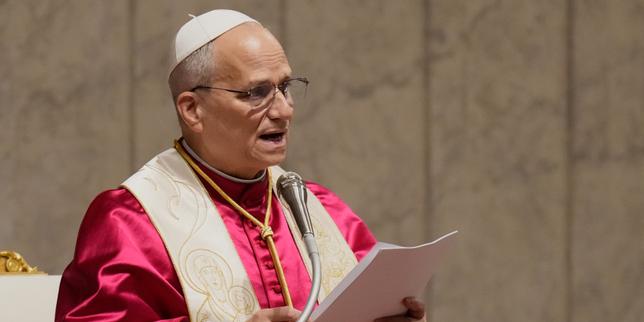
The escalating public feud between Pope Leo XIV and Donald Trump represents more than a simple disagreement over foreign policy or border security. It is a fundamental collision between two competing visions of global order. While mainstream outlets have framed this as a clash of personalities, the reality is a deep-seated struggle for the moral and political soul of the West. The Pope’s recent “Enough with war” declaration serves as a direct challenge to the transactional realism that defines the Trump administration’s approach to international conflict. This is not just a war of words. It is a battle for influence over a shared constituency that stretches from the American Rust Belt to the traditionalist heartlands of Europe.
The Geopolitics of Peace
Leo XIV has moved the Holy See away from the cautious diplomacy of his predecessors. He is not merely suggesting peace; he is demanding an immediate cessation of hostilities in regions where the U.S. has significant strategic interests. This puts him on a direct collision course with a White House that views military aid and the threat of force as primary diplomatic levers. When Trump criticizes the Pope as being "out of touch" or "weak," he is attempting to delegitimize the Vatican as a geopolitical actor. The Pope, however, is playing a longer game.
The Vatican’s influence is rarely measured in battalions, but its soft power remains formidable. By framing Trump’s "America First" doctrine as a path to perpetual conflict, Leo XIV is targeting the Catholic vote—a demographic that proved crucial in recent elections. The tension stems from a radical difference in priorities. Trump views the world as a series of deals to be won or lost. The Pope views it as a fragile ecosystem of human rights and spiritual obligations.
Money and Morals in the New Holy War
Underneath the rhetoric about war and peace lies a gritty reality of institutional survival. The Vatican is currently navigating a period of financial restructuring and internal reform. Simultaneously, the Trump administration has been aggressive in its use of economic sanctions and tariffs. These two worlds collide when the Holy See advocates for debt relief and humanitarian corridors in countries currently under the thumb of U.S. economic pressure.
The Pope's stance isn't just about theology. It’s about the tangible impact of U.S. policy on the global poor. Trump’s supporters often argue that the Vatican should stay out of politics, but the Catholic Church has been a political entity for two millennia. They understand power. They understand how a change in U.S. trade policy can lead to a migration crisis in Central America, which then puts pressure on Catholic charities and dioceses.
The Border as a Theological Fault Line
Nowhere is the friction more visible than at the U.S. southern border. Trump’s hardline immigration policies are often presented as a matter of national security and economic protection. To Leo XIV, they are a rejection of the foundational Christian tenet of welcoming the stranger. This isn't a minor point of contention. It is a fundamental disagreement on the definition of a nation.
Is a nation defined by its walls or by its values? Trump’s rhetoric suggests that a nation without borders is not a nation at all. Leo XIV argues that a nation without compassion is a hollow shell. This creates an impossible choice for the millions of Americans who identify as both devout Catholics and patriotic nationalists. They are being forced to choose between their Commander-in-Chief and their Holy Father.
The Weaponization of Traditionalism
Donald Trump has successfully courted a specific brand of traditionalist Catholicism that feels alienated by the modern world. These individuals often view Leo XIV as too "liberal" or "globalist." Trump’s team has leaned into this, positioning the President as the true defender of Western civilization against a Vatican that they claim has lost its way. This is a sophisticated psychological operation.
By aligning himself with conservative bishops who have been critical of the current Pope, Trump is effectively sponsoring a schism within the American church. He is providing a political home for those who feel the Vatican has abandoned traditional dogma in favor of environmentalism and social justice. This creates a feedback loop where political grievances are dressed up as theological concerns, making the conflict nearly impossible to resolve through traditional diplomacy.
The Specter of the Next Election
The timing of this public spat is not accidental. As the U.S. moves closer to another election cycle, both leaders are hardening their positions to shore up their respective bases. Trump knows that he doesn't need to win over the entire Catholic Church; he only needs to keep the conservative wing energized and the moderate wing conflicted. Leo XIV knows that his window for influencing the direction of the West is tied to the current political climate.
If the Pope can successfully brand Trump’s foreign policy as inherently "anti-life" due to its focus on military buildup and the abandonment of international treaties, he creates a significant problem for the Republican platform. Conversely, if Trump can paint the Pope as an agent of globalist interests who is indifferent to the security of the American people, he neutralizes the Vatican’s moral authority.
The Failure of Traditional Diplomacy
The usual back-channels between the State Department and the Secretariat of State are failing. In previous decades, a phone call between the Secretary of State and the Cardinal Secretary would have smoothed over these ripples. Today, the grievances are aired on social media and in morning press briefings. This transparency is not a sign of health; it is a sign of a total breakdown in the "special relationship" that existed during the Cold War era.
During the late 20th century, the U.S. and the Vatican were often aligned against a common enemy. Today, they cannot even agree on who the enemy is. For Trump, the enemy is often found in trade deficits and "freeloading" allies. For Leo XIV, the enemy is the "globalization of indifference." These are two different languages being spoken in the same room.
Beyond the Soundbites
We must look past the "virulent" tweets and the "stern" homilies. The real story is the fragmentation of the West. When the two most visible leaders of Western moral and political thought are at each other's throats, it signals a period of profound instability. It suggests that the consensus that has held the Western world together since 1945 is finally dissolving.
Investors and analysts should watch the flow of Vatican funds and the rhetoric of American bishops. If the Holy See begins to actively divest from American interests or if we see a coordinated movement of U.S. bishops openly defying papal encyclicals, we will know the break is permanent. This is not a temporary spat between a politician and a priest. It is a structural shift in the way power is validated in the 21st century.
The Pope is betting that the moral arc of history will eventually bend away from nationalism. Trump is betting that the era of global moral authorities is dead. Both cannot be right. The outcome of this clash will determine the geopolitical landscape for the next fifty years, regardless of who sits in the Oval Office or on the Throne of Saint Peter.
Stop looking at the polls and start looking at the pulpits. If the message from the local parish begins to diverge sharply from the message on the news, the social fabric is tearing in ways that no policy paper can fix. The conflict between Leo XIV and Trump is the ultimate test of whether "Western Civilization" is a coherent idea or just a convenient slogan for two different empires.
Power used to require a blessing from the divine or a mandate from the people. Now, it seems to require only a loud enough microphone and a refusal to blink. As these two titans stare each other down, the rest of the world is left to wonder what will be left of the peace they both claim to want. The true casualty of this war isn't likely to be found on a battlefield, but in the total erosion of shared truth between the sacred and the secular.
Identify the specific ideological markers in your own local community and observe which side of this divide they favor. The rift is no longer in Rome or Washington; it is in the house next door.