Money Changes the Noise
Walk into a local television station in suburban Pennsylvania three months before an election.
The air smells like stale coffee and ozone. Editors sit in dark control rooms, scrub bars flickering across monitors, adjusting audio levels on thirty-second ads. In August, the ads are routine: local car dealerships, injury attorneys, mattress sales.
By October, the static disappears. Every commercial break turns into a barrage of dark music, ominous voiceovers, and high-contrast photos of politicians looking stressed.
That wall of sound does not happen by accident. It is bought, second by second, with massive sums of capital. And right now, a single political figure has assembled a four-hundred-million-dollar war chest designed to flood those airwaves, buy those digital feeds, and reshape the entire battlefield for control of Congress.
Numbers like that feel abstract. We hear "four hundred million" on cable news and our brains instantly round it off to "a lot of money." But political capital is not a score in a game. It is fuel.
The Mechanics of the Surge
To understand what four hundred million dollars actually buys, think of a campaign network as a massive irrigation system in a dry valley.
Without water, the land stays brown. A trickle of money keeps a few acres green—a few field offices in key counties, a modest run of digital ads, enough staff to answer the phones.
Four hundred million dollars is a flash flood.
It buys regional field organizers in counties that haven't seen a campaign staffer in a decade. It buys top-tier data operations capable of identifying precisely which voters in specific zip codes are on the fence about turnout. It reserves prime commercial airtime in expensive media markets—Philadelphia, Phoenix, Atlanta, Detroit—months in advance, locking out opponents who lack the liquidity to pay early.
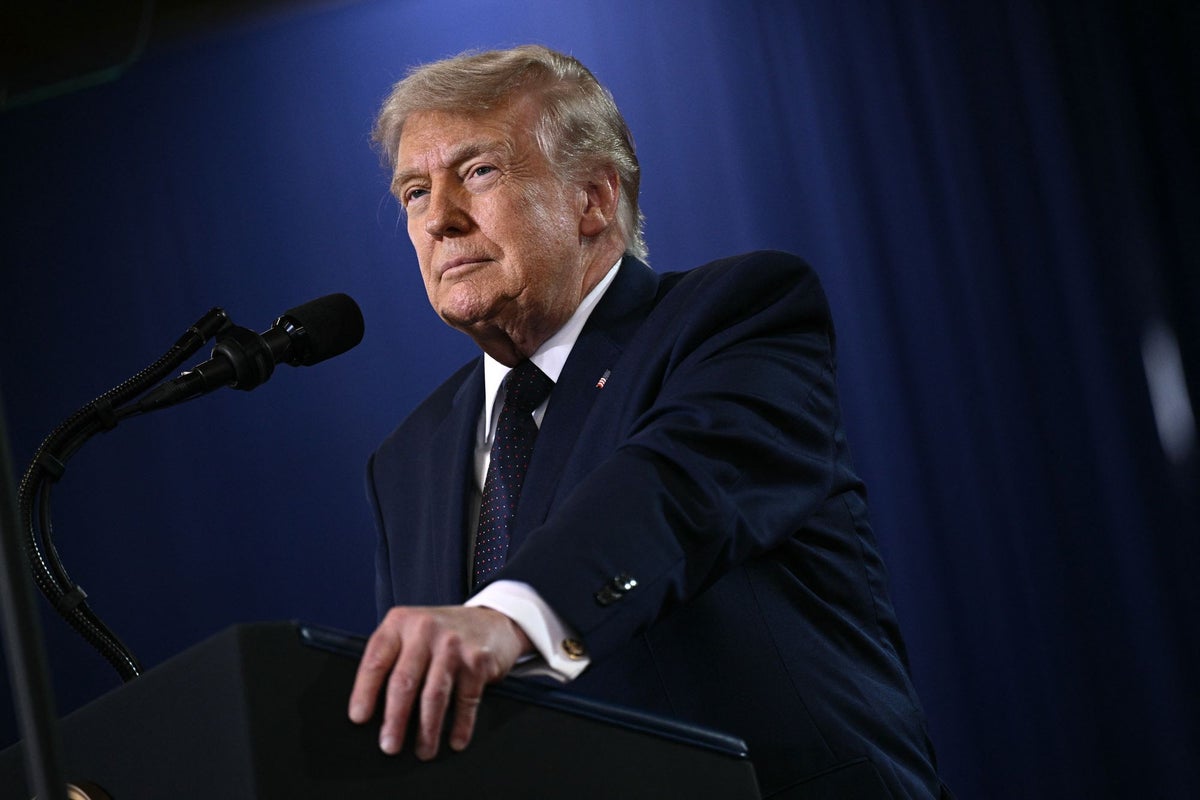
When Donald Trump sits on a treasury of that scale, the dynamic of every tight congressional race in the country shifts overnight.
Local candidates running for House or Senate seats usually spend months begging small-dollar donors for ten-dollar contributions just to keep their staff paid through September. A central war chest of this size acts as a massive gravity well. It allows the national movement to shore up weak candidates, launch aggressive opposition campaigns early, and force the opposition to spend defensively in districts they thought were safe.
The Human Cost of the Airwaves
Consider a hypothetical voter named Sarah, living in a swing district outside Milwaukee.
She works fifty hours a week managing an auto parts supply desk. She does not follow day-to-day political drama on social media. She cares about her mortgage, the price of groceries, and whether her kids' school district is doing well.
Six months before the election, Sarah’s media consumption is normal. She watches baseball on weekend afternoons and streams shows in the evening.
Then the money hits the market.
First, it arrives in her mailbox: glossy, heavy-cardstock flyers warning that a vote for one party will ruin the economy, while a vote for the other will destroy local safety.
Then it hits her phone: targeted text messages arriving three times a day, timed precisely for her lunch break and her evening commute.
Finally, it takes over her screen. Every break in the baseball game brings three back-to-back political spots. The messaging is targeted, aggressive, and relentless.
This is where the true power of a four-hundred-million-dollar fund lies. It isn't just about persuading people who love politics; it is about saturating the daily lives of people who hate it until the sheer volume of messaging alters their perception of what is at stake.
Strategic Pressure Across the Map
Campaign finance is a game of resource allocation under extreme uncertainty.
If Party A has to spread two hundred million dollars across fifty competitive districts, they must make hard choices. They cut funding to challenging candidates in swing districts to protect their own incumbents. They abandon moonshot races. They play defense.
If Party B has double that amount, the entire strategic map opens up.
They can drop five million dollars into a district they lost by ten points two years ago, forcing Party A to divert precious capital away from a toss-up race just to protect a seat they assumed was secure. It creates an asymmetrical warfare environment.
Political strategists call this expanding the map.
It means every targeted House member wakes up to a campaign reality where their margin for error shrinks to zero. It means campaign managers sit in regional offices staring at media rate cards, realizing they have been outbid for local evening news slots through the end of November.
The Unseen Currency
Money buys airtime, but airtime only buys attention. The real question is what that attention yields at the ballot box.
In modern political campaigns, field operations—the human beings knocking on doors in rainy October weather—are often funded by the same pool of money that pays for television spots. A candidate with a massive central financial advantage can build a human infrastructure that outlasts any single news cycle.
They can place organizers in precincts where turnout usually hovers around forty percent, driving that number up by three or four key percentage points. In a high-stakes battle for control of the House or Senate, where majorities are decided by a handful of seats and a few thousand individual votes, those percentage points are everything.
The money sits in bank accounts today, quiet and stagnant. But in the final weeks before the vote, it transforms into an invisible force, shaping what millions of people see, hear, and feel as they walk into the voting booth.
The station in Pennsylvania keeps its editors working late into the night. The monitors flicker. The audio levels rise. The wave is coming, paid for down to the last cent.