The Architect and the Anchor
Alice is sixty-four. She lives in a brick house in Ohio, the kind with a porch that creaks in the wind and a garden that demands more of her knees than they are willing to give. For thirty years, she worked as a middle-school registrar, a job defined by filing cabinets and the relentless ticking of a clock. Every month, a portion of her paycheck vanished into an invisible vault managed by an insurance company.
She doesn’t know the CEO of that company. She doesn’t know the name of the regulator in Washington or the fund managers in Manhattan. To Alice, the insurance policy is a promise—a legal and moral anchor that ensures when the paycheck stops, the heat stays on.
But the vault is changing.
For decades, insurance companies were the "boring" giants of the financial world. They bought government bonds. They invested in high-grade corporate debt. They were the tortoises of the market, slow and steady, prioritizing safety above all else because their liabilities—the promises made to people like Alice—span decades.
Recently, the walls of that vault have started to thin. The boring stuff doesn't pay what it used to. To keep those promises, or perhaps to pad their own margins, insurers are stepping out of the light of public markets and into the shadows of private equity.
The Shift into the Shadows
Andrew Mais, the president of the National Association of Insurance Commissioners (NAIC), recently sounded a bell that many in the industry hoped would remain silent. He pointed to a growing, systemic migration. Trillions of dollars are moving.
In the old world, if an insurance company bought a bond, you could look up its price on an exchange. You knew who owned it, what it was worth today, and how likely it was to fail. This is transparency. It is the sunlight that keeps the financial system from rotting.
Now, a significant chunk of those assets is being funneled into "private markets." This includes private equity, private credit, and complex bundles of debt that aren't traded on any public floor.
Think of it as the difference between a grocery store and a secret auction. In the grocery store, the price of milk is on the shelf. At the auction, the price is whatever the person in the suit says it is, based on a model they built themselves.
The regulators are worried. They should be. When an insurance company becomes deeply entwined with a private equity firm, the DNA of the institution changes. The goal is no longer just "don't lose Alice's money." The goal becomes "maximize the internal rate of return."
The Complexity Trap
Metaphorically, we are watching the construction of a skyscraper where the foundation is made of a new, experimental concrete. The builders swear it’s stronger. They have spreadsheets and computer simulations to prove it. But we haven't seen how it holds up in a hundred-year flood.
The private equity firms aren't just managing the money; in many cases, they are buying the insurance companies outright. This creates a circular logic that would make a philosopher dizzy. The firm manages the assets, charges itself fees, and determines the value of the investments it holds.
It is a closed loop.
Regulators like Mais are specifically concerned about "asset-backed securities." These are essentially giant bags of various debts—car loans, commercial mortgages, equipment leases—sliced into pieces and sold. In the public market, these are scrutinized by rating agencies. In the private market, the insurer might be the one deciding how risky the bag actually is.
If the model is wrong, the "experimental concrete" cracks.
Consider the "liquidity" problem. If Alice needs her money tomorrow, or if a thousand Alices need their money because of a sudden economic shift, the insurance company needs to sell something. A government bond sells in seconds. A stake in a private car-wash conglomerate or a bundle of distressed warehouse debt? That takes months.
When you can’t sell, you can’t pay.
The Invisible Stakes
It’s easy to dismiss this as "rich people math." It feels distant, a skirmish between bureaucrats in gray suits and titans in blue ones. But the stakes are human.
Insurance is the bedrock of the American middle class. It is the safety net under the tightrope of aging. If the insurance sector catches a cold, the rest of the economy gets pneumonia. Because these companies hold so much debt, they are the grease in the gears of global commerce.
If they pull back because their private investments have soured, interest rates for everyone go up. Small businesses can't get loans. The creaky porch in Ohio stays unpainted.
The push into private markets is driven by a hunger for "yield"—the profit generated by an investment. With inflation eating away at traditional returns, insurers feel they have no choice but to chase higher numbers. They argue that private markets offer a "complexity premium." They claim they are being rewarded for doing the hard work that public markets won't touch.
But there is no such thing as a free lunch. There is only moved risk.
If you are getting a higher return, you are taking a higher risk. You are either betting that the investment is harder to sell (liquidity risk), harder to understand (complexity risk), or more likely to default (credit risk). You cannot escape the math. You can only hide it in a more complicated spreadsheet.
The Watchmen in the Dark
The NAIC is trying to shine a flashlight into this room. They are proposing new rules to force insurers to disclose more about these private holdings. They want to see the math. They want to know exactly who owns what and what happens if the music stops.
The pushback is predictable. The industry argues that over-regulation will stifle growth and make insurance more expensive for the consumer. They say they are the experts, and the regulators are just playing catch-up.
This is the classic tension of the financial age. Innovation always outpaces oversight. By the time the rules are written, the players have moved on to a new game.
The danger isn't necessarily a sudden, catastrophic collapse like 2008. It is more likely a slow erosion. It is the "gray swan"—a predictable event that we choose to ignore until it is too late. It is a world where the vault looks the same from the outside, but inside, the gold has been replaced by IOUs written in a language no one fully speaks.
The Weight of the Promise
We often forget that the financial system is built on nothing but trust. A dollar bill is a piece of paper; a digital balance is a series of ones and zeros. An insurance policy is a piece of paper that says, "We will be there."
When regulators warn about private markets, they aren't just talking about capital requirements or risk-weighted assets. They are talking about the preservation of that trust.
If the public loses faith that the "boring" insurance company will be there in thirty years, the entire structure of long-term planning falls apart. People stop saving. They stop buying homes. They stop believing in the future.
Alice doesn't read the NAIC reports. She doesn't track the "origination platforms" of private credit firms. She trusts that the system works because it has always worked.
But the system is being re-engineered while the plane is in the air. The bolts are being replaced with something cheaper and more complex. The pilots say it’s fine. The regulators are pointing at the vibrations in the wings.
The quiet transformation of the insurance industry is not a headline that will grab the attention of a nation obsessed with political theater or celebrity scandal. It is a slow, silent movement of tectonic plates.
We only notice when the ground starts to move.
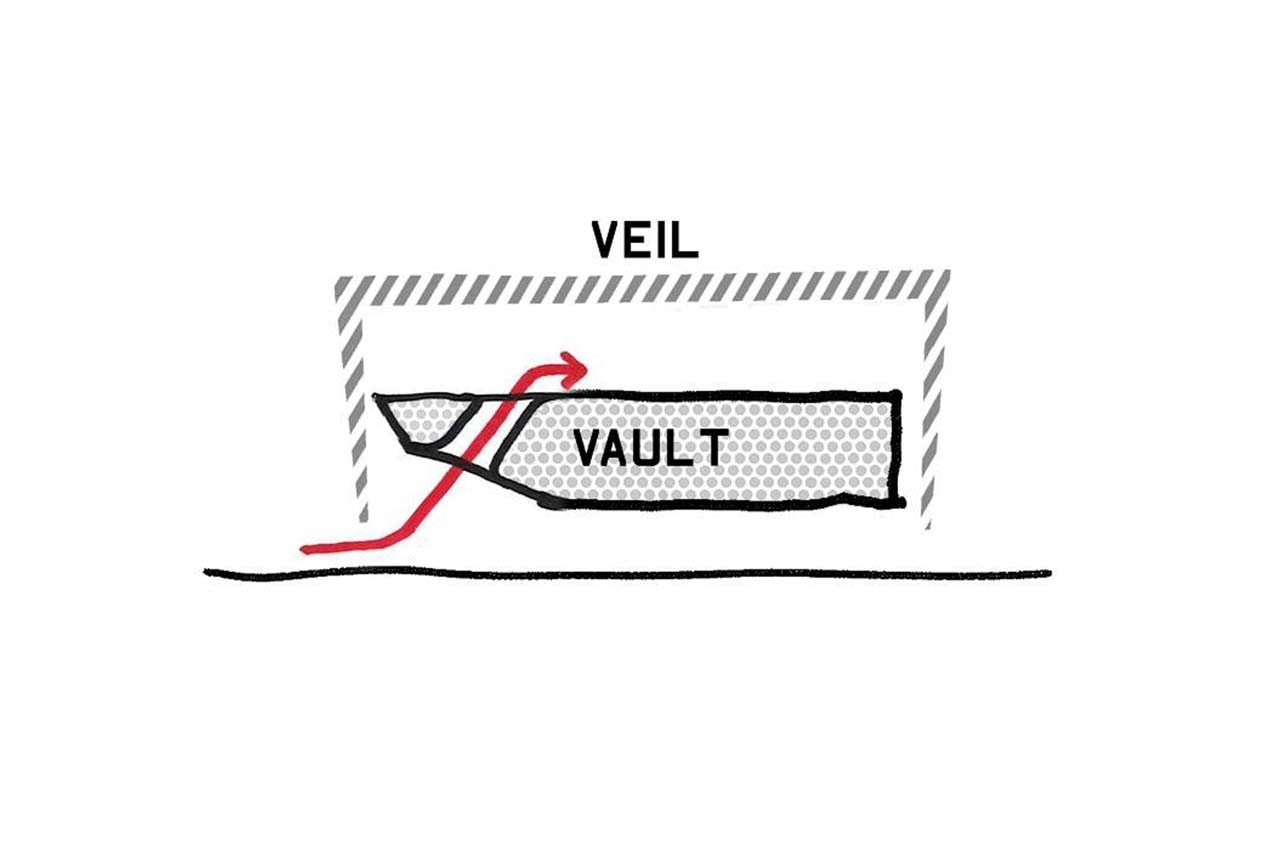
The vault is no longer a simple room of stone and steel. It has become a labyrinth of mirrors, where value is reflected back and forth until the original object is hard to find. We are betting that the mirrors are strong enough to hold the weight of ten thousand Ohio porches.
We are betting that the models are smarter than history.
And if we're wrong? The people who built the labyrinth will have already moved on to the next project, leaving Alice to wonder why the door to the vault won't open.