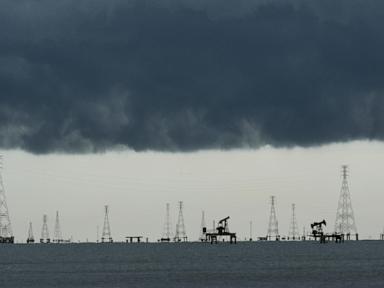
Venezuela claims to sit on roughly 300 billion barrels of proven oil reserves, putting it ahead of Saudi Arabia and Iran on paper. Honestly, though, that headline number is doing a lot of heavy lifting for very different reasons depending on who is talking.
Walk through any energy briefing or scroll through market commentary and you'll hear the same talking point: Venezuela holds the largest oil reserves on Earth, about 303 billion barrels according to OPEC reporting. Multiply that volume by a benchmark price and people start tossing around multi-trillion-dollar figures like it's sitting in a vault. It isn't. Energy economists, geologists, and industry analysts have pointed out for years that the 300-billion-barrel figure relies on aging assumptions, political reclassifications, and geology that's far trickier—and costlier—to turn into cash than a simple barrel count suggests.
Look closely at the drilling site in Venezuela's Orinoco Belt and you're looking at the heart of the debate. The region holds vast volumes of extra-heavy crude oil, not light, free-flowing crude. That distinction changes everything about economics, recovery rates, and whether those barrels ever reach global markets at scale.
Where the 300 Billion Barrel Number Actually Comes From
If you want to understand why energy experts push back on Venezuela's 300 billion barrel claim, you have to look at how the tally jumped in the first place.
For decades, Venezuela's officially reported proven reserves sat at much lower levels before surging dramatically in the mid-to-late 2000s under President Hugo Chávez's administration and its energy leadership. Rather than suddenly discovering brand-new reservoirs overnight, the government reclassified massive volumes of extra-heavy oil in the Orinoco Belt as "proven" reserves.
Energy analysts such as Francisco Monaldi—a longtime Latin American energy policy researcher—and other sector observers have long argued that those reserve figures were inflated and lacked transparent technical backing. Some analysts estimate that realistic economically recoverable reserves could be closer to a fraction of the headline number, with independent estimates from firms like Rystad Energy and researchers at Rice University's Baker Institute pointing to figures well below 300 billion barrels.
What really makes seasoned oil analysts raise an eyebrow is how static the number stays. Real oilfields deplete as you pump oil out, and revisions happen continuously as wells age, prices swing, and new engineering data comes in. When a country reports roughly the same massive reserve figure year after year despite years of underinvestment and shifting field conditions, skepticism isn't just natural—it's standard practice in the oil industry.
Politicians Love Big Numbers, Geologists Love Caveats
Every political camp in Venezuela has found a reason to keep the 300-billion-barrel figure alive. Chávez used it to project geopolitical clout and resource nationalism. Nicolás Maduro and subsequent leaders leaned on it as proof of national wealth even as domestic output fell far short of historical highs. Even opposition figures like María Corina Machado have referenced the country's enormous oil endowment when framing Venezuela's economic potential.
Geologists and reservoir engineers don't get swayed by speeches. To them, "oil in place" and "proven, economically recoverable reserves" are two completely different animals. A massive deposit can sit underground for decades and still yield only a modest share of what's trapped in the rock if extraction costs, diluent supply, upgrading capacity, or fiscal terms don't line up.
Why Extra-Heavy Crude Changes the Math
When people hear "300 billion barrels," they often picture light sweet crude gushing out of a well and heading straight to a refinery. That's not what dominates the Orinoco Belt.
Venezuela's biggest deposits are extra-heavy crude—thick, dense, high-sulfur hydrocarbons that behave closer to molasses than light oil. Because it's so viscous, you can't just pump it effortlessly through standard pipelines or process it in just any refinery.
- Dilution is mandatory: Heavy crude typically needs lighter hydrocarbons mixed in—or specialized upgrading—just to flow properly through gathering lines and export terminals.
- Refining is picky: Only refineries equipped with deep-conversion and coking units—such as complex facilities along the U.S. Gulf Coast in Texas and Louisiana—are built to handle heavy, high-sulfur crudes efficiently.
- Price discounts apply: Heavy grades usually trade at a discount to light benchmark crudes like Brent or WTI, reflecting extra processing costs and market differentials.
- Recovery rates are limited: Even under solid technical management, extracting heavy oil generally achieves lower recovery factors than conventional light oil fields, meaning a huge slice of the original oil in place stays put.
I've seen plenty of first-time energy observers make the exact same mistake: multiplying 300 billion barrels by $50 or $60 a barrel and calling it a $15 trillion to $18 trillion fortune. That back-of-the-envelope math treats underground geology like cash sitting in a checking account with zero extraction cost, zero discount rate, and 100% recovery. In real project finance, oil only creates value when you can drill it, move it, upgrade or sell it, and collect cash flows over time—after paying for years of capital expenditure.
Reserves Don't Equal Production or Quick Market Relief
Having big numbers on a reserve table doesn't automatically translate into high daily output. Over the past couple of decades, Venezuela's actual crude production experienced a steep long-term slide compared to its peak years above 3.5 million barrels per day in the late 1990s.
Why? Because oil fields need constant maintenance, workovers, power reliability, spare parts, and fresh capital. When state company PDVSA faced years of financial strain, sanctions pressure, management turnover, and deferred maintenance, well performance suffered. At one low point in October 2020, reporting noted that active drilling rigs in the country had essentially ground to a halt.
Even when headlines swirl around political shifts, U.S. involvement, or potential deals to sell or revive Venezuelan crude, turning around heavy-oil infrastructure takes serious time and billions of dollars. Pipelines corrode, upgraders need repair, and experienced oilfield crews have to be rebuilt or brought back in. So even if Venezuela holds far more oil than almost any rival on paper, it isn't going to magically flood global oil markets overnight.
What Investors and Readers Should Watch Next
If you're following Venezuela's oil story—whether as an investor, a student of global energy, or someone trying to cut through viral social media claims—don't get hypnotized by the 300-billion-barrel headline.
Start by checking actual daily production and export volumes rather than reserve tallies. Barrels pumped and shipped today tell you what the infrastructure can actually handle right now; barrels estimated underground only tell you what might be possible under specific price and technical assumptions.
Next, pay attention to independent reserve audits, contract terms, and capital spending commitments. Serious international operators look for transparent engineering data, predictable legal and fiscal rules, reliable security, and clear economics around heavy-oil upgrading and diluent supply before committing big money. Until those pieces come together, treat any massive reserve valuation as a starting point for debate—not money in the bank.