The gavel fell in a room thousands of miles away from the heat of Khartoum, but the sound seemed to echo through the empty, shelled-out streets of Sudan.
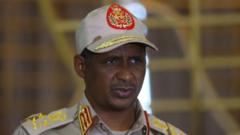
A Sudanese court sentenced Mohamed Hamdan Dagalo, widely known as Hemedti, to death. The leader of the paramilitary Rapid Support Forces (RSF) was tried in absentia, convicted of treason, war crimes, and crimes against humanity. It is a historic ruling. On paper, it represents the ultimate accountability for a man whose forces have spent years tearing a nation apart.
But on the ground, paper carries very little weight.
To understand what this verdict actually means, you have to look past the legal jargon and the international headlines. You have to look at the reality of a country caught in a relentless, brutal tug-of-war between two military titans. The ruling is a massive symbolic victory for the Sudanese state and the millions of civilians who have lost everything to RSF violence. Yet, as the dust settles on the courtroom floor, a troubling question remains.
Does a death sentence bring justice when the executioner cannot reach the condemned?
The Architecture of a Catastrophe
Think of a nation not as a map, but as a house. For decades, Sudan’s house was unstable, held together by a brittle authoritarian framework. When that framework collapsed, two men stepped into the vacuum, both claiming they alone could rebuild it. Instead, they took sledgehammers to the load-bearing walls.
On one side is General Abdel Fattah al-Burhan, the head of the Sudanese Armed Forces (SAF). On the other is Hemedti, a former camel trader who rose to command a formidable, heavily armed paramilitary network. For a brief, tense moment, they shared power. Then, in April 2023, the rivalry exploded into open warfare.
The statistics are staggering, the kind of numbers that numb the brain because the human mind isn't built to process tragedy on this scale. Over 15,000 people dead. Millions displaced, creating one of the largest humanitarian crises on Earth. Entire neighborhoods in the capital turned to rubble.
Consider a hypothetical family living in Omdurman, just across the Nile from Khartoum. Let us call the mother Amna. Before the conflict, her worries were ordinary: rising food prices, her children's education, the sporadic power outages. When the fighting started, her world shrank to the size of her basement. The sky became a source of terror, raining down artillery from the army's jets, while the streets became a gauntlet of RSF checkpoints, where young men with Kalashnikovs decided who lived and who died. Amna’s family eventually fled, joining the sea of refugees carrying their lives in plastic bags.
For Amna, and for millions like her, the court’s verdict is a recognition of their pain. It is an official statement that the terror inflicted upon them was not just the collateral damage of war, but a documented crime.
The Limits of the Law
The trial, held in the government-controlled city of Port Sudan, laid bare the horrific scope of the RSF’s campaign. Prosecutors presented evidence of systematic looting, sexual violence, ethnic targeting, and the deliberate destruction of critical infrastructure. The court found Hemedti and several of his top commanders guilty of undermining the constitutional order.
The verdict was clear: death by hanging.
But the real problem lies elsewhere. The law requires enforcement, and enforcement requires power. Hemedti is not sitting in a jail cell awaiting his fate. He is in hiding, or moving between shifting frontlines, surrounded by thousands of loyal, heavily armed fighters. He dismisses the court as a puppet of his military rival, General Burhan.
This creates a dangerous paradox. A legal system must project authority to be effective. When it issues its highest penalty against a man it cannot capture, it risks exposing its own impotence. The verdict is a powerful moral statement, but it does not change the immediate military balance on the ground. The RSF still controls vast swaths of Darfur and significant portions of the capital. They are not laying down their arms because a judge signed a piece of parchment.
The Shadow of the Past
This is not the first time a Sudanese leader has faced international or domestic condemnation. The ghost of Omar al-Bashir, the long-time dictator deposed in 2019, looms large over this entire proceeding. Bashir was indicted by the International Criminal Court (ICC) for genocide in Darfur, yet he evaded capture for over a decade, traveling to friendly nations while the international community watched helplessly.
History has a cruel way of repeating itself in this region. The tactics used by the RSF today are the direct descendants of the Janjaweed militias utilized by Bashir’s regime in the early 2000s. Hemedti learned how to wield terror as a political tool under the old guard. The international community promised "never again" after the horrors of Darfur twenty years ago. Yet, here we are.
The court’s decision is an attempt to break this cycle of impunity. By labeling Hemedti a war criminal and a traitor under Sudanese law, the government is attempting to permanently delegitimize him. It sends a message to regional powers who have quietly backed the RSF: supporting this man means supporting a condemned criminal. It isolates him politically, even if it cannot touch him physically.
The Human Cost of a Stalled Peace
While the generals fight and the courts deliberate, the fabric of Sudanese society continues to unravel. The economy has collapsed. Fields go unplanted, leading to the looming specter of a man-made famine. Hospitals have been looted or destroyed, leaving the sick and wounded with nowhere to turn.
Imagine standing on the banks of the Red Sea in Port Sudan. The city is overwhelmed, swollen with displaced families seeking safety. The air is thick with humidity and the quiet desperation of people who have lost their past and cannot see their future. They do not talk about the legal technicalities of the verdict. They talk about the price of bread. They talk about the relatives they haven't heard from in months because the telecommunications networks are down.
The death sentence handed to Hemedti will not automatically open humanitarian corridors. It will not convince a rogue militia commander to stop his men from looting a grain warehouse. In fact, some analysts fear it could backfire. By backing the RSF leadership into a corner with no hope of a political compromise or legal immunity, the verdict might make them fight even harder. When a wolf knows it is marked for death, it has no reason to stop biting.
The Long Road to Reconciliation
True justice is a rare commodity in the aftermath of civil conflict. It requires more than a punishment for the perpetrator; it requires a restoration for the victim.
For Sudan to heal, the guns must eventually fall silent. But peace cannot be built on a foundation of amnesia. The documentation of these war crimes, formalized by the court's ruling, ensures that the truth of what happened in Khartoum, in Darfur, and across the nation is preserved. It prevents the revision of history by the perpetrators.
The verdict against Hemedti is a milestone, but it is just the beginning of a incredibly long and treacherous journey. It is a declaration of intent by a battered state, a signal that the rule of law still gasps for air beneath the smoke of explosions.
Somewhere in a refugee camp, a child who fled the violence in Khartoum plays in the dirt, oblivious to the legal declarations in Port Sudan. That child’s future depends entirely on whether the international community and the Sudanese people can transform the symbolic justice of a courtroom into the tangible reality of a peaceful home. Until then, the sentence remains a promise written in the dust, waiting for the wind to either blow it away or reveal the solid ground beneath.